
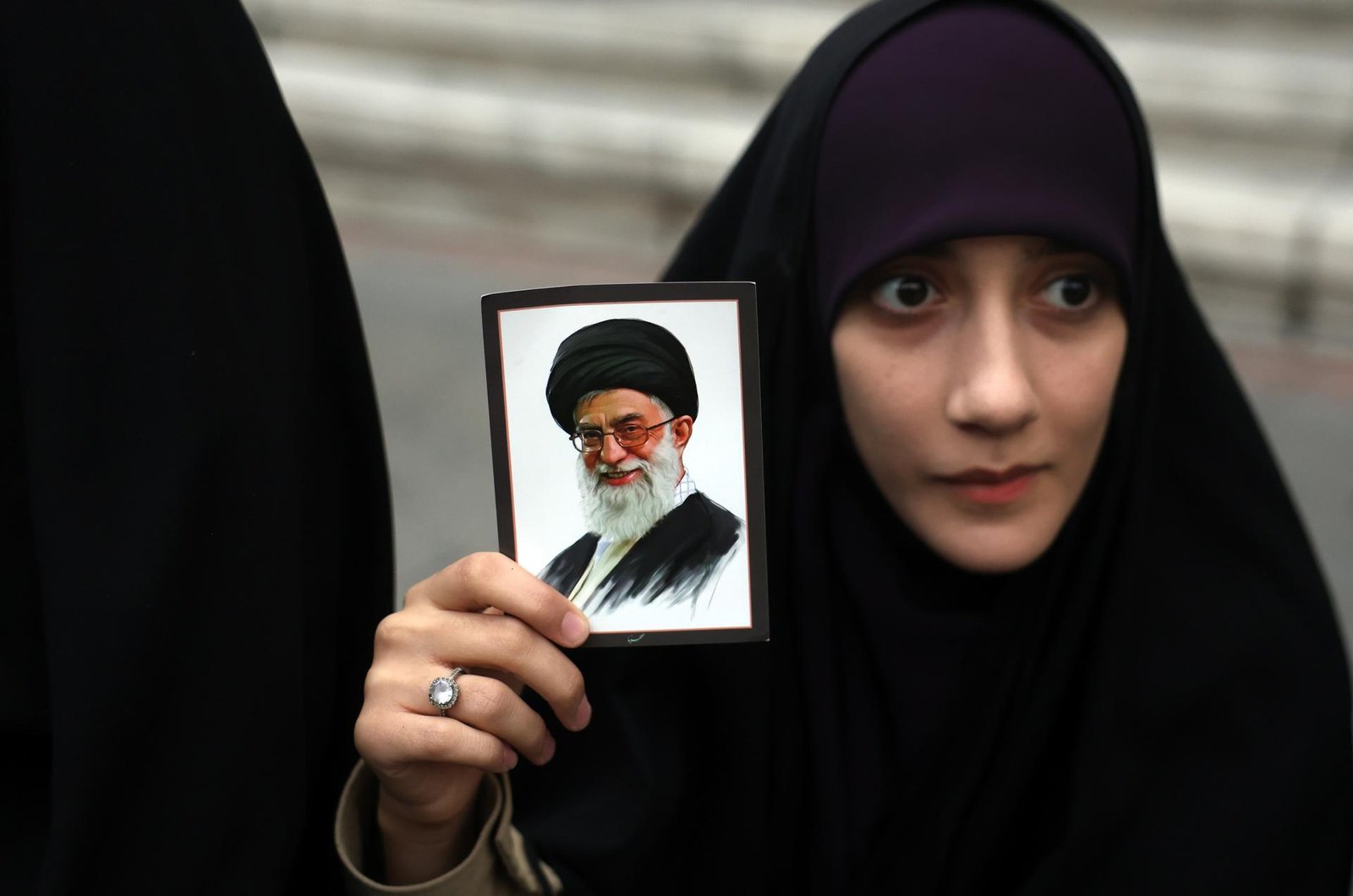
One of the targets of the American and Israeli attack this Saturday (28), the supreme leader of Iran, Ayatollah Ali Khamenei, is dead, according to information from the President of the United States, Donald Trump. The American classified the Iranian as “one of the most evil people in history”.
“Khamenei, one of the most evil people in history, is dead. This is not just Justice for the people of Iran, but for all Great Americans and for the people of many Countries around the World who were killed or maimed by Khamenei and his gang of bloodthirsty henchmen,” Trump wrote.
The US president also declared that Khamenei’s death represents “the greatest opportunity” for the Iranian people to regain control of the country. He stated that members of the Revolutionary Guard, military and security forces would be seeking immunity from the United States.
Ayatollah Ali Khamenei was considered the most powerful man in the Persian country and, in a 35-year government, the longest-serving head of state in the Middle East. The position, which gave him maximum political, religious and military authority, was achieved with the establishment of the Ayatollah regime with the so-called Islamic Revolution in 1979.
Earlier, before Trump’s statement, Iran’s Foreign Minister, Abbas Araghchi, told American TV that the supreme leader was “alive” as far as “what is known.” Israeli authorities had already signaled the possibility of having killed Iranian Defense Minister Amir Nasirzadeh and the commander of the revolutionary guard, Mohammed Pakpour.
Ayatollahs are Shiite Muslim leaders, high-ranking clerics, considered masters of Islamic jurisprudence (fiqh), theology and philosophy, and who serve as the highest authorities in Iran. After protests in 1979, they orchestrated a popular movement that culminated in the overthrow of the Iranian monarchy led by Shah Reza Pahlavi.
Since then, the country, which was previously an ally of the United States in the region, has adopted an anti-West and anti-Israel stance, in addition to implementing internal changes that violate human rights, such as the suppression of the rights of women and political opponents.
The first leader chosen as the highest authority in Iran was Ruhollah Khomeini, Ayatollah Khomeini, who led the conservative opposition to the Pahlavi regime from exile. During his time in power, Khomeini called Washington and Israel the “great and little Satan”, respectively, due to their support for the overthrown Iranian monarchy.
In 1980, Khomeini chose Khamenei to be imam, responsible for the traditional Friday prayer in Tehran. The following year, he climbed once again in the Iranian political hierarchy when he was elected president of the country, the second most important position in the Ayatollah regime, in an election considered a sham. At age 42, he became the first cleric to assume the role of president.
Possession with maneuver
Born in the city of Mashhad, in eastern Iran, Ali Khamenei began his religious and political studies in the 1960s, being strongly influenced by Khomeini’s thoughts, aligned with a more radical vision of Islam. It was during this period of indoctrination that the current supreme leader of Iran equipped himself with the influence of Shiite theories hostile to the West.
In 1989, he was chosen as Iran’s new supreme leader by the Assembly of Experts, upon the death of his mentor, Khomeini. Despite not meeting all the necessary requirements to take on the position at the time – he did not yet have the degree of berrygranted to the ayatollahs with the power to issue decisions on Islamic law – the body made a move to change the Constitution and allow Khamenei’s ascension.
Since then, Khamenei has maintained the anti-Western and anti-Israel stance inherited from his predecessor, mainly through the sponsorship of terrorist groups, such as Hamas, responsible for the October 7, 2023 massacre in Israel, and the promotion of the Iranian nuclear program, seen as a threat by Western countries and one of the reasons that led to Israel’s recent attacks against the country.
The division of power in the regime
Under the ayatollahs’ regime, all institutions linked to the three powers (Legislative, Judiciary and Executive) are mediated by bodies that aim to maintain the connection between State and Religion. Furthermore, the supreme leader retains the country’s most important military and political decision-making.
Supreme Leader – Lifetime position, the position of supreme leader in Iran places Ali Khamenei as head of state, highest religious figure and commander-in-chief of the Armed Forces. He is responsible for matters related to security, defense and foreign policy;
President – Iran’s second most authoritative position, according to the Constitution, the head of the Executive has a four-year term and does not act as in other countries, his power is limited by the clerics and the supreme leader. Its main focus is on domestic politics, with emphasis on the economy;
Council of Guardians – made up of 12 members – six clergy and six jurists – is the most powerful organization in the country. The council undergoes a careful evaluation by the supreme leader, the clergy themselves and the jurists are appointed by the president. Its main function is to evaluate and ratify all bills that come out of Parliament, having veto power for measures that go against the Constitution and Islamic law.
Revolutionary Guard – Military power is also one of the bases of the ayatollahs’ regime. One of the most relevant fronts is the Revolutionary Guard (IRGC), an elite parallel military force created during the revolution that operates internally and externally and reports directly to Iran’s supreme leader.
