
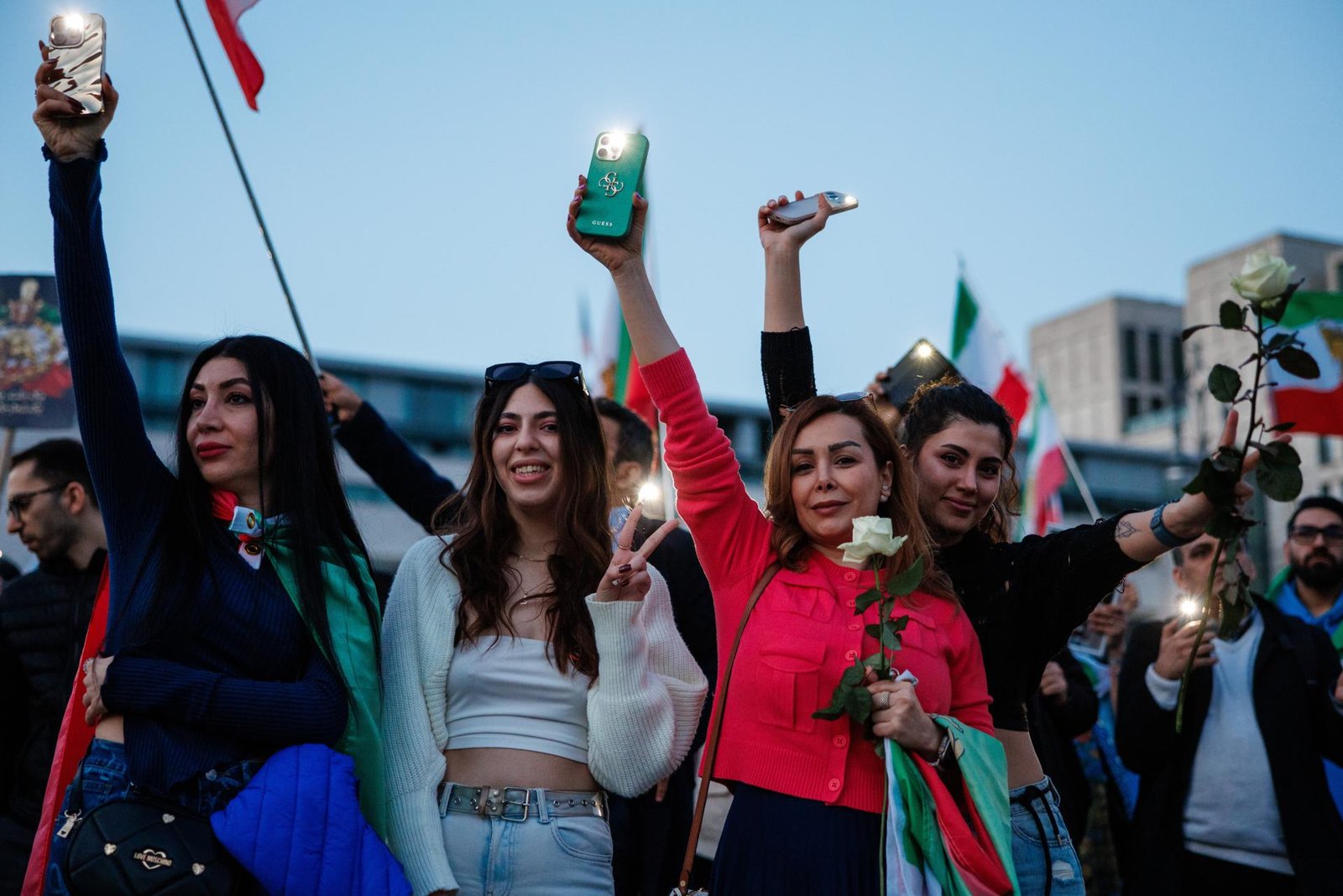
President Donald Trump has claimed that Iran’s Supreme Leader Ayatollah Ali Khamenei is dead, following reports of his shooting in a joint military operation led by the United States and Israel.
“Khamenei, one of the most evil people in history, is dead,” Trump wrote on social media Truth Social on Saturday afternoon.
“This is not just Justice for the people of Iran, but for all great Americans and for the people of many countries around the world who were killed or maimed by Khamenei and his gang of bloodthirsty henchmen,” Trump said.
A senior Israeli government official informed the agency Reuters earlier in the day that Khamenei’s body was found. Iranian media reported that his son-in-law and daughter-in-law were also killed in the joint operation against Iran, which began in the early hours of Saturday.
In a post-Khamenei Iran, the country’s future would be in the hands of its citizens, according to Victoria Coates, former deputy national security adviser to President Donald Trump. Coates spoke to The Daily Signal this Saturday (28), before reports of Khamenei’s death.
“It’s not America’s mission to go and create a democracy in Iran. That’s up to the people of Iran, if they want it, or whatever form of government they want,” Coates said. She currently serves as vice president of the Davis Institute for National Security and Foreign Policy at The Heritage Foundation (renowned center of conservative thought in Washington).
In a video message announcing the operation on Saturday morning, Trump told the Iranian people that their freedom was “at their fingertips.”
“When we’re done, take over your government. It will be yours. This will probably be your only chance in generations,” Trump said.
The strategic moment
The joint operation, called Operation Epic Fury (Epic Fury), targeted strategic regime assets, military installations and Khamenei’s residential complex.
Neither Coates nor Ilan Berman, senior vice president of American Foreign Policy Council (American Foreign Policy Council), believe that the US operation will last for a long period. Both spoke to the report before Khamenei’s death was confirmed.
“What we’ve seen so far is something much closer to what occurred in Venezuela than in Iraq and Afghanistan in the past, in terms of government signaling,” Berman said, referring to the U.S. capture of Venezuelan dictator Nicolás Maduro in January.
“The ideal scenario for the president is for the supreme leader to leave the scene and for a new crop of leaders to emerge who are more willing to negotiate with the United States,” Berman explained. “But that doesn’t necessarily mean that [Trump] want to overthrow the entire regime or root it out.”
In Venezuela, members of the Maduro regime remain in power but have shown a willingness to cooperate with the US now that Maduro is imprisoned in New York.
Trump stated, in the video announcing the attacks, that the operation is being carried out “for the future”.
“We pray for every service member who selflessly risks his or her life to ensure that Americans and our children are never threatened by an Iran armed with nuclear bombs,” Trump said.
United States targets
The US has sought a diplomatic solution with Iran during three recent rounds of talks, but the Iranian regime has refused to stop enriching its uranium stockpiles. Omani Foreign Minister Badr Albusaidi — one of the diplomats involved in the dialogues — told CBS News that the Iranians were only willing to minimize enrichment and allow IAEA (International Atomic Energy Agency) inspections.
“We will destroy your missiles and we will destroy your missile industry,” Trump said in his Saturday video, adding: “We will annihilate your navy.”
Coates believes there are “exit routes” planned in Trump’s operation: “If we move faster than anticipated, the president could end the actions.” Khamenei’s death could be one of these milestones for military de-escalation in the region.
The US is targeting Iranian ships and naval capabilities “because the president understands that Iran’s natural first reaction would be to maneuver to close or narrow the Strait of Hormuz,” Berman explained.
The Strait of Hormuz connects the Persian Gulf with the Gulf of Oman and is a vital route for global oil transport. If Iran managed to close the Strait, world markets would be severely affected, increasing international pressure for the US to halt the operation.
According to the Institute for the Study of War (Institute for the Study of War), a Washington-based national security research organization, most American attacks so far have focused on military targets. The Israel Defense Forces (IDF) claimed to have carried out attacks against Iranian missile launchers and air defense systems.
Iranian response
The Iranian regime responded by launching missiles at Israeli and US military assets in the Middle East.
Bahrain’s Foreign Ministry said on Saturday it was “dealing with damage to three buildings” in the capital, Manama, and neighboring Muharraq, caused by “drone strikes and debris from an intercepted missile.”
Iran has also attacked countries that host American military bases, including the United Arab Emirates, Qatar and Kuwait.
A central concern, according to Coates, is that Iran will activate terrorist sleeper cells within the United States.
“We don’t know who crossed our southern border or any other border during the Biden administration, but we do know that several people who were on the terrorist watch list managed to get in,” Coates warned.
Homeland Security Secretary Kristi Noem said Saturday that she is “coordinating directly with federal intelligence and law enforcement partners to monitor and thwart any potential threats to the homeland.”
“Anti-Iran” Sentiment in the Middle East
The UAE “condemned and denounced” the Iranian missile attacks in a statement on Saturday, calling the attacks against “the UAE and several sister nations in the region” a “flagrant violation of national sovereignty and a clear breach of international law and the Charter of the United Nations.”
For Berman, an “anti-Iranian regime” coalition is forming in the Middle East. “The Iranians did not help themselves at all, as they hardened the Arab stance on the need for regime change in Iran,” he said.
Jacob Olidort, US security director for the America First Policy Institutebelieves it is possible that nations such as Jordan, the United Arab Emirates, Bahrain and Saudi Arabia will also take action against Iran, especially if their civilians are victimized as Iran attacks US military infrastructure.
The consequences of the operation, says Olidort, “will be global in scale and will dramatically transform the world scenario”. He concludes that action against Iran offers “many more opportunities for the United States and its partners to expand peace and prosperity.”
SEE ALSO:
-
Trump confirms death of Iran’s supreme leader and promises to continue bombings
-
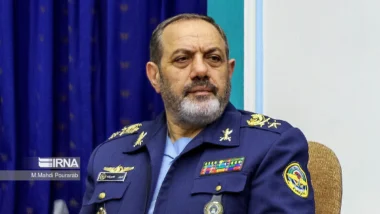
Aziz Nasirzadeh: who was the general at the head of the Iranian Defense
©2026 The Daily Signal. Published with permission. Original in English: Trump Says Khamenei Is Dead. What Happens Now in Iran?
