
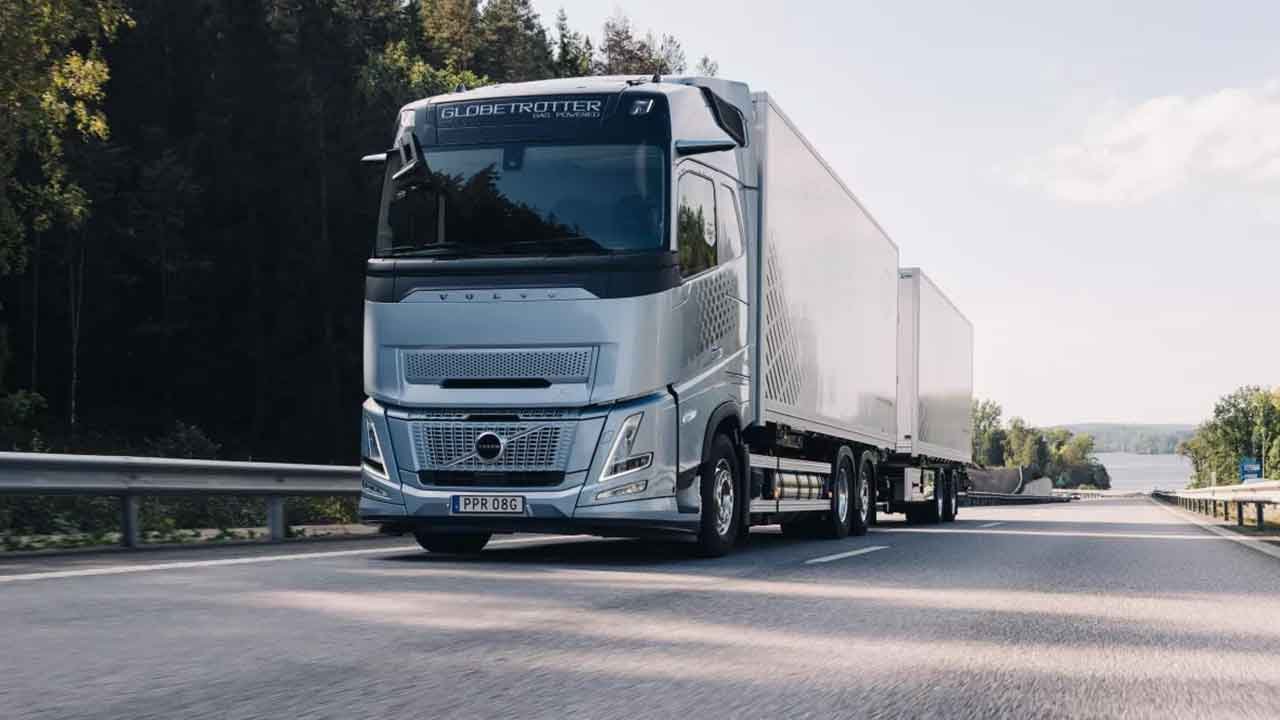
Volvo Trucksannounced that it has delivered more than 10,000 gas-powered trucks worldwide since introducing the technology in 2018.
This shows the growing demand for transportation solutions that reduce carbon emissions in a variety of markets.
According to the manufacturer, 2025 will be the year with the highest sales performance ever in the gas-powered truck sector, with the expansion of the product lineup, expansion of fuel supply in each country, and improved price competitiveness being considered as major factors.
Currently, the UK leads the way in sales of these vehicles, followed by Germany, Sweden, the Netherlands, Norway and France. India and Latin American countries are also emerging as new markets with steadily increasing technology adoption.

The gas engine is applied to the large model Volvo FM, FH, and FH Aero lineup. The model can run on existing LNG (liquefied natural gas) as well as bio-LNG, a non-fossil fuel produced from organic waste.
Jan Hjelmgren Volvo Trucks The head of product management said that the company’s gas engine technology provides similar performance to diesel trucks in terms of power, torque, responsiveness, and energy efficiency. He said these vehicles were an important step in the transition to zero-emission transport.
It can travel up to 1,000 km with a single fuel tank, making it suitable for long-distance transportation, local logistics, and construction site operations. The manufacturer explained that gas charging infrastructure has already been established in several countries, and bio-LNG supply is also rapidly expanding.
In Germany, Norway, Finland, and Sweden, all gas filling stations provide renewable fuel, and they emphasized that CO₂ emissions can be reduced by up to 100% on a ‘Well-to-Wheel’ basis that considers the entire life cycle of the fuel.

Volvo’s gas engine technology is based on the proven D13 powertrain and applies a high-pressure direct injection (HPDI) system supplied by Cespira. This method uses a small amount of diesel for ignition. If HVO (hydrogenated vegetable oil) is used at this stage, CO₂ emissions can be reduced by up to 100% on a full cycle basis compared to pure diesel trucks.
Bio-LNG is a fuel that liquefies biomethane generated from organic waste and uses it in internal combustion engines. Volvo sees this as a key element in achieving net zero emissions by 2040.
To achieve this goal, the company is implementing three strategies in parallel: battery electric trucks, fuel cell electric vehicles, and internal combustion engines based on renewable fuels.
+ NATO plans to send world’s largest drone fleet to protect Baltic Sea
Source and image: Volvo Trucks. This content was created with the help of AI and has been reviewed by our editorial team.
