
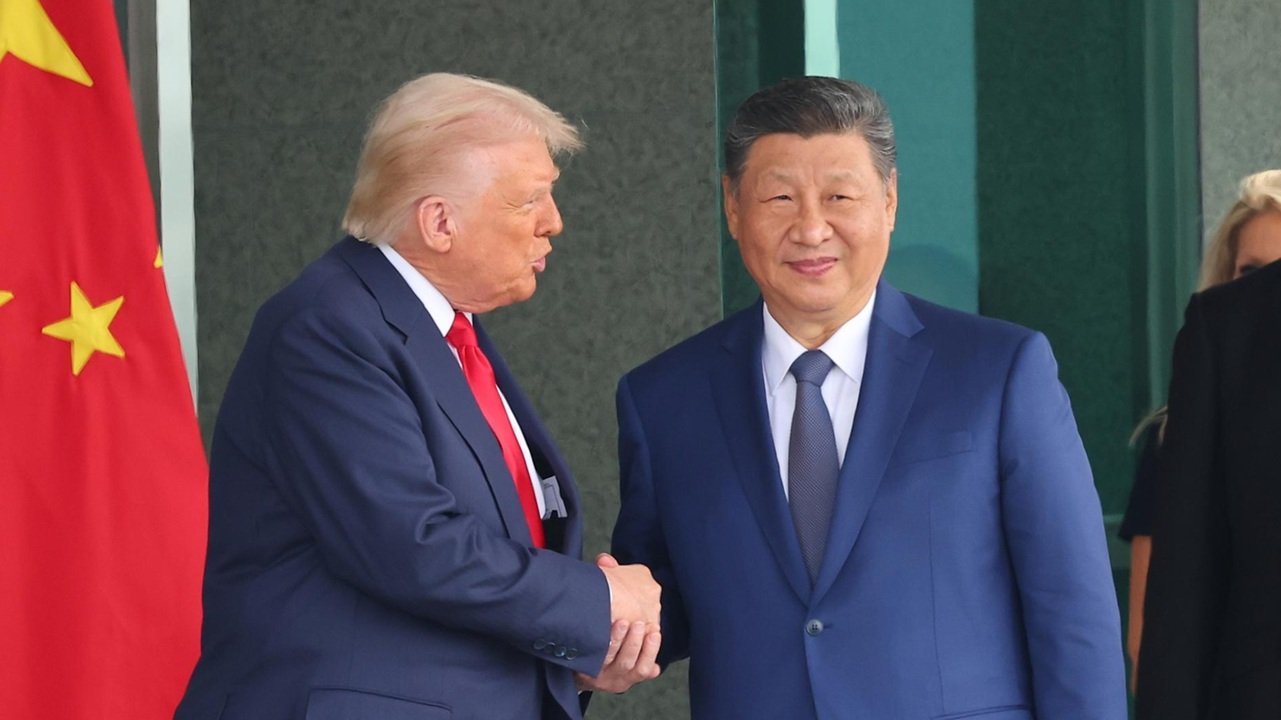
US President Donald Trump and Chinese dictator Xi Jinping spoke by telephone this Wednesday (4), according to the Chinese Foreign Ministry, while plans are underway for the American’s possible visit to the Asian giant in April, after both reached a trade truce in November last year.
Xi and Trump spoke on Wednesday night (China local time), as reported by the foreign ministry in a brief message, without specifying the issues discussed by the leaders of the world’s biggest powers. However, Trump himself detailed that the situation in Iran, Taiwan, Ukraine, as well as issues related to trade between the two nations, were discussed in the conversation.
The call took place on the same day that Xi had a video conference with the Russian dictator, Vladimir Putin, which Beijing informed hours before and during which they discussed strategic cooperation between their countries shortly before the expiration, this Thursday (5), of START III, the last nuclear disarmament treaty still in force between Russia and the USA.
Both Russia and China asked the US president to extend compliance with the limits contemplated by START III by one year, in line with Putin’s proposal. According to the Kremlin, both leaders discussed, among other topics, cooperation with Venezuela and Cuba and the situation surrounding Iran.
In turn, Trump and Xi had spoken, until then, for the last time on November 25, weeks after meeting in South Korea, when they agreed to a one-year truce in their trade dispute.
At the time, tariffs were reduced and suspended, China lifted restrictions on rare earths and both defended cooperation in combating fentanyl trafficking, among other measures.
At that time, Trump said he would travel to China in April, although final travel dates have not yet been announced.
Since the meeting, tensions between the powers have continued over issues such as Trump’s actions in relation to Venezuela, Cuba, Iran or Greenland – countries in which Beijing has important interests – as well as the Panama Canal or Taiwan.
Furthermore, the conversation took place in a context marked by negotiations around supply chains and trade, after Washington this week called on international partners for a ministerial meeting on critical minerals, with the aim of reducing its dependence on China.
