
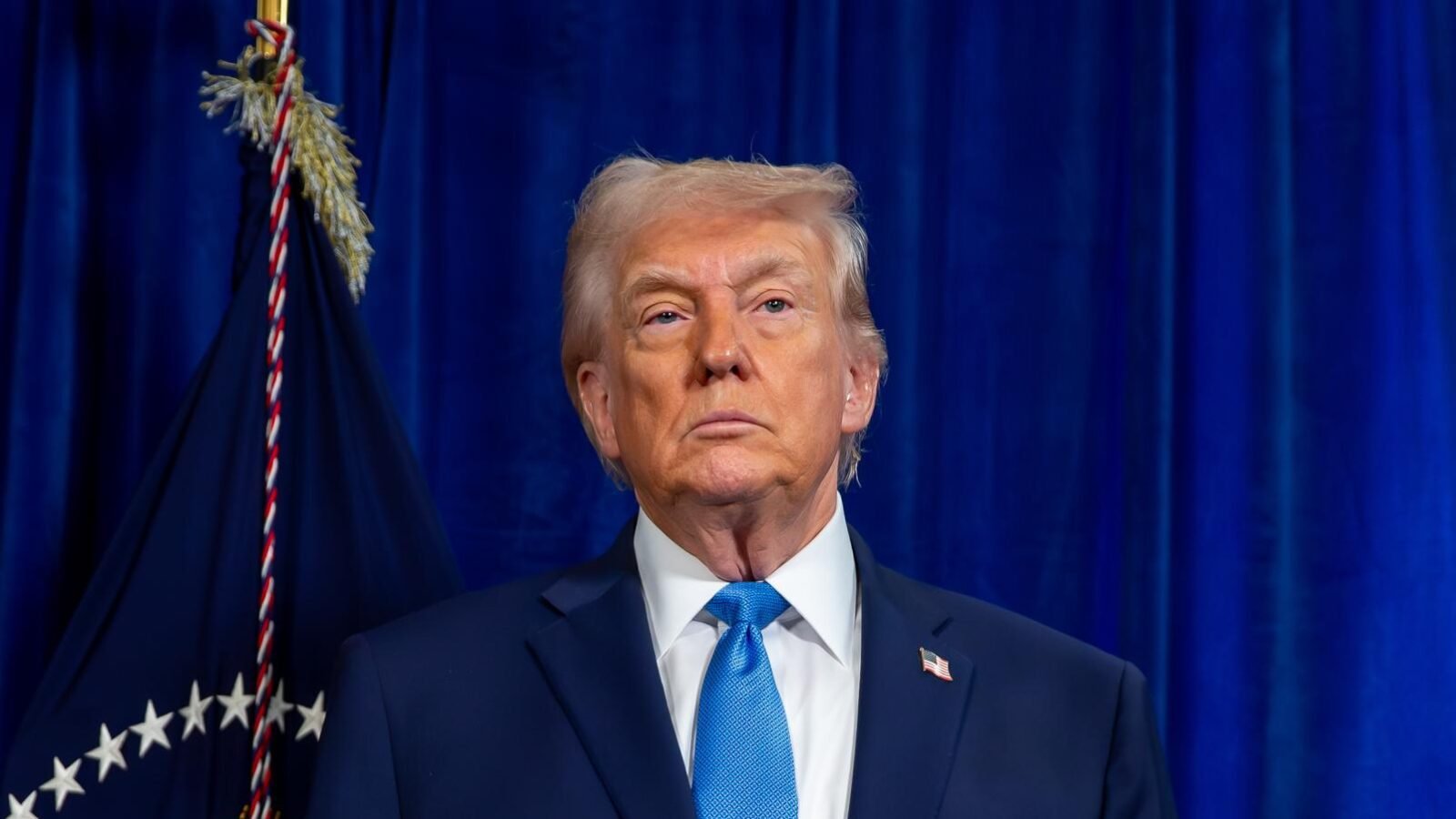
US President Donald Trump once again criticized the US Supreme Court this Monday (23), three days after the decision that suspended part of his tariff.
In a post on social media, the Republican leader called the high court’s conclusion “ridiculous” and argued that the judges ended up granting him more power and strength in his tariff policy, implemented almost a year ago.
“The U.S. Supreme Court, through complete disregard, has accidentally given me more power and strength than I had before its ridiculous decision,” Trump wrote in Truth Social. He also threatened to use the charges in a “much more powerful and unpleasant way.
On Saturday, the president announced that he will increase the new tariff on imports from all countries from 10% to 15%. On Friday (20), the day the Supreme Court handed down its decision, the American leader said he would replace the invalidated tariffs with a 10% rate on all goods entering the country.
Trump administration says trade agreements remain in force
The US trade representative, Jamieson Greer, said in an interview with ABC News that the agreements signed individually with the countries remain in force.
“The legal instrument to implement it may change, but the policy itself has not changed,” he argued.
As a result, the new 15% tariffs do not apply to nations with which the US had already reached a trade pact, including the United Kingdom, the European Union (EU), Switzerland, Japan, South Korea and Vietnam.
The measure will come into force this Tuesday (24) and will be valid for 150 days, based on the new legislation used, Section 122 of the Commerce Act of 1974, which allows the imposition of temporary taxes to address serious trade deficits. After this period, Congress will need to give approval for the tariffs to remain in effect.
The Supreme Court’s decision favored, at least temporarily, Brazil, which faced tariffs of 50% last year, in retaliation for the legal case against former president Jair Bolsonaro and the court orders of the Federal Supreme Court (STF) against American companies.
In April last year, Trump imposed his so-called 10% reciprocal tariff on countries. In July, he sent a letter to the government of Luiz Inácio Lula da Silva (PT), in which he announced a 40% surcharge. Both were affected by the decision of the American highest court.
