
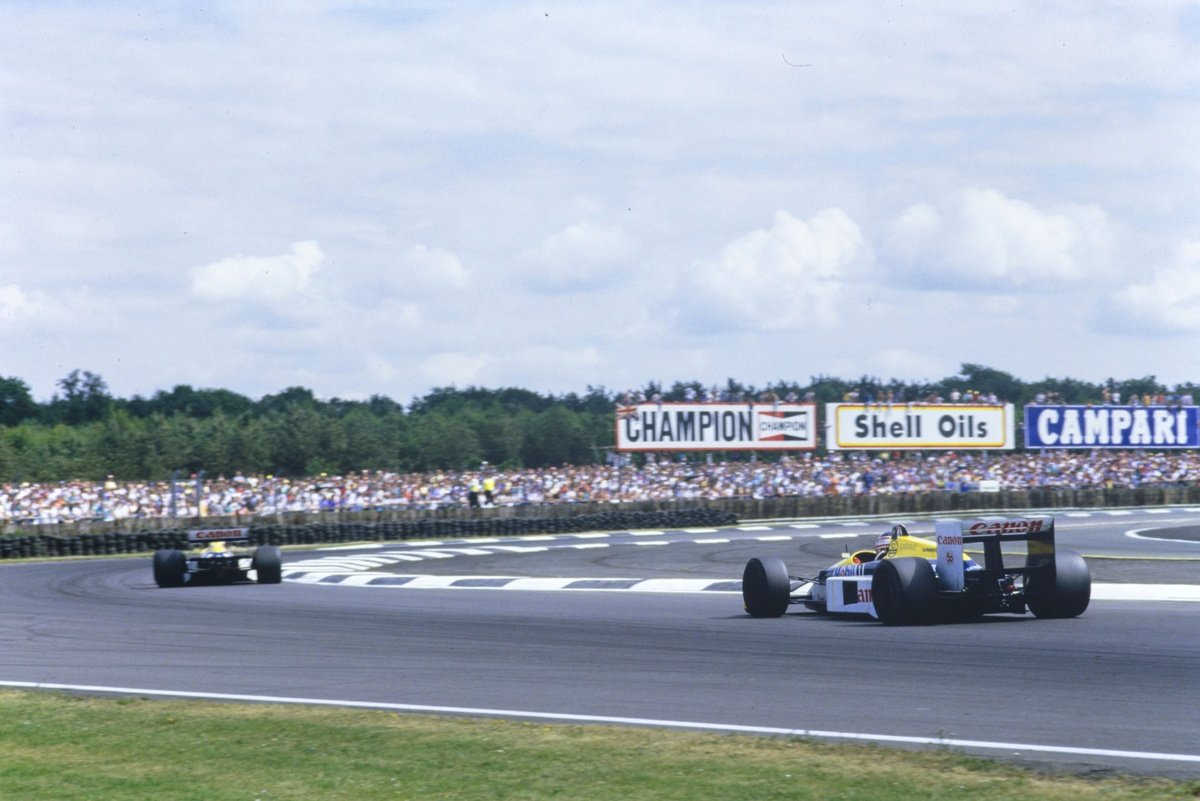
More than 70 tracks, some with multiple configurations, have hosted a world championship grand prix since the contest began in 1950. Some, such as the Pescara road circuit that remains the longest in F1 history at 16 miles, only did so once. Others have been staples of the calendar for decades.
Selecting the top 10 isn’t just about how great the track is for drivers, though that is a factor. It’s also about each circuit’s part in F1 history, the moments that have taken place there and how each promotes good racing (or not!).
Longevity has to be regarded as a major plus, too. It’s no coincidence that the six most-used F1 circuits appear in our 10…
10. Brands Hatch
Brands Hatch has only hosted 14 F1 world championship races, but these have included some of the all-time moments in history
Races: 14
The undulating swoops of the Brands Hatch Grand Prix circuit first hosted world championship F1 in 1964 and alternated with Silverstone as the host of the British GP until 1986. As well as those 12 races, Brands was also the venue for two European GPs, plus it had its very own Race of Champions – 14 editions between 1965 and 1983.
It became a circuit respected by drivers, with the awesome Paddock Hill Bend, Hawthorns and Dingle Dell among the challenges.
Memorable Brands F1 moments include Jack Brabham running out of fuel on the final lap in 1970, handing victory to Jochen Rindt, Emerson Fittipaldi’s fine win in 1972, Carlos Reutemann outfoxing Niki Lauda in 1978 and Nigel Mansell scoring his first victory in 1985 – at the same time as Alain Prost clinched his first title.
There were dark times too, most notably the death of Jo Siffert in a non-championship encounter in 1971.
Brands was never particularly well-endowed with space, so there wasn’t a lot of run-off. That was brought into sharp focus when the leading cars were topping 170mph on the tricky approach to Paddock Hill Bend – and by the start crash that ended Jacques Laffite’s F1 career in 1986.
F1 cars have long since outgrown Brands, but it remains one of the great circuits.
9. Montreal
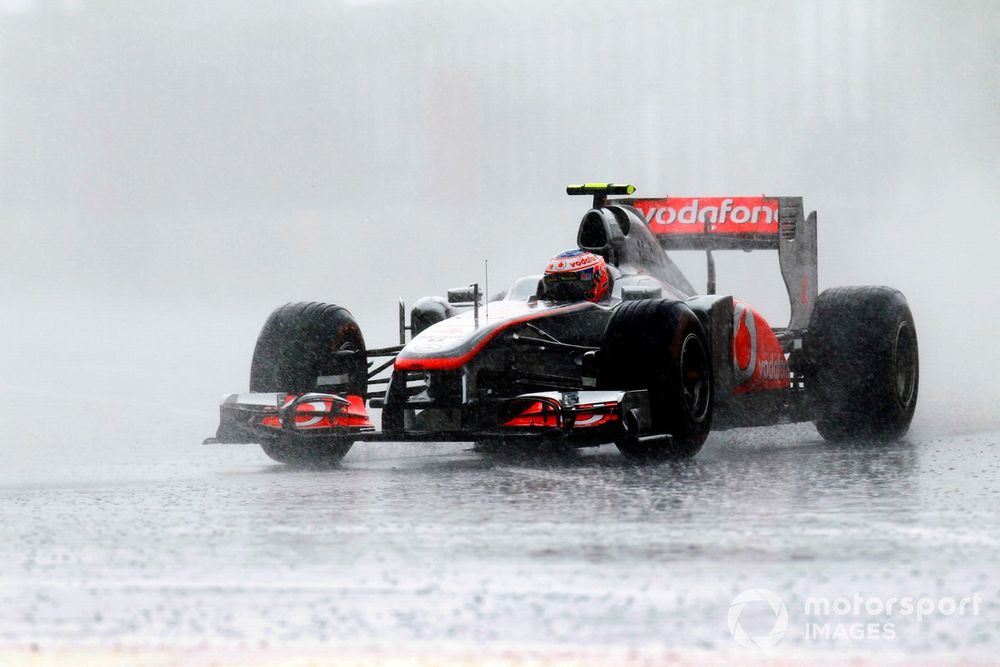
Button won one of the wildest F1 races in history in 2011
Photo by: Steven Tee / Motorsport Images
Races: 44
We really wanted to include Adelaide in this list (what a place to finish the season!) but Montreal – or the Circuit Gilles Villeneuve – has hosted four times the number of world championship races, which edges the Canadian venue ahead of the much-loved Australian street track.
Aside from being one of F1’s most popular venues, Montreal provides an interesting challenge. It has high-speed elements, but also several place where run-off is in short supply, so precision is key. That’s certainly true of the final chicane, which has caught out enough top drivers over the years to have been dubbed ‘Wall of Champions’.
It’s held some bizarre and dramatic races. Mansell and Alessandro Nannini started from the pitlane before the race got under way in 1989, Lewis Hamilton crashed into Kimi Raikkonen in the pitlane in 2008, setting up Robert Kubica’s only F1 victory, and Jenson Button took a ridiculous last-lap victory from the back after two clashes in 2011.
It was also the scene of home hero Villeneuve’s first F1 win (in 1978), the venue of a great Villeneuve-Alan Jones duel the following year, and was where fan-favourite Jean Alesi scored his solo GP victory in 1995. It’s also where Martin Brundle feels he should have become an F1 winner…
8. Kyalami (original layout)
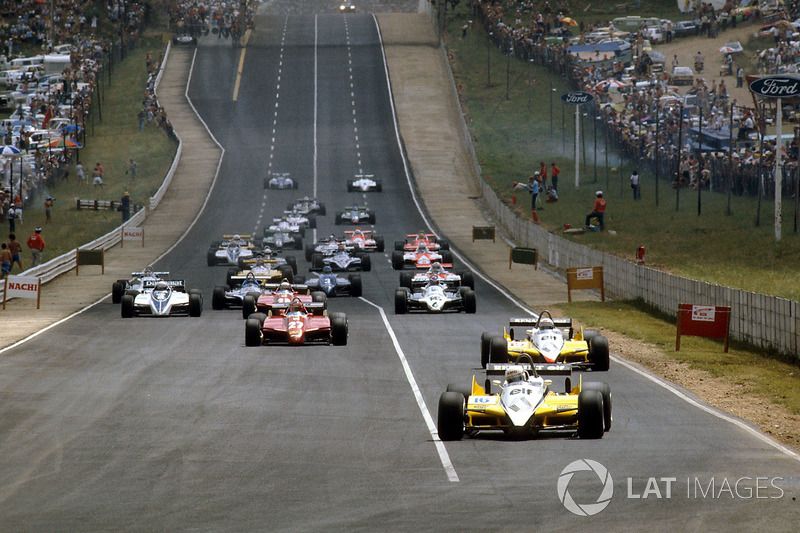
The original Kyalami demanded speed and bravery from drivers
Photo by: Motorsport Images
Races: 18 (+2 on later version)
It’s the early version of Kyalami, which first hosted a world championship GP in 1967, that makes it onto the list. The original 2.5-mile circuit was dauntingly fast in a way the 2.6-mile version used in 1992-93 was not.
Mansell’s 1985 pole position was set at an average speed of 147.2mph, compared to the 126.3mph of his 1992 benchmark.
Kyalami had its dark days. Peter Revson was killed during testing in 1974 and Tom Pryce’s fatal accident during the 1977 South African GP, after hitting a marshal, was one of F1’s worst moments. The GP was also struck from the calendar due to Apartheid during the 1980s.
But it also had its fair share of great moments: privateer John Love almost winning in 1967; Jackie Stewart charging through from 16th in 1973; Prost’s recovery from a lap down in 1982, after the infamous drivers’ strike.
While the current F1 calendar could do with a trim, it seems wrong that there is no race in all of Africa. F1 could do a lot worse than a return to high-altitude Kyalami, even if the old challenges of the high-speed approach to the Crowthorne right-hander and fast sweeps starting with Barbeque are no longer present.
7. Interlagos
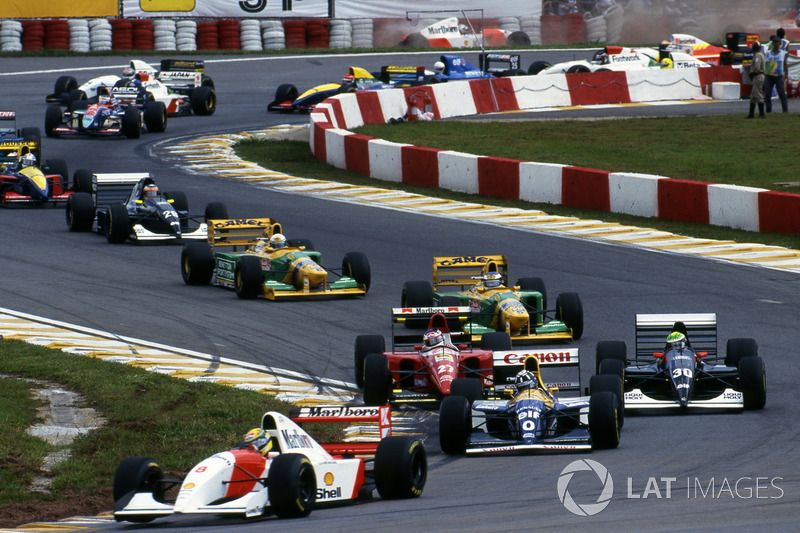
The Senna Esses at Interlagos are arguably the most iconic corners in F1
Photo by: Sutton Images
Races: 42
Unlike Kyalami, both of the main versions of Interlagos contribute to it getting onto this list. The original 4.9-mile layout, which first hosted a world championship GP in 1973, featured some high-speed sweeps, including the notorious first corner.
Fittipaldi (twice) and Carlos Pace were popular home winners in the first three editions, but Rio hosted the Brazilian GP for much of the 1980s. It wasn’t until the now familiar 2.7-mile version arrived on the calendar in 1990 that Interlagos established itself in the championship.
Ayrton Senna, who for years had been thwarted in his quest to win his home race, finally won the Brazilian GP in 1991 despite being stuck in gear, then did it again as rain hit in 1993.
Interlagos first hosted the season finale in 2004. The 2008 race, in which Hamilton denied Felipe Massa of the crown at the final corner, and Sebastian Vettel’s recovery drive to snatch the title in 2012 are standouts.
Though no longer the season-closer, Interlagos remains one of the most eagerly anticipated races on the calendar. It often produces great races, partly due to overtaking still being possible – as Hamilton proved with his brilliant charge to victory in 2021 – and partly due to the unpredictable weather, Max Verstappen starring in the rain in both 2016 and 2024.
6. Suzuka

Suzuka has hosted many dramatic moments over the years, both good and bad for F1, but it remains and iconic track
Photo by: Sutton Images
Races: 35
Suzuka was an instant classic when it arrived on the schedule in 1987, though the Honda-owned, John Hugenholtz-designed circuit had been around for 25 years by then.
The first event was the scene of Mansell’s season-ending crash in qualifying, Gerhard Berger’s first win for Ferrari and one of the great unsung recovery drives by Prost. And following races continued the theme.
Senna brilliantly secured his first world title after nearly stalling at the start in 1988 – the downhill start/finish straight coming to his rescue – and then there were the controversial Prost-Senna clashes that decided the championships in 1989 and 1990.
Mika Hakkinen clinched both his titles at Suzuka, while Michael Schumacher turned the tables on his McLaren rival in 2000 to end Ferrari’s long wait for another drivers’ crown. Raikkonen scored probably his greatest win in 2005, storming by Giancarlo Fisichella on the final lap after starting 17th.
While the high-speed 130R is less fearsome than it once was, the S curves at the start of the lap and the Degner sequence remain challenges.
The only real downside to Suzuka is that, as F1 cars have got bigger and the issue of dirty air has grown, overtaking has become very difficult. Max Verstappen’s victory at the 2025 Japanese GP was superb, based on a great qualifying lap, but he never really had to defend from the faster McLarens. Hopefully the new rules for 2026 will restore some of Suzuka’s value as a racing venue.
5. Monaco

It might not often produce exciting races, but Monaco has to feature on this list
Photo by: Motorsport Images
Races: 71
Yes, it’s a ridiculous place for an F1 race. And we don’t mean just this century – people were complaining about Monaco’s unsuitability for F1 machinery in the 1970s. By our reckoning, there hasn’t been a genuine pass for the lead between two healthy cars around the streets of Monte Carlo, aside from at starts, since Michele Alboreto overtook Prost in 1985…
And yet it has to be here. Aside from four years in the 1950s and the COVID-enforced hiatus in 2020, Monaco has been a part of the world championship from the start and has a grand prix history stretching back as far as 1929.
It’s also the one that all the drivers want to win because of the pure challenge of racing between the barriers for nearly two hours. As safe run-off areas have become more and more a feature of motorsport, the precision and constant concentration required at Monaco has been brought into even sharper focus. And qualifying at Monaco remains one of the highlights of the F1 season.
The greats often win here – Senna six times, Graham Hill five, Alain Prost four – but it can also be cruel. Jim Clark and Mansell dominated at times but never crossed the Monaco finish line first.
Monaco has produced many dull races but every now and again it’s the scene of the truly dramatic: the ridiculous finish of 1982, Senna crashing out in 1988, Olivier Panis winning from 14th on the grid for Ligier in 1996…
4. Monza
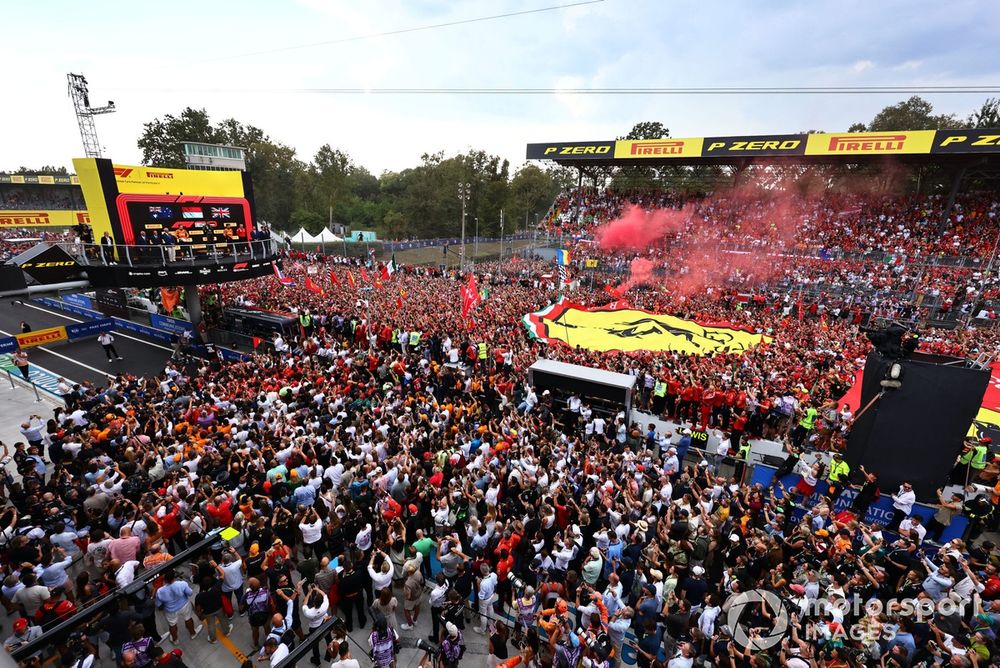
Monza has only been absent from the F1 calendar for one year back in 1980
Photo by: Steve Etherington / Motorsport Images
Races: 75
If it wasn’t for Imola hosting the 1980 Italian GP, Monza would have featured in every world championship season. It has a GP history from before the Second World War, having been opened in 1922, even had a banked (and bumpy) oval section at one point and has always been one of the calendar’s fastest venues.
Prior to the arrival of chicanes in 1972, Monza featured slipstreaming battles and close finishes, particularly in 1967, 1969 and 1971. Just 0.61s covered the top five in the last of those years and Peter Gethin’s winning average speed of 150.8mph stood as a championship record for more than three decades.
Although the racing hasn’t been quite so dramatic since the arrival of chicanes, the home of the tifosi and Ferrari has remained fast, its long straights making it increasingly unusual as the calendar has evolved. Verstappen’s 2025 qualifying effort at 164.5mph is the fastest pole in F1 history and the Red Bull ace followed it up the next day by setting a new race average-speed benchmark at 155.8mph.
Monza has had more than its fair share of tragedy. Wolfgang von Trips and 15 spectators were killed in F1’s worst accident in 1961, Rindt perished in a qualifying crash in 1970, and Ronnie Peterson died after a multi-car start incident in 1978. And that’s before mentioning the three driver deaths that occurred on the same day at the 1933 Monza GP.
But it’s also had many magic moments: Clark recovering from a lap down in 1967; Stewart securing his third world title in 1973; Mario Andretti’s pole for Ferrari in 1982; Berger leading a Ferrari 1-2 mere weeks after Enzo Ferrari’s death in 1988; Hamilton defeating the Ferraris in 2018; Charles Leclerc snatching victory away from McLaren in 2024, the list goes on…
Every F1 season should have an Italian GP – and it just wouldn’t seem right heading anywhere other than Monza.
3. Silverstone

As history remembers, the F1 world championship started at Silverstone in 1950
Photo by: BRDC
Races: 60
The world championship started at Silverstone, it once topped even Monza as the fastest circuit on the calendar and, if you were to include non-championship events, it’s probably hosted more F1 races than any other venue.
Like all great circuits, it has been the scene of many famous moments. The duel between Stewart and Rindt in 1969, Mansell’s dummy on Williams team-mate Nelson Piquet in 1987, ‘Mansell Mania’ a few years later and Hamilton’s wet-weather masterclass in 2008 to name but a few.
But it’s not just about the history of the place. Although it has changed significantly over the years, particularly in 1991 and 2010, Silverstone remains a true driver challenge, with the Maggotts/Becketts complex a particular highlight. It is also invariably at the top of the list when it comes to fan feedback.
A fractious relationship with F1 tsar Bernie Ecclestone once threatened to move the British GP elsewhere, but Silverstone is now in a much stronger financial position and underlined its importance by hosting two races, back-to-back, in the COVID-hit 2020 season.
2. Spa

Few modern tracks can test teams and drivers as much as Spa
Photo by: Michael Potts / Motorsport Images
Races: 58
Spa often comes up when drivers are asked to name their favourite circuits. The high-speed sweeps through the picturesque Ardennes are rewarding, and allow modern F1 cars to really strut their stuff.
Unlike some circuits on the list, both the main versions contribute to getting the Belgian GP venue towards the top of our ranking. The 8.8-mile layout – used 18 times between 1950 and 1970, and with a history dating back to 1922 – was intimidating and very fast.
Clark hated it, perhaps unsurprising given the deaths of Chris Bristow and Alan Stacey in 1960, and yet won there four times, including one of the great wet-weather performances in 1963.
Even in 1970, when Pedro Rodriguez’s BRM won at an average speed of 150mph, many regarded it as unsafe and F1 did not return to Spa until 1983.
When it did, the circuit was ‘only’ 4.3 miles but much of the challenge and majesty remained. So did the sequence of great moments, including Schumacher’s victory from 16th on the grid in 1995, his domination in the rain two years later, Hakkinen’s three-wide overtake in 2000, and Button’s sublime success in 2012.
The nature of the flowing circuit – and the fickle weather – has tended to reward the sport’s best. The most successful drivers at Spa are Schumacher (six wins), Senna and Hamilton (both on five)…
1. Nurburgring Nordschleife
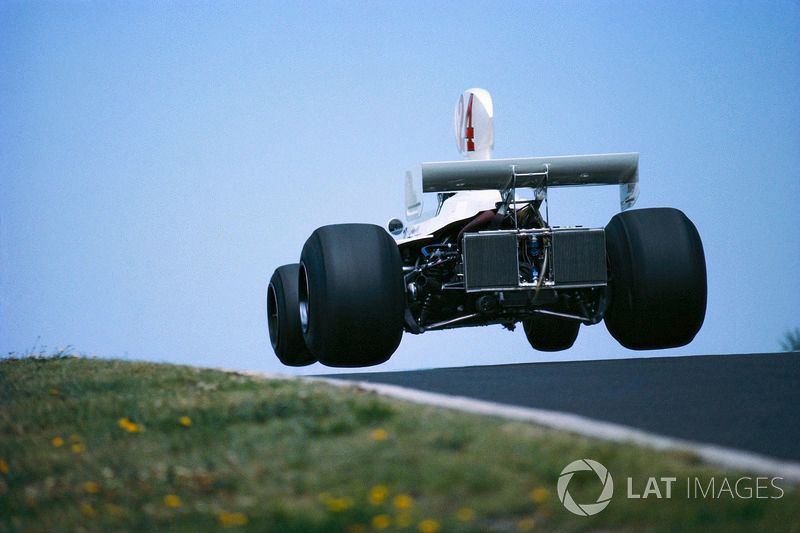
Hunt jumps over of the many climbs on the 14.2-mile track
Photo by: Rainer W. Schlegelmilch / Motorsport Images
Races: 22
It takes something special to top the fantastic and long-standing venues still on F1’s calendar and the greatest race circuit in the world is surely that. Though not used by F1 since the tumultuous 1976 event, Nurburgring’s Nordschleife stands apart in terms of sheer driving challenge.
Built in the 1920s, the track hosted some epic races long before the F1 world championship began. Tazio Nuvolari’s defeat of the German wondercars in his Alfa Romeo in 1935 remains one of motorsport’s greatest drives, while Bernd Rosemeyer signalled his arrival with star performances in the 1935 and 1936 Eifelrennens.
Very few drivers could master the undulating and narrow 14.2-mile course and the true greats starred there, surely the sign of a circuit worthy of the pinnacle of the sport. Juan Manuel Fangio took his greatest victory there in 1957, Stirling Moss defeated the faster Ferraris in 1961 and Stewart’s legendary drive in the appalling rain of 1968 is one of the best wet-weather performances in history.
Changeable weather made the track all the more challenging – and dangerous. Even by 1960s standards, it was regarded as perilous and that didn’t change despite various improvements, including flattening bumps and installing barriers while the German GP headed to Hockenheim for a ‘one-off’ in 1970.
The Nurburgring had already claimed promising Argentinian Onofre Marimon (in 1954), Peter Collins (1958), Carel Godin de Beaufort (1964), John Taylor (1966) and Gerhard Mitter (1969) when Lauda – the only F1 driver to ever lap the track in under seven minutes – suggested it was no longer a suitable F1 venue in 1976. The fiery crash in that year’s German GP that almost killed him marked the end of the track’s time in F1, though the Nordschleife continues to host GT and historic events.
We’re not even including the new Nurburgring GP circuit, which hosted 19 world championship races, including the epic 1999 European GP. The ‘Green Hell’ takes top spot all on its own.
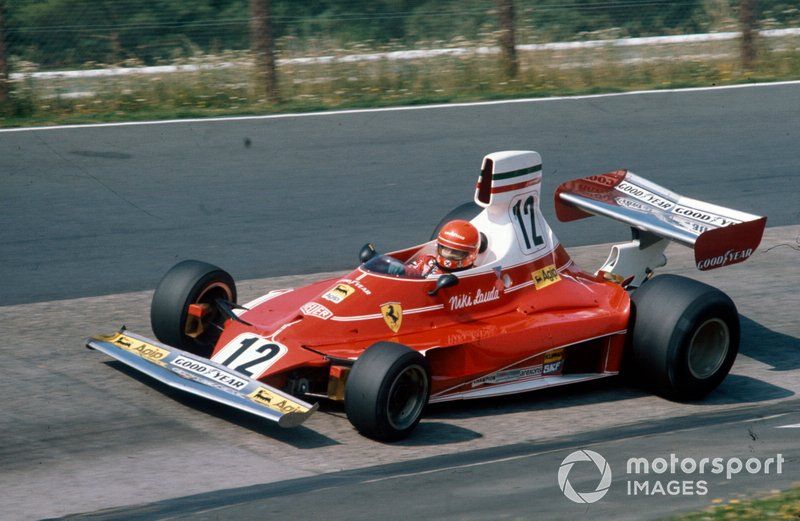
Despite being too dangerous for F1, the Nurburgring’s Nordschleife still holds a special place in the history of grand prix racing
Photo by: Motorsport Images
We want to hear from you!
Let us know what you would like to see from us in the future.
– The Autosport.com Team
