
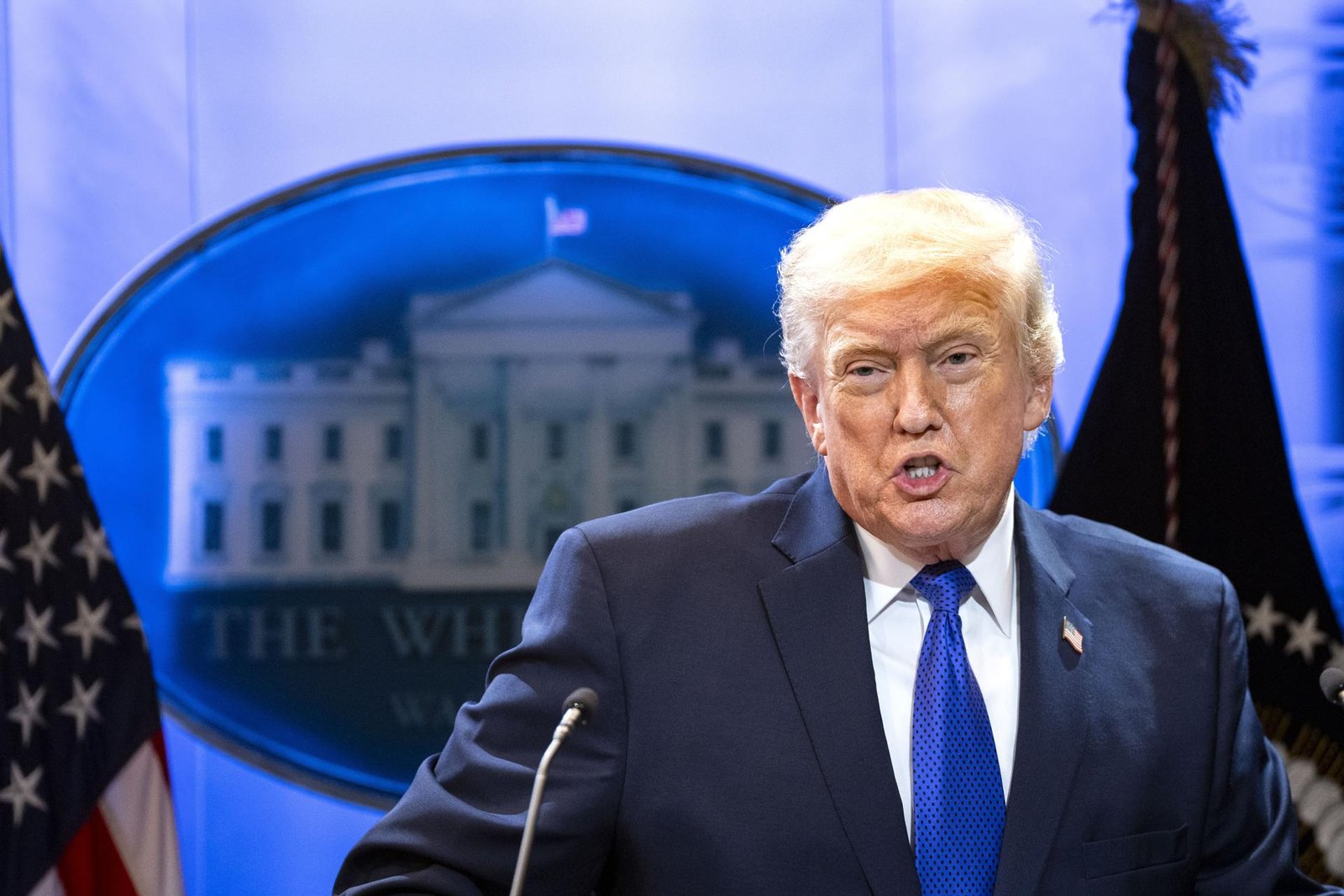
Following the Supreme Court decision that prevented the use of the International Emergency Economic Powers Act (IEEPA) to impose tariffs, the President of the United States, Donald Trump, announced this afternoon that he will resort to other legal norms to maintain his policy of taxing imports.
The White House intends to primarily use Section 122 of the Trade Act of 1974, in addition to previously used Sections 232 and 301. Trump stated at a press conference that he will sign a decree with a global tariff of 10%. According to information from the The New York Timesthis order will be based on Section 122. The rule allows the president to impose temporary surcharges to deal with “large and serious” deficits. The measure can be in force for up to 150 days and, to be extended, it depends on Congressional approval. According to experts cited by Timesthe standard has never been used before, which means that there are no judicial precedents that define its scope.
Section 122 was created during a period of economic uncertainty in the US in the 1970s and authorizes temporary restrictions – such as tariffs or quotas – of up to 15%. Unlike other commercial tools, it does not require prior investigation, allowing for faster Executive action.
Another alternative mentioned by Trump is Section 232 of the Trade Expansion Act of 1962. This instrument authorizes tariffs based on national security arguments, after an investigation conducted by the Department of Commerce. This mechanism is already being used by the White House to support current tariffs on steel, aluminum and other products. Under American law, the Secretary of Commerce has up to 270 days to present conclusions to the president on advances and agreements in the area.
In addition, Trump indicated that he may resort to Section 301 of the 1974 Trade Act. This rule allows investigations into trade practices considered unfair. If a violation or unfair treatment is found, the government can impose specific tariffs against a specific country. This is the basis used for the tariffs applied to China. Brazil is also being investigated under Section 301.
The portal Axios found that the White House may also use Section 338 of the Tariff Act of 1930, which authorizes measures against countries that discriminate against United States trade, although this tool was not detailed by the president in his announcement.
Experts consulted by New York Times state that none of these alternatives offers the same flexibility and speed as IEEPA.
