
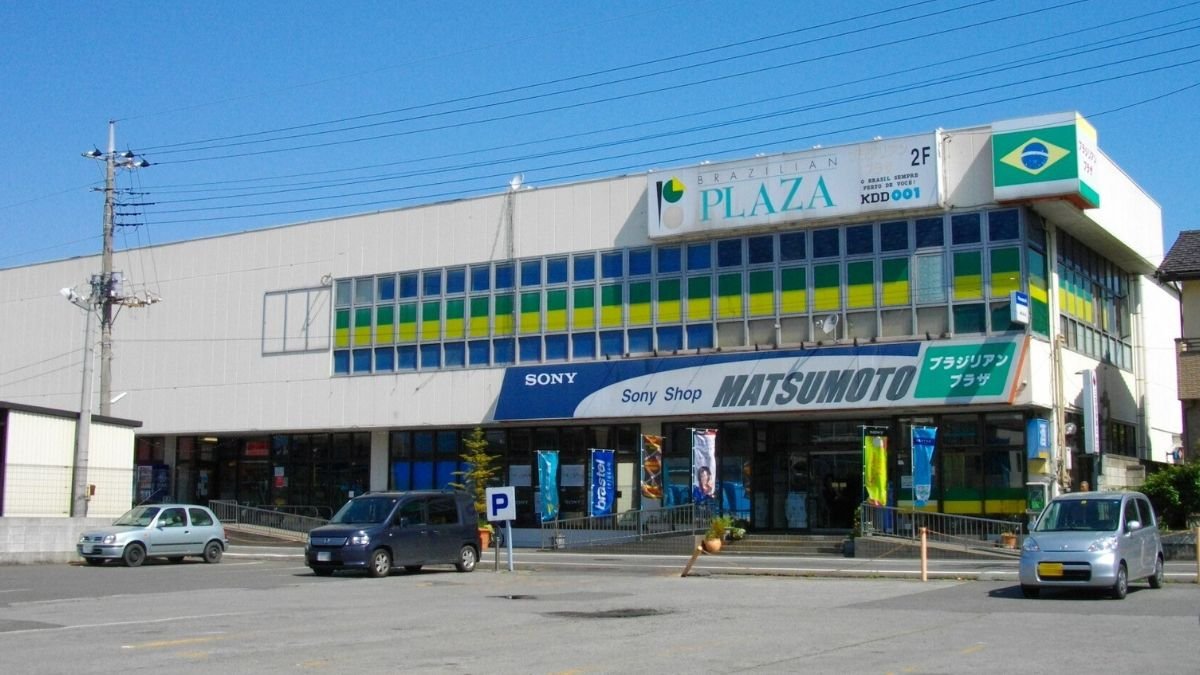
Amid the organized urban landscape and disciplined daily life of Japan, a small town in Gunma Prefecture draws attention for an unusual detail: Portuguese is heard on the streets, signs display words in two languages and yellow-green appears on the facades of markets and restaurants.
Oizumi, located about 100 kilometers from Tokyo, is considered the main “Brazilian city” in Japan and became one of the most emblematic examples of presence and Brazilianness in the country.
With just over 40 thousand inhabitants, the municipality is home to one of the highest proportions of Brazilians living in Japan, reaching around 20% of the local population, according to data released by local authorities in 2024.
How did the Brazilian presence grow in Oizumi?
The strong presence of Brazilians in the city is directly linked to the migratory movement started in the late 1980s and intensified in the 1990s. With the opening of the Japanese job market to descendants of Japanese born abroad, thousands of Brazilians – many of them children and grandchildren of Japanese immigrants – went to the country in search of opportunities in industries.
Oizumi, located in a strategic industrial region, began to attract this flow of workers. The concentration of jobs and the continuous arrival of Brazilian families have consolidated a stable community, with well-defined social, economic and cultural ties.
The history between Japan and Brazil is marked by back and forth movements. If at the beginning of the 20th century the Japanese came to Brazil, decades later their descendants did the opposite. The Brazilian city in Japan stands out in this context for having welcomed a large community in a relatively small urban space, which enhanced the visibility of Brazilian culture in the city’s daily life.
What the days are like in Oizumi, the “Brazilian” Japanese city
Estimates point to thousands of Brazilian immigrants living in Oizumi, in the Gunma region. This presence is reflected in a practical way: the city hall offers assistance with translators, there are adapted public services, community radios in Portuguese and bilingual signs in areas of high circulation.
Brazilian culture in Oizumi is present in commerce, gastronomy and social life. Supermarkets sell typical products, restaurants serve Brazilian dishes, and establishments such as bars, salons and studios aimed at the Brazilian public are part of the urban landscape. Portuguese is often heard more than Japanese in certain neighborhoods, reinforcing local identity.
Daily coexistence reveals a multicultural experience marked by integration and challenges. Brazilian and Japanese children share schools and parks, while adults reconcile Brazilian traditions with Japanese rules and customs. This constant exchange transformed the place into an example of a Brazilian community abroad that managed to put down roots without losing its identity.
Typical festivals, cultural events, sports championships and community meetings are part of the local calendar. These celebrations help preserve traditions and reinforce the feeling of belonging among Brazilians living in the city, in addition to arousing the curiosity of Japanese visitors.
What tourists can expect when visiting the region
For those who visit, Oizumi offers a unique experience: it is not a traditional tourist destination, but a living portrait of contemporary and globalization.
The association itself Local tourism started promoting the city as the “Brazilian City of Japan”attracting thousands of visitors interested in learning about this cultural phenomenon. Oizumi shows how migratory flows shape cities and create new identities.
More than a cultural enclave, the city symbolizes adaptation and coexistence between different peoples, revealing how Brazilianness in Japan manifests itself in a concrete way in everyday life. For those interested in migratory history, cultural exchange or off-the-beaten-track destinations, Oizumi is a lively and surprising chapter in this global trajectory.
SEE ALSO:
-
The paradox of the city that has the highest GDP per capita in Brazil and residents do not see the wealth
