
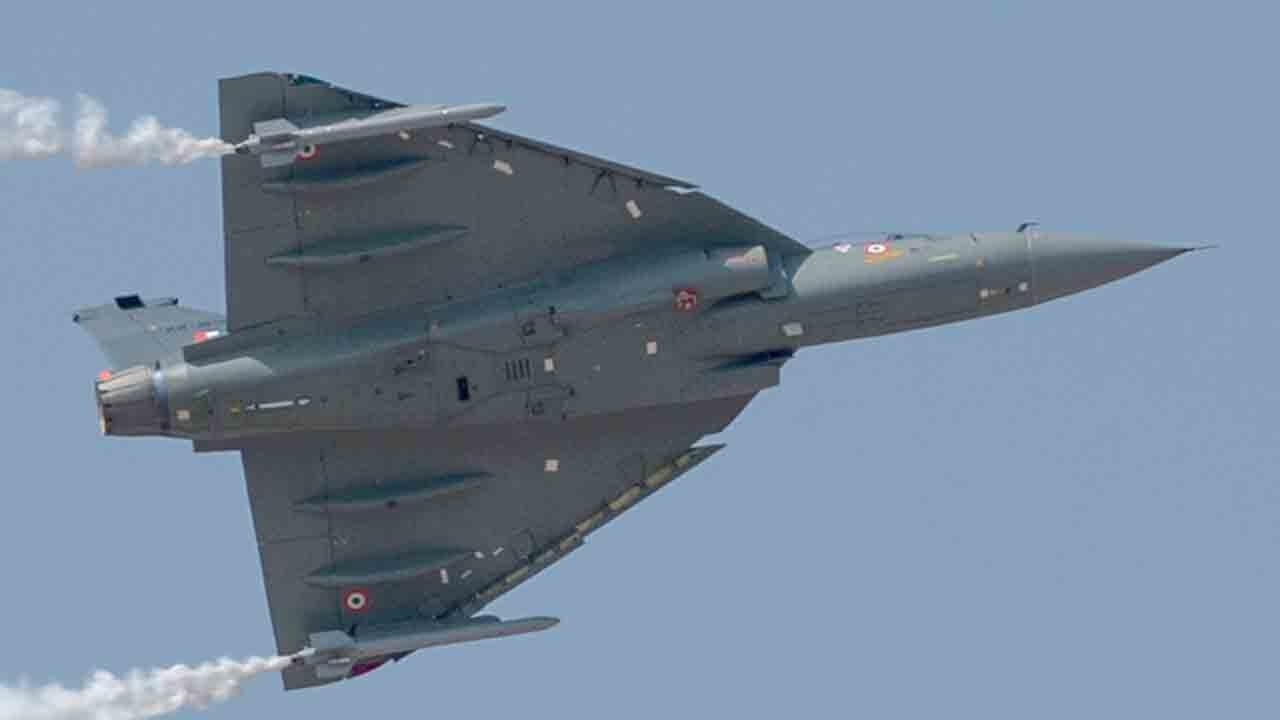
A Tejas light fighter crashed in early February 2026 during a landing after a training flight at an Indian Air Force base.
The information was published by The Economic Timeswhich cited its own sources linked to the defense sector.
The pilot managed to eject successfully and did not suffer serious injuries. According to preliminary reports, the aircraft suffered significant structural damage and will likely be decommissioned.
The Air Force has already begun formal investigations and fleet-wide inspections.
Currently, India operates around 32 units of the version Tejas Mk-1. The accident involves a single-seater configuration of the LCA (Light Combat Aircraft).
The episode marks the third recorded loss within a relatively small fleet, increasing pressure on the program.
Recent incident history

The new accident adds to two other relevant episodes:
On March 12, 2024, a Tejas crashed near Jaisalmer during a training flight; the pilot also ejected successfully.
On November 21, 2025, during a demonstration at the Dubai Air Show, a Tejas crashed after entering an uncontrolled dive at low altitude. The accident was fatal for the pilot and sparked international questions about the reliability of the platform.
The disaster in Dubai, in particular, directly impacted the aircraft’s export image.
Report points out structural flaws
Audit by the Comptroller and Auditor of India (CAG) identified 53 significant flaws in the Mark-I version that directly affect operational capability. Among the main points:
- Excess weight and limited thrust, reducing speed and maneuverability.
- Insufficient protection of the cabin and fuel system.
- Internal limitations that prevented the complete installation of self-defense systems.
- Actual component nationalization rate estimated at around 35%, below the 70% initially announced.
- External dependence deepens vulnerabilities
The heavy dependence on foreign components is another sensitive factor. After the end of the development of the national Kaveri engine, the program began to depend on the F404 and F414 engines from General Electric.
Between 2024 and 2025, delays in supply chains in the United States delayed the delivery of F404 engines for more than two years, directly impacting the production schedule.
In 2025, the HAL decided to equip 83 Mk1A aircraft with the Israeli EL/M-2052 radar from Israel Aerospace Industries (IAI), replacing the Indian Uttam radar. The decision generated new challenges:
Control of the source code remains under Israeli control.
Integration problems with the Indian Astra Mk1 missile.
Test carried out in March 2025 failed due to data synchronization failure between radar and weapons.
Strategic program under scrutiny
Tejas is a centerpiece of India’s strategy of modernization and industrial autonomy in the aerospace sector. However, recent incidents, production delays and technical difficulties have reignited the debate on technological maturity, industrial management and external dependence.
The investigation into the most recent accident must determine whether there was an operational failure, human error or systemic problem — a conclusion that could directly influence the pace of production and international confidence in the program.
Source and images: economictimes | Wikimedia. This content was created with the help of AI and reviewed by the editorial team.
