
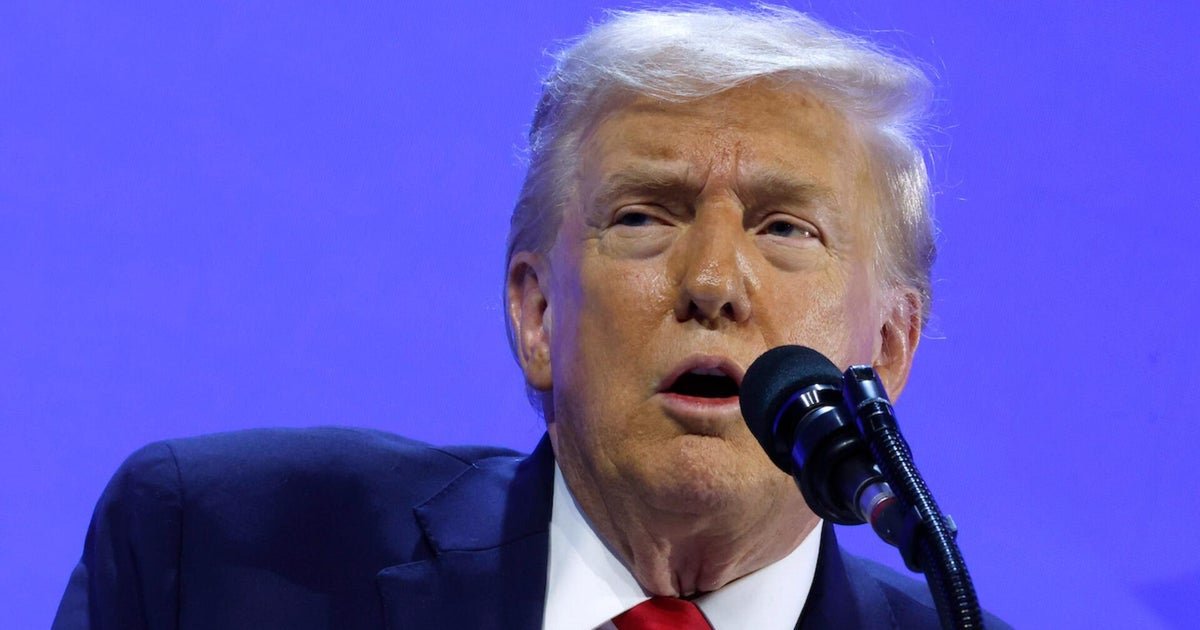
Business owners said that a Supreme Court ruling on Friday striking down sweeping U.S. tariffs could spell relief by lowering their costs and potentially leading to refunds.
The high court ruled that President Trump does not have the authority to impose levies on imports under the International Emergency Economic Powers Act, or IEEPA. Mr. Trump last year invoked the 1977 law to impose tariffs on dozens of U.S. trade partners, claiming that trade deficits and the flow of fentanyl and other illegal drugs into the U.S. constitute national emergencies.
Beth Benike, co-founder of Busy Baby, which makes mealtime accessories for babies, said that uncertainty about the legal status of the IEEPA tariffs had forced her to halt all imports from China, where the Minnesota-based company’s products are made. She also has inventory in China that her manufacturer is holding for her overseas.
“I should have had it shipped last month, but I was waiting for the Supreme Court decision, because it was the difference between paying an extra $48,000 [in tariffs] or not,” she told CBS News before the Supreme Court issued its long-awaited decision on Friday.
A recent analysis from the Federal Reserve Bank of New York found that U.S. businesses and consumers bore the brunt of Mr. Trump’s tariffs in 2025, paying for nearly 90% of the levies. The Trump administration disputes the analysis.
Billions in potential refunds
Scott Lincicome, vice president of general economics at the Cato Institute, a nonpartisan think tank, said the Supreme Court ruling against Mr. Trump’s tariffs nullifies “the biggest and baddest of Trump’s 2025 tariffs and almost certainly requires the refund of duties already collected.”
The Treasury Department collected $287 billion in tariffs in 2025, up 192% from the previous year, according to the Federal Reserve Bank of Richmond. As of mid‑December, roughly $130 billion had been collected in IEEPA tariffs, although total refunds for businesses could approach $150 billion, according to economists with PNC Financial Services Group.
“I am expecting a full refund, but if for some reason we don’t get them, I would have to raise my prices, which will be tough for consumers,” Benike said. “People buying baby products are already buying new stuff they didn’t have to buy before they had the baby, so they are already squeezed.”
The average tariff rate on all imports is around 17%, including levies Mr. Trump imposed under IEEPA, according to the nonpartisan Tax Policy Center.
Rachel Rozner, owner of Elden Street Tea Shop in Reston, Virginia, said ahead of the decision that a Supreme Court ruling striking down the IEEPA tariffs could make an “astronomical” difference for her business. Most of the tea and other products she sells come from China, India, Japan and Nepal.
“If I can just order and get the product, and I know the price is good, that will take away a lot of stress,” she told CBS News.
Although her business could be eligible for a tariff refund following the ruling, she isn’t confident she’ll be reimbursed.
“What if they run out of money before you’re able to get your refund?” she said. “I’m worried that some people might get refunds and others will not, and that people will take advantage of the system.”
Meanwhile, some experts think the U.S. may not fully refund IEEPA tariff revenue.
“[W]e think it’s reasonable to assume a few months would pass before refunds begin, and even longer if the distribution faces significant legal challenges,” Morgan Stanley analysts said in a report.
Other tariffs to fill the void?
The Trump administration has said it can deploy other import duties to replace the IEEPA tariffs. Last month, White House economic adviser Kevin Hassett told Fox Business that the administration had a plan to re-implement tariffs under different powers, to prepare for a potential ruling against the Trump administration’s reliance on IEEPA to impose sweeping tariffs on the U.S.’s trade partners.
“We think that we’re on very strong footing, but we’ve got a backup plan and a backup plan for the backup plan, and we believe that we could put the tariffs that we have under alternative authorities like 301, back into place almost immediately should the supreme court rule against us,” Hassett said, referring to Section 301 of the Trade Act of 1974.
Section 301 allows the U.S. president to apply country-based tariffs at his or her discretion if the U.S. Trade Representative determines that another country is engaging in unfair foreign trade practices.
Yet Section 301 tariffs bear restrictions and can’t be applied to all foreign imports, according to trade experts. And replacing IEEPA tariffs with substitute levies could also take many months, according to Morgan Stanley analysts.
The Trump administration could also turn to Section 232 of the Trade Expansion Act of 1962, which allows the president to impose duties on trade partners to protect national security, based on an investigation from the Department of Commerce.
