
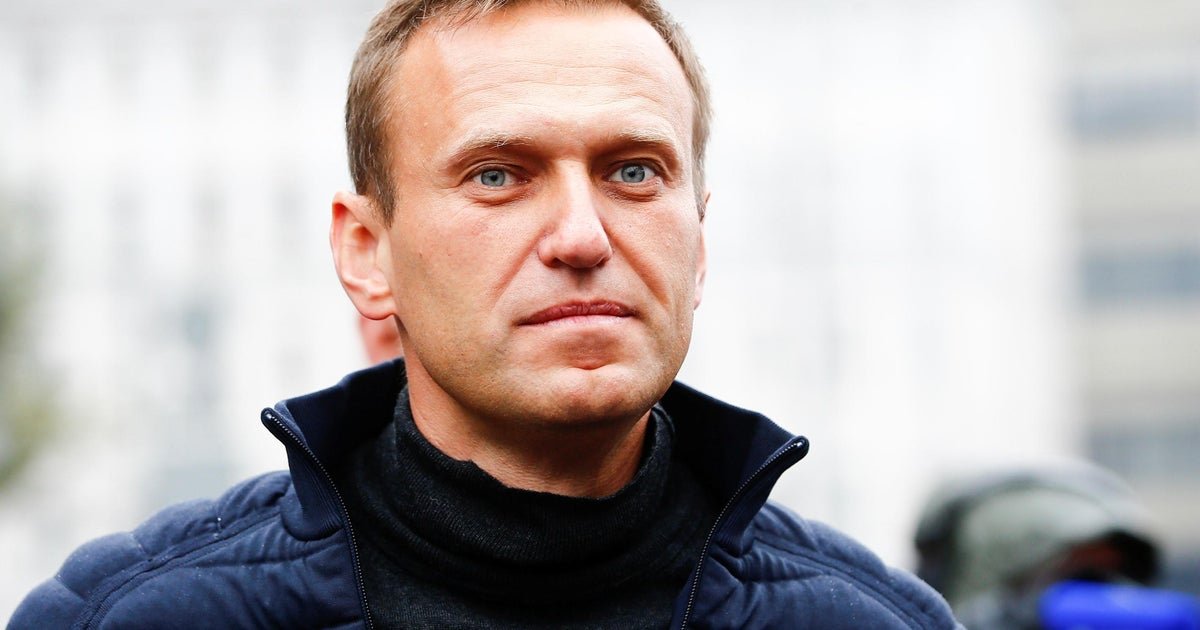
An analysis of samples from deceased Russian opposition leader Alexei Navalny shows he was likely fatally poisoned in a Russian prison, according to multiple European governments.
In a joint statement, the leaders of the United Kingdom, France, Germany, Sweden and the Netherlands said they are confident Navalny was poisoned. Samples from Navalny “conclusively confirmed the presence of epibatidine,” a toxin found in poison dart frogs in South America, according to the statement.
“Russia claimed that Navalny died of natural causes,” the countries said. “But given the toxicity of epibatidine and reported symptoms, poisoning was highly likely the cause of his death. Navalny died while held in prison, meaning Russia had the means, motive and opportunity to administer this poison to him.”
British Foreign Secretary Yvette Cooper said in a statement that “Russia saw Navalny as a threat” and poisoned him as a show of strength.
“By using this form of poison, the Russian state demonstrated the despicable tools it has at its disposal and the overwhelming fear it has of political opposition,” Cooper said.
The United Kingdom’s foreign office said that “only the Russian state had the means, motive and opportunity to deploy this lethal toxin to target Navalny” and that they “hold it responsible for his death.”
Navalny’s widow, Yulia Navalnaya, said on the sidelines of the Munich Security Conference in Germany that her husband’s death was now a “science-proven fact,” according to the AFP.
Kay Nietfeld/dpa via AP
“Two years ago, I came on stage here and said that it was Vladimir Putin who killed my husband,” said Navalnaya, who said in September that independent labs found her husband was poisoned shortly before his death but did not provide proof for the claim or elaborate on what the alleged poison was. At the time, she said the labs were not publishing their results due to “political considerations.”
“I was of course certain that it was a murder,” Navalnaya continued, the AFP reported. “Back then, it was just words. But today these words have become science-proven facts.”
Navalny was the loudest critic of Russian President Vladimir Putin. He crusaded against official corruption and staged massive anti-Kremlin protests. He was poisoned with the Soviet-era nerve agent Novichok while flying from Moscow to Siberia in 2020 and treated in Germany. Navalny later told 60 Minutes’ Lesley Stahl that he believed the poisoning was an assassination attempt engineered by Putin. Russia has denied any involvement.
Navalny returned to Moscow in 2021, facing certain arrest. He was convicted three times and received a sentence of 19 years for extremism. Navalny called the charges politically motivated.
He was jailed in January 2021 and moved to an Arctic penal colony in late 2023. He died there in February 2024.
Sefa Karacan/Anadolu Agency via Getty Images 
Russian authorities gave few details on the cause of Navalny’s death. Navalnaya said in August 2024 that she was told by Russian investigators that Navalny died from a combination of “a dozen different diseases” and that he finally succumbed to arrhythmia, or an irregular heartbeat, after a walk. Navalnaya said her husband exhibited no instances of heart disease before he was imprisoned.
The European leaders accused Russia of having “repeated disregard for international law” and the Chemical Weapons Convention, a 1997 treaty that prohibits the development, production, stockpiling and use of chemical weapons. Russia has also been accused of using Novichok in a 2018 incident that led to the death of a British woman, Dawn Sturgess.
“We are further concerned that Russia did not destroy all of its chemical weapons,” the European leaders said. “We and our partners will make use of all policy levers at our disposal to continue to hold Russia to account.”
