
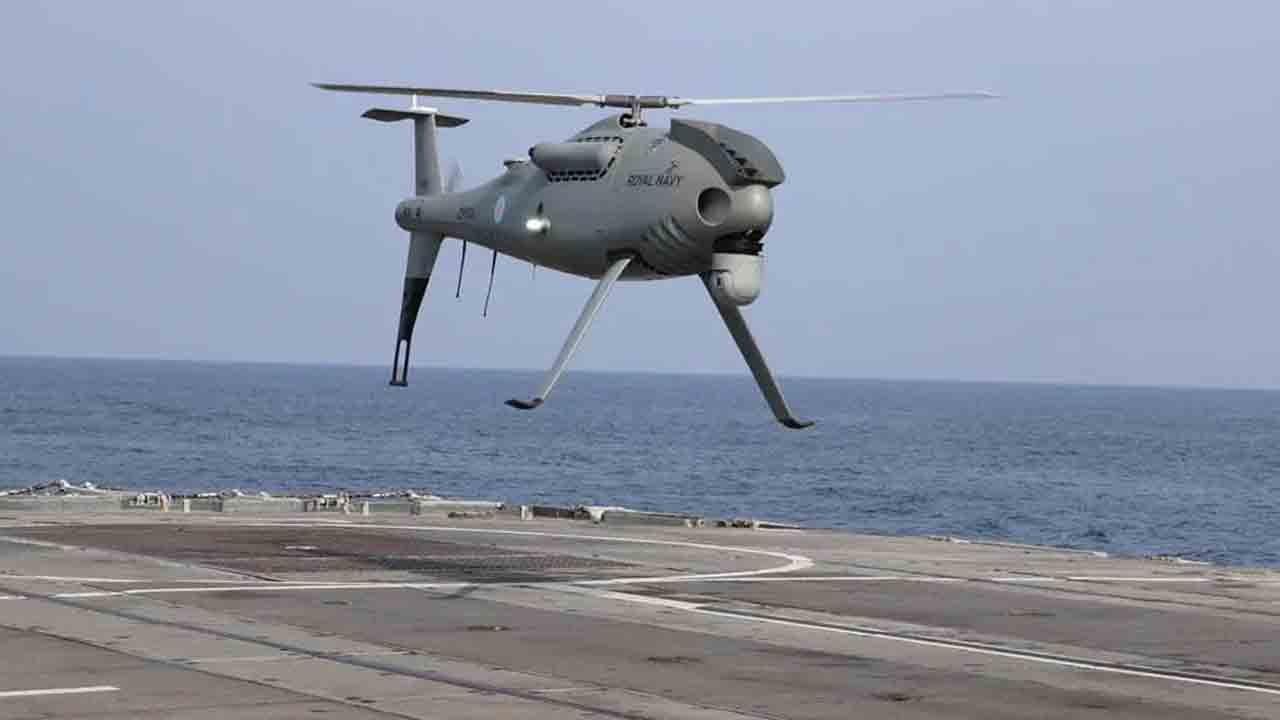
A Royal Navy the quick reflexes of one of its drone pilots prevented a £2.5 million aerial device from plunging into the sea during a mission in the Gulf of Oman.
Adrian „AJ” Hill Lieutenant Commander took manual control of the Peregrine drone moments before it hit the water and guided the aircraft safely to the flight deck of the frigate HMS Lancaster.
+ The US Navy is investing $22.6 million in new generation helmets
The intervention brought unprecedented recognition for Hill: he became the first drone operator to receive the Green Endorsement, the highest safety recognition awarded by the Fleet Air Arm and the British Royal Air Force.

The incident occurred at the end of an approximately two and a half hour patrol. The Peregrine, a reconnaissance drone about three meters long, was flying in autonomous mode at an altitude of about 18 meters directly behind the frigate when a computer malfunction occurred and the aerial device began to descend rapidly towards the sea.
“It went very low, a foot or two off the water. A quarter of a second later, it would have hit the water — and that would have been it,” said Hill, the flight commander of the 700X Naval Air Squadron. According to him, it took seconds to take over manual control, execute the appropriate sequence of commands and apply maximum power to regain altitude.
After stabilizing the drone, Hill manually landed it safely on the ship’s flight deck. “After reaching a safe height, I took a deep breath and executed a manual landing. With high adrenaline levels, it ended up being one of my best landings,” he added.

The maneuver was seen by only two squadron engineers who were watching the landing procedure, and they were also surprised by the sudden loss of altitude of the aircraft.
Peregrine is the name used by the Royal Navy for a militarized version of the S-100 Camcopter developed by the Austrian company Schiebel, equipped with additional sensors and systems for maritime missions. At the time of the incident, the drone was still in the operational testing phase aboard HMS Lancaster.
Hill officially from Commander Fleet Air Arm, Anthony Rimington received the recognition from rear admiral. The justification highlights that although the incident did not pose a direct threat to human life, it posed a serious risk to a high-value asset and the operational capabilities of the Navy.
According to the text, the officer showed “exceptional professional skills, keen observation and extremely quick reactions” in the critical situation.
Source and images: Royal Navy. This content is generated with the help of artificial intelligence and verified by the editors.
