
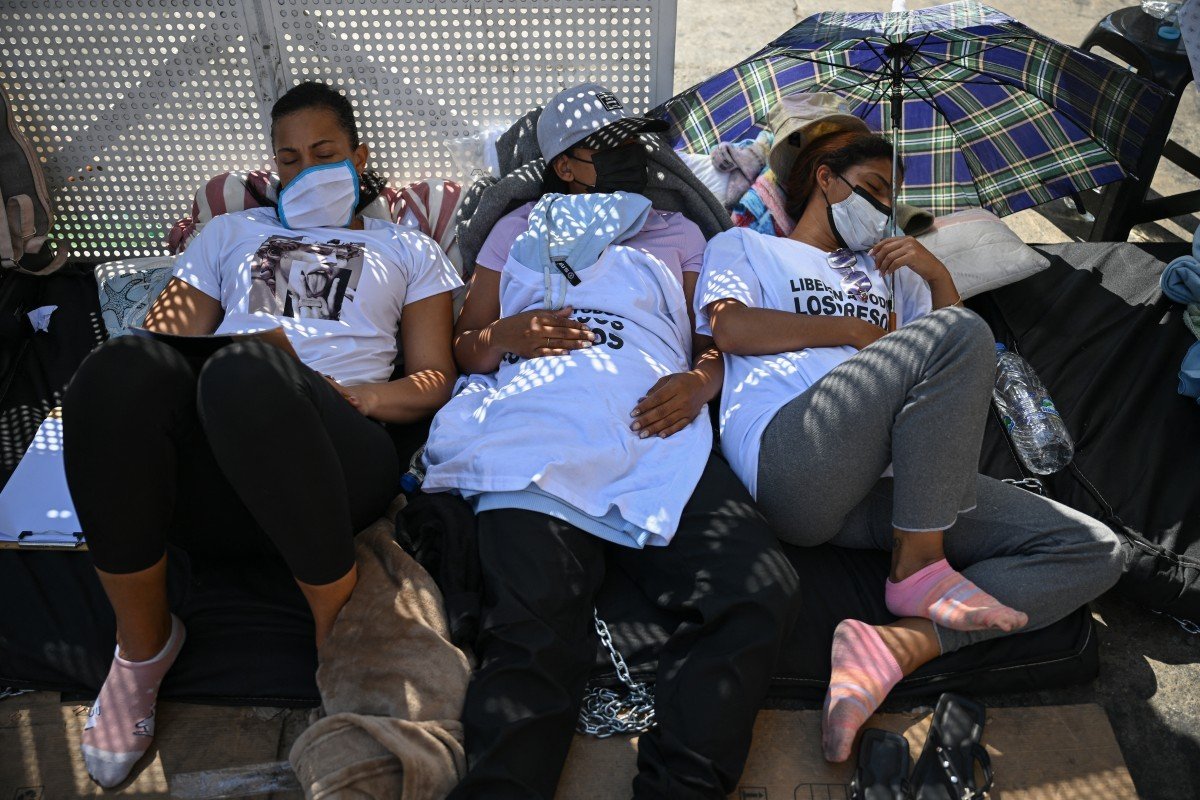
Relatives of a political prisoner lie on the ground during a protest in front of the prison. FEDERICO PARRA / AFP Family members of political prisoners began a hunger strike this Saturday (14) in Caracas to press for more releases, after the postponement of the approval of an amnesty law in the country. During the early hours of the morning, 17 political prisoners were released from the National Police cells known as Zone 7, in the capital of Venezuela. Wearing masks, around ten women lay in a line at the entrance to Zone 7, where family members have been camping for more than a month. Beside it, they left a handwritten list of the names of the strikers. They ask for speed in the release of their family members as part of a release process that interim president Delcy Rodríguez announced on January 8, under strong pressure from Washington. READ ALSO: Pope calls for ‘fasting’ from offensive words on social media and in politics during Lent See the videos that are trending on g1 Many were asleep at dawn, when they had scheduled the start of the protest. “Sleeping calms hunger”, said one of them, anonymously. “We demand that everyone’s release be achieved and real. It’s fair, it’s fair. We already have a lot of time for this,” Evelin Quiaro, 46, a migration service employee and mother of a political prisoner, told AFP. Quiaro ate for the last time after 1am: biscuits with ham. “We’re really not prepared, I’ve never done this in my life”, confessed Quiaro about the strike. His 30-year-old son has been detained since November 2025. He has been accused of terrorism, criminal association and terrorist financing. “The main and only meaning is that they finally give us concrete answers about the release of all the boys who are inside there, all of them”, explained Quiaro. Among those released overnight was José Elías Torres, secretary general of the Confederation of Venezuelan Workers (CTV), who had been imprisoned since November without a court order, reported the Committee for the Freedom of Political Prisoners on network The final discussion for its approval was postponed twice. In theory, it will cover the 27 years of Chavismo and it is expected that this legislation will result in the full freedom of hundreds of detainees. According to the NGO Foro Penal, since January 8, 431 political prisoners have been released on parole and 644 remain in prison. “What we are asking for with this is that everyone be released, as we were promised,” said another striker, Sachare Torrez, 23. The President of Parliament himself, Jorge Rodríguez, was in the vicinity of these cells in Caracas on February 6th. “We will repair all the mistakes that have been made”, promised Rodríguez during a meeting with family members of those detained for political reasons in Zone 7, and added that the amnesty law would be approved by the National Assembly on February 10. However, approval was postponed until next week due to disagreements between deputies about its scope and the role of the Judiciary in its application. Shortly afterwards, several family members of political prisoners chained themselves to each other in front of the entrance to the Zone 7 prison. This Saturday, they chose to increase the pressure with a hunger strike. “With this it is obvious that we will exhaust ourselves much more (…) but it is already a drastic measure that we consider necessary to put an end to all this”, said Quiaro, lying down with an umbrella to protect herself from the intense heat. The next legislative session is scheduled for February 19.
Source link
Relatives of political prisoners begin hunger strike in Venezuela
23
