
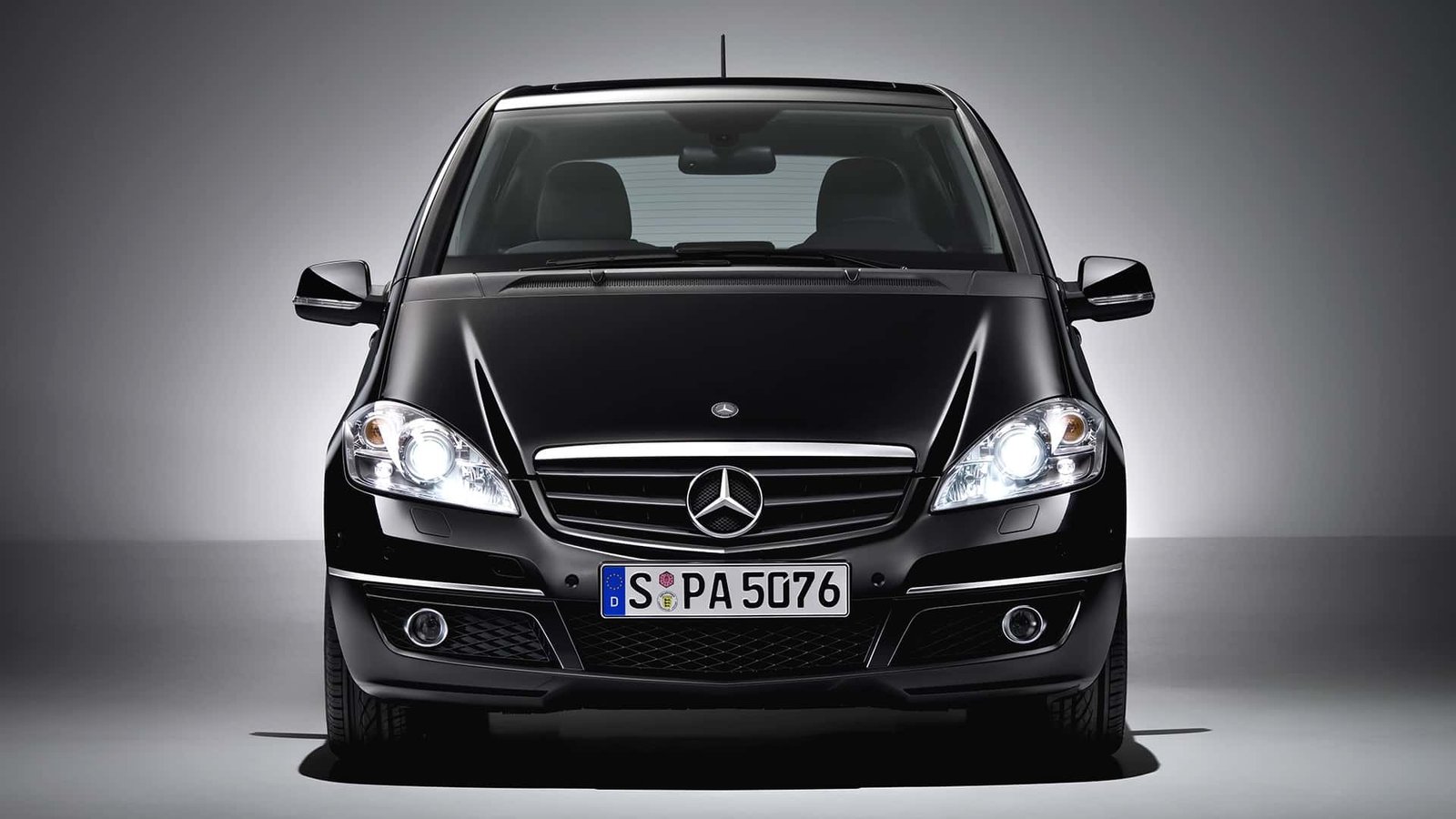
- Mercedes is working on an A-Class successor, but it won’t be another hatchback.
- The new model will also replace the B-Class by blending minivan and SUV cues.
- It will have a European focus and launch in 2028.
Mercedes pulled the plug on the A-Class in the United States years ago, but the entry-level model remains on sale in Europe and other markets. The hatchback has had its life cycle extended and will continue until 2028, at which point it will be a decade old. It’s an unusually long run that wasn’t part of the original plan, as the smallest car to wear the three-pointed star was supposed to retire this year.
Due to popular demand, the A-Class will soldier on for a few more years, with production moving in the second quarter of 2026 from the Rastatt plant in Germany to the Kecskemet factory in Hungary. Extending the life cycle gives Mercedes more time to work on a replacement, which won’t be another hatchback or sedan. Instead, it will blend cues from two distinct body styles: a minivan and an SUV.
The newcomer will also serve as an indirect successor to the B-Class minivan, which bows out later this year. German business newspaper Automobile Week cites Mercedes Chief Technology Officer Jörg Burzer as saying the future compact car “will be an incredibly attractive vehicle; we have to make it.” He added some intrigue by claiming that “it will be unlike anything we’ve seen before.”
Mercedes A-Class (W169)
” width=”16″ height=”9″ loading=”lazy”/>
Photo by: Mercedes-Benz
Automobile Week reports, citing sources close to Mercedes, that the company’s most affordable model will indeed borrow traits from SUVs and minivans. We’re curious to see what comes out of putting the B-Class and GLA into a blender, but the German luxury brand is no stranger to experimentation.
Remember the Vision Mercedes-Maybach Ultimate Luxury? It was a half-sedan, half-SUV contraption billed as a Sport Utility Sedan (SUS); a fitting acronym, if we may add, since it did look rather suspicious. It was supposed to go on sale in China and possibly other markets by 2025, but the project was ultimately shelved.
<img src="https://cdn.motor1.com/images/static/16×9-tr.png" alt="
Mercedes A-Class (W169)
” width=”16″ height=”9″ loading=”lazy”/>
Photo by: Mercedes-Benz
The new SUV/minivan hybrid is definitely happening, and it’s being developed with European customers in mind. It will ride on the MMA platform that already underpins the new CLA and CLA Shooting Brake. Expect a mix of combustion engines and electric drivetrains to satisfy both ICE and EV buyers, albeit with some packaging compromises on either side.
Mercedes is likely to build the unnamed model in Hungary, especially as the A-Class is about to lose its “Made in Germany” label. The company’s CTO told Automobile Week that the new compact vehicle will target affluent younger buyers in Europe. Pricing remains a mystery, but it’s reasonable to assume it will cost more than the A-Class, which starts at nearly €35,000 in its home market. In Germany, a base CLA with a gas engine kicks off at almost €44,000, so something in that ballpark.
<img src="https://cdn.motor1.com/images/static/16×9-tr.png" alt="
Mercedes A-Class (W177)
” width=”16″ height=”9″ loading=”lazy”/>
<img src="https://cdn.motor1.com/images/static/16×9-tr.png" alt="
Mercedes A-Class (W177)
” width=”16″ height=”9″ loading=”lazy”/>
Motor1’s Take: Mercedes may be a luxury brand, but it understands that volume still matters when it comes to maintaining a healthy balance sheet. Developing another entry-level model while leveraging an existing platform should keep the bean counters satisfied. The shift from a traditional hatchback to a new, unconventional shape is somewhat unexpected, and it remains to be seen whether buyers will embrace it.
Combining a minivan with an SUV should translate into a spacious interior, but we’re still scratching our heads over how Mercedes plans to execute this concept. As long as it’s not just another conventional crossover, we’re on board. Hopefully, it will feel like a true Mercedes rather than a rehashed Smart.
Source:
Automobilwoche (subscription required)
