
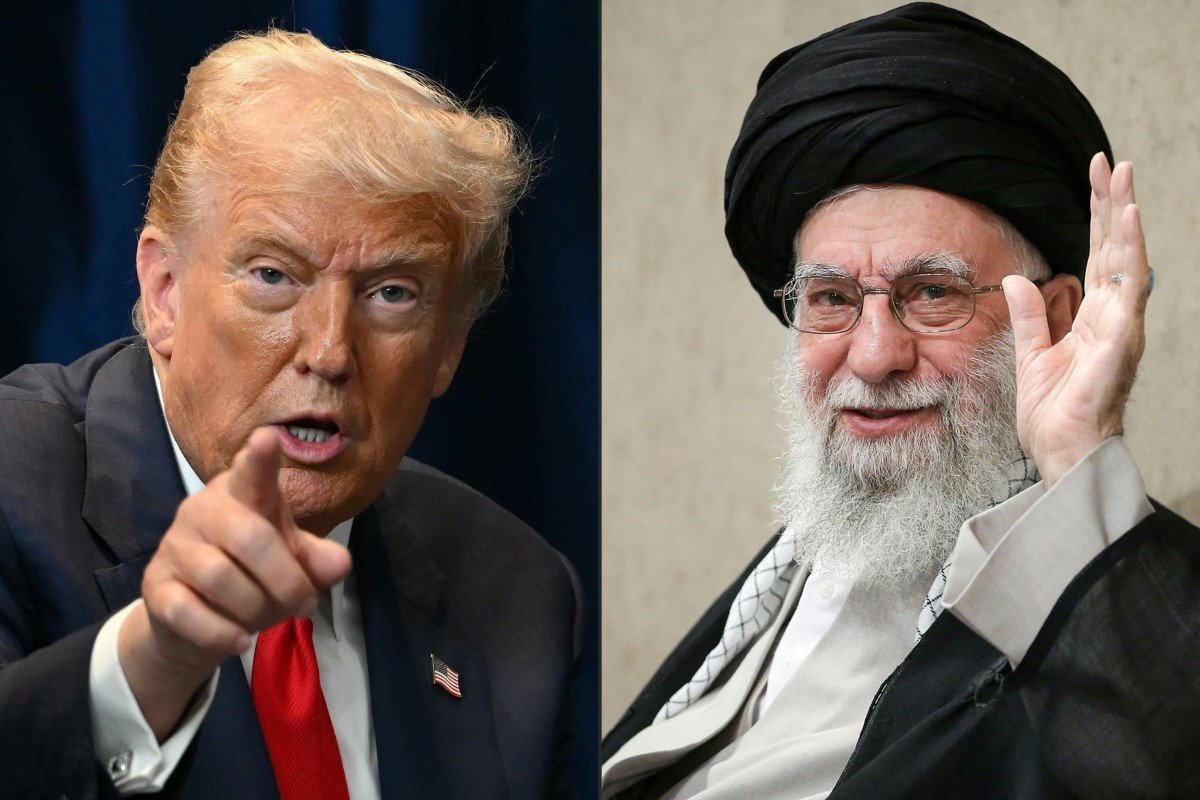
President of Iran sees good prospects for negotiations with the US Iran should have a decisive day this Thursday (25), with another round of nuclear negotiations with US authorities. According to the British newspaper The Guardian, President Donald Trump should decide on a possible attack on the country based on the outcome of the meeting. ✅ Follow the g1 international news channel on WhatsApp ▶️ Context: This Thursday’s meeting, in Geneva, Switzerland, will be the third in less than a month in the attempt to reach an agreement that limits or ends the Iranian nuclear program. The US wants Iran to stop uranium enrichment because it fears the country will seek to build a nuclear bomb. The Iranian government claims that the program is for peaceful purposes, aimed at energy production. According to the American press, the US also wants to restrict the range of Iranian ballistic missiles and end support for armed groups in the Middle East. Iran defends that the negotiations are limited to the nuclear program and says it is willing to reduce the level of uranium enrichment in exchange for the end of sanctions. The last meeting between the two countries took place on February 17, also in Geneva. At the time, the Iranian delegation stated that progress had been made. The White House said the meeting represented “certain progress.” For this Thursday’s meeting, Iranian President Masoud Pezeshkian said he saw chances of a good result. Foreign Minister Abbas Araqchi said a deal could be reached as long as diplomacy was prioritized. The US Secretary of State, Marco Rubio, stated on Wednesday (25) that he expects a productive meeting. On the other hand, he declared that the Iranian government will have “a big problem” if it resists discussing the range of the missiles. Amid tensions, Iran has seen student protests again in recent days. The government warned protesters not to cross “limits”. In January, a wave of protests left thousands dead after strong repression by Iranian security forces. In this report, you will understand: What Trump is considering against Iran The threats made by the US president Military movements How tensions between the two countries have grown Attack on the radar Donald Trump and Ayatollah Ali Khamenei ANDREW CABALLERO-REYNOLDS / VARIOUS SOURCES / AFP The Guardian newspaper published on Monday (23) that Trump should make a final decision on an attack on Iran based on the assessment of envoys Steve Witkoff and Jared Kushner after the meeting this Thursday with Iranian authorities. Sources interviewed by the newspaper stated that Trump told advisors that he is considering limited attacks to put pressure on Iran. The president is also evaluating a broader campaign, with the aim of overthrowing the government of Ayatollah Ali Khamenei. CBS News reported that Trump has expressed frustration with the limited military options available at this time. According to the American press, General Daniel Caine, head of the Joint Chiefs of Staff, warned the president of a series of risks. Sources interviewed by The Washington Post said the US could face difficulties due to limited ammunition supplies. The arsenal would be reduced because of American support for conflicts involving Israel and Ukraine, according to the report. The newspaper further stated that Caine is concerned about the risk of American deaths, in addition to a widespread war. Trump denies the information. The New York Times reported that Trump is considering a more limited attack in the coming days, if he assesses that negotiations have not progressed. A broader bombardment, aimed at toppling Khamenei, would only occur in the coming months if initial pressure has no effect. Iran has promised a “fierce” response to any type of US attack, even if it is limited. The government has already indicated that it may target American military bases in the Middle East. “There is no such thing as a limited attack. An act of aggression will be considered an act of aggression. Period,” Iranian Foreign Ministry spokesman Esmail Baghaei said on Monday. Public threat US President Donald Trump delivers the State of the Union address in the plenary of the Chamber of the United States Capitol Kevin Lamarque/Reuters On Tuesday, Trump again adopted a threatening tone against Iran during the State of the Union address in the US Congress. He recalled the attacks carried out in June 2025 and stated that, at the time, American forces destroyed an Iranian nuclear weapons program. According to the president, Iran was warned not to resume the program. Even so, he declared that the country “returned to pursuing nuclear ambitions”. Trump also said that the Iranian government seeks to develop missiles capable of reaching the United States. The North American also stated that he will not allow “the biggest sponsor of terrorism in the world” to have a nuclear weapon. In response, Iran classified the accusations as “big lies” and accused the Trump administration of promoting a “disinformation campaign”. This was not the first time that Trump threatened Iran. Since January, the president has stated that he may opt for a military exit if diplomacy fails. Last week, the president suggested he had given the Iranian government up to 15 days to move forward with an agreement. The deadline ends in the first week of March. “Maybe we have to go a step further. Or maybe we can reach a deal. You’ll find out,” he said on February 19. Military movements The aircraft carrier USS Abraham Lincoln transiting the Strait of Hormuz in 2019 Zachary Pearson/US Navy via AP Faced with the crisis, in January, Trump ordered the sending of the aircraft carrier USS Abraham Lincoln to the Middle East. According to the president, the objective was to monitor Tehran “closely”. Previously, the ship participated in maneuvers in the South China Sea. In recent weeks, the US has sent a second aircraft carrier to the region. The USS Gerald R. Ford, which had assisted in the operation that captured Venezuelan dictator Nicolás Maduro, left the Caribbean for the Middle East. The forces sent were added to warships and military bases already maintained by the US in the region. In total, the Americans control at least 10 bases in countries neighboring Iran and maintain troops in nine others. Satellite images also recorded movements at US military bases in the Middle East, with aerial reinforcement and missile positioning. There are also reports of aircraft being sent to Europe and Israel. Meanwhile, Iran announced joint military exercises with Russia and China in the Sea of Oman and the northern Indian Ocean. The Revolutionary Guard also carried out maneuvers, including in the Strait of Hormuz, through which much of the world’s oil production passes. Infographic shows US military siege on Iran Editoria de Arte/g1 Escalation of tensions It is not new that Iran and the United States are experiencing tense relations. The countries have been accumulating disagreements since 1979, when the Islamic Revolution implemented the Ayatollahs’ regime, which continues to this day. Since then, the two countries have exchanged a series of hostilities, with the US relying on economic sanctions and trade embargoes to pressure Iran, mainly to prevent the country from developing weapons and supporting armed groups in the Middle East. During Barack Obama’s administration, relations had some stabilization, which contributed to the historic 2015 agreement, which limited Iran’s nuclear program. Two years later, however, Trump withdrew the US from the treaty, saying that Iran was still in an arms race and reimposed economic sanctions. At the beginning of 2020, the two countries experienced a major crisis after the Trump administration launched an operation that resulted in the death of General Qassem Soleimani, the main figure in Iranian military strategy and very close to the supreme leader. Last year, the US launched an attack on Iran in support of Israel to destroy Iranian nuclear facilities. The bombing resulted in a limited counterattack against an American base in the region and a ceasefire agreement. Tensions rose again in early January this year, when Iran violently faced a wave of protests against the Khamenei government. Thousands of people died during the repression. At the time, Trump threatened new military action. With the weakening of the acts, motivated by government repression, the North American president began to focus on the Iranian nuclear program to maintain the threats. Even with the two countries returning to the negotiating table, the exchange of hostile statements continued. Iranians burn US flag in demonstration in support of Iran’s attack on Israel Majid Asgaripour/WANA via REUTERS VIDEOS: most watched on g1
Source link
Iran has decisive day with nuclear meeting with the US and possible Trump decision on attack
36

previous post