
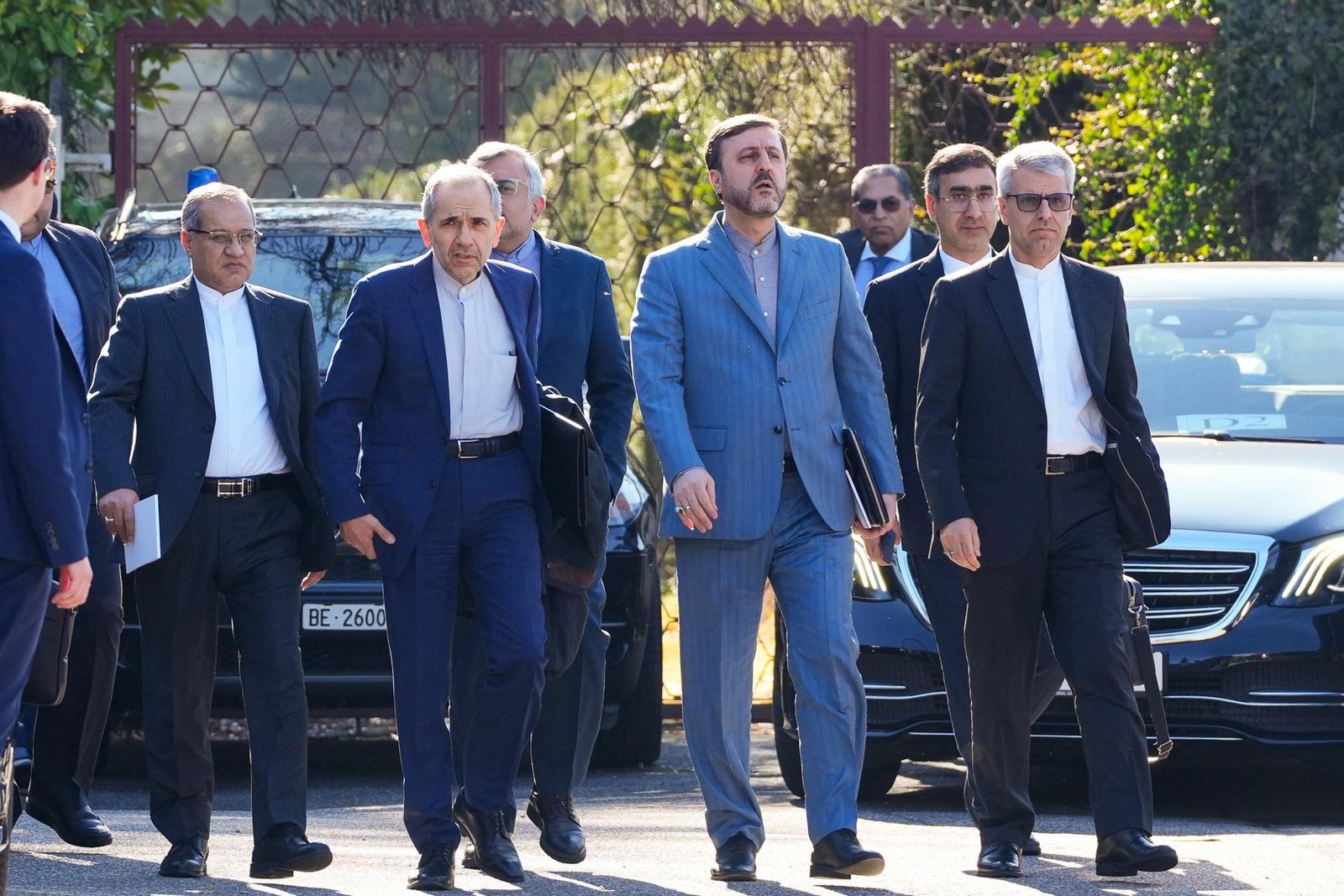
The United States and representatives of the Iranian regime concluded this Thursday (26) the third round of negotiations this year on the Iranian nuclear program and reported “good progress”, although there is still no definitive agreement reached. The meeting took place in Geneva, Switzerland, mediated by Oman, and a new round of “technical” conversations has already been scheduled for next week, in Vienna, the capital of Austria.
According to Iranian Foreign Minister Abbas Araghchi, the talks were “the most serious” ever held between the parties. In a statement to the Iranian state press, he stated that there had been “good progress” and that “the elements of an agreement have been seriously entered into”. Araghchi acknowledged, however, that “on many issues, our positions have become closer, although there are still differences.”
According to the mediator of the negotiations, Omani Foreign Minister Badr bin Hamad al Busaidi, “significant progress” has been achieved. The conversations lasted around six hours throughout the day, divided between morning and afternoon sessions – a longer duration than the previous round.
The delegations decided to resume discussions at a technical level next Monday (2 March), in Vienna, headquarters of the International Atomic Energy Agency (IAEA). The agency’s director general, Rafael Grossi, was present at the site of this Thursday’s negotiations, at the diplomatic residence of the Omani ambassador to the United Nations in Geneva, although he did not participate directly in the conversations.
The dialogue takes place amid strong pressure exerted by Washington on Tehran. The President of the United States, Donald Trump, recently ordered a naval air reinforcement in the Middle East and warned that he could authorize an attack against Earth if there is no diplomatic progress. The military movement raised fears of a regional conflict.
At the heart of the negotiations is the scope of Iran’s nuclear program. The Iranian regime maintains that its activities are exclusively for civilian purposes. The United States seeks to restrict the country’s uranium enrichment capacity as much as possible to prevent Tehran from developing nuclear weapons.
According to American demands, Iran must deliver more than 400 kilograms of uranium enriched above levels compatible with civilian use, which the Iranian regime rejects. Furthermore, Washington argues that the country’s ballistic missile program should also be included in the negotiations – a point that Tehran claims it does not accept within the current negotiation format.
