
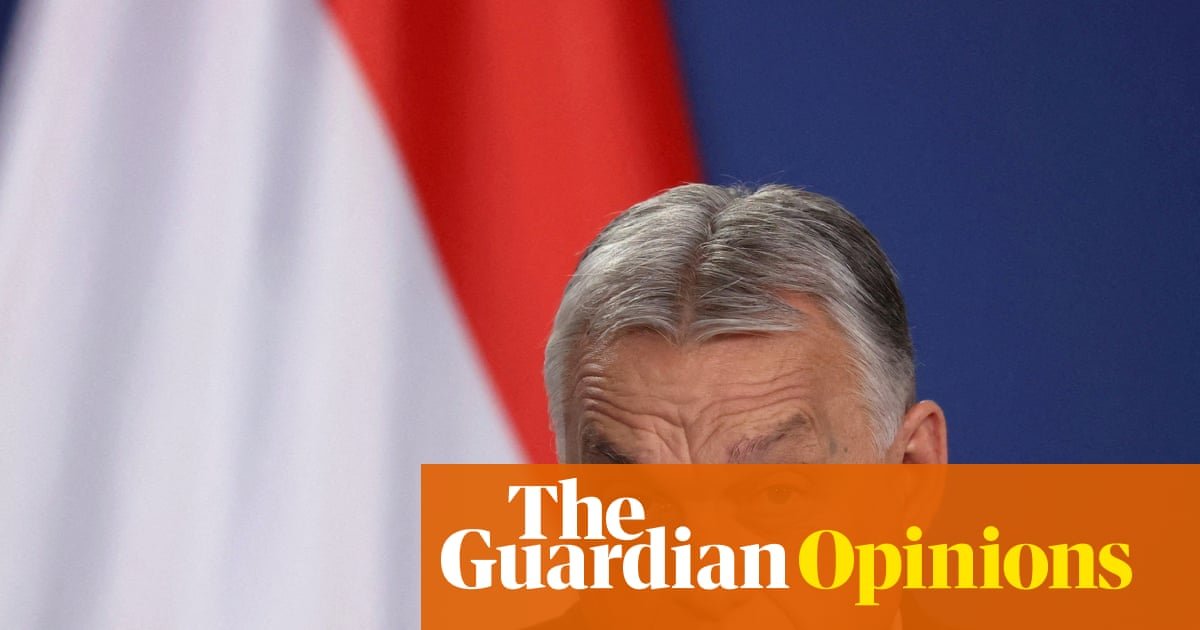
After 16 years of uninterrupted power, Viktor Orbán is facing his biggest electoral challenge. For years Hungary’s prime minister has spun weak policy performance as success. The rise of a rival, Péter Magyar, and the opposition Tisza party has exposed the limits of that strategy.
The economy is stagnatingdespite repeated promises of a long-awaited takeoff. Over the past decade and a half, Hungary has slipped from being one of central and eastern Europe’s strongest performers to one of its weakest. Public services, from healthcare to transport, are widely seen as neglected, and Policy Solutions surveys show that voters have noticed. Hungary is not alone in facing a cost of living crisis, but comparisons offer little consolation to voters who were assured that Orbán’s model would deliver exceptional results.
Tisza has unified a previously fragmented opposition and turned the April 12 parliamentary election into a genuine contest. At this stage, nearly half of Hungarians say they want a change of government.
Yet preference is not the same as confidence. Many voters still doubt that change is within reach. This tension between dissatisfaction with the status quo and nervousness about the feasibility of political change has created an unpredictable electoral landscape. Frustration with Orbán may not be sufficient to overcome fear of the unknown.
Orbán also has something his rival can’t match: he has a tailwind from Washington. While he may have little to shout about at home, Orbán has gained new momentum in Donald Trump’s volatile second term.
Orbán’s campaign narrative now rests on the boast that he is simultaneously on good terms with the leaders of the United States, Russia and China. In a world of strongmen, Hungary needs a leader who can sit at their table.
Expect Trump’s name to feature increasingly in the campaign as Orbán seeks to reinforce the claim that he – and only he – has the ear of the world’s most powerful leaders. His recent White House audience was proof of international relevance and this weekend’s visit of Marco Rubio to Budapest will only reinforce that narrative.
What is striking about this campaign is that Fidesz, Orbán’s party, is no longer asking voters to reward it for a record of good governance. Rather, it is warning people that however dissatisfied they may be, Hungary could be a lot worse off. The aim is not to mobilise hope, but to suppress it – to make sure voters see the ballot box not as an opportunity for change, but as a risk.
As Ukraine dominates Hungary’s election campaign a pro-Orbán billboard depicts President Zelenskyy demanding money for weapons. Photograph: Bernadett Szabó/Reuters
“The safe choice”, as the Fidesz party slogan goes, is designed to respond to an increasingly anxious mood in an uncertain and dangerous world. With war in Europe, migration, culture wars and geopolitical upheaval, the message runs, this is an age of danger, and change at the top is a gamble the country cannot afford.
Everything Orbán presents as dangerous – European military support for Ukraine, migrants, expanding LGBTQ+ rights – is lumped together as the “Brussels path”. By contrast, peace, a migration-free country and the rejection of “gender ideology” are framed as the uniquely “Hungarian path”. The choice, voters are told, is civilisational, a message that echoes the Trump administration’s warning about European liberal democracy.
Trump’s scepticism towards Ukraine and his readiness to blame Kyiv for the war with Russia also closely align with Orbán’s position. This has emboldened Orbán, allowing him to be even softer on Russia and harsher on Ukraine, while presenting this stance as vindicated by global power shifts.
Two strategies now stand in stark opposition. Orbán derives his political relevance from the international environment: from global instability, from war and from the claim that only he can navigate this dangerous world. Magyar, by contrast, grounds his message in domestic reality: the cost of living, failing public services and the sense that the state delivers far less than it should.
Orbán’s worldview underpins this contrast. For him, international treaties and multilateral organisations matter less and less in a new global order defined by power and bilateral deals. What count now, he argues, are personal relationships and strength.
Despite Tisza leading in independent and opposition-leaning polls (while trailing in Fidesz-friendly polling), Orbán retains a credible path to victory. This is partly due to the structural advantages embedded in Hungary’s electoral system, which Fidesz designed in 2010. Biases built into the constituency map – with Fidesz-leaning districts on average smaller than those favouring the opposition – mean that the governing party can still win a parliamentary majority even if it narrowly loses the popular vote. To overcome this, Tisza would probably need a lead of at least five percentage points nationally – a high bar in an uneven playing field.
The greatest opportunity for Tisza lies in convincing those disappointed with the government that it can offer a credible alternative and tangible improvements in everyday life. Orbán wants voters to believe that change itself is the greatest danger. Magyar wants them to believe that stagnation is. For the first time in 16 years, the outcome is genuinely open. And that uncertainty alone marks a profound break with Hungary’s political past.
