
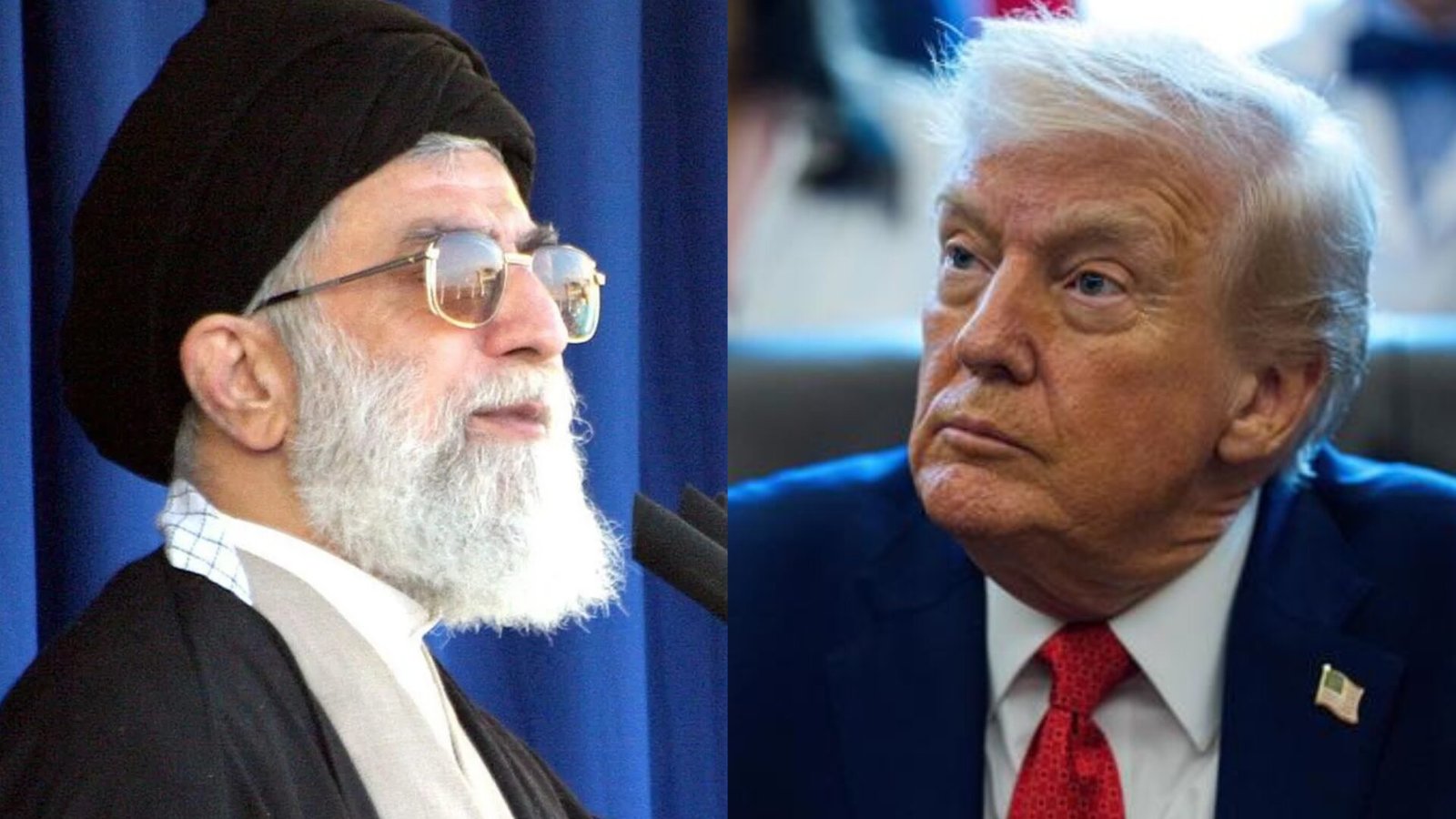
While the US deploys the largest military deployment in more than two decades in the Middle East, Iran is divided between seeking to resolve frictions through diplomatic channels and a hasty preparation of its bases and nuclear installations for a possible conflict.
This Tuesday (24), the Iranian Revolutionary Guard carried out military exercises in the south of the country and on the islands of the Persian Gulf. Missiles, artillery, drones, special forces and armored vehicles were mobilized, according to Iranian state TV. But this is just one of the actions taken in recent days, since pressure has grown in the region: last week, Tehran carried out military exercises in the Gulf of Oman with Russiaone of his main allies.
In this context of military intensification, the Iranian regime has sought to get closer to Russia and China, which avoid getting directly involved in the situation. After the announcement of a secret agreement with Moscow to supply thousands of military equipmentthe Reuters news agency reported this Tuesday that the Persian country would also be close to closing a pact with Beijing to purchase anti-ship cruise missiles that could open a new scenario in the region.
The military preparation comes amid a lack of significant results between Iranian and American negotiators. According to Iran’s top diplomat, Abbas Araghchi, the two sides agreed on a set of “guiding principles”, however, US Vice President JD Vance said that Iran did not recognize the non-negotiable points established by American President Donald Trump: for Iran to review its nuclear program, halt the production of ballistic missiles and cease support for terrorist groups in the region.
Tehran has stated that, in the event of a US attack, the consequences would not be limited to a single country and that responsibility would fall on those who initiated or supported such an attack, including regional allies of the Americans, such as Israel.
How Iran is mobilizing for a possible conflict
The threat of conflict has generated changes in the regime’s internal power structure.
While the supreme leader, Ali Khamenei, maintains a certain distance from public life, the Supreme National Security Council, headed by Ali Larijanistarted to take the lead in the current moment of crisis. According to the newspaper The New York Times, Khamenei tasked Larijani with “leading the country” during the protests that began in December and he would be effectively governing the country.
In an interview with the Qatari broadcaster Al JazeeraThis month, Khamenei’s powerful ally said the country would be prepared for war.
“We are definitely stronger than before. We have been preparing for the last seven, eight months. We have identified our weaknesses and corrected them. We do not seek war and we will not start it. But if they force us to do so, we will respond,” he declared at the time.
In addition to this movement at the top, the regime created a new department to deal with the current scenario of instability: the Defense Council, focused on times of war. The military veteran and former commander of the Islamic Revolutionary Guard Corps (IRGC) Ali Shamkhani, who survived an Israeli attack in the Twelve Day War in June last year, was chosen to take on the role.
According to a report from the think tank American Institute for the Study of War (ISW, its acronym in English), since that exchange of aggression, Leaders close to Khamenei have sought a restructuring of the regime between hard-line, moderate and pragmatic figures, which includes Larijani.
Vali Nasr, an expert on Iran at the Johns Hopkins University School of Advanced International Studies, explained to Times that this redistribution of power signals that the Iranian supreme leader hopes to be a “martyr.”
“He is distributing power and preparing the State for the next big event, both secession and war, aware that secession could be a consequence of war”, assessed the expert.
Regarding operational preparation, Iranian authorities spent the months following the conflict with Israel carrying out renovations to missile facilities and air bases that were severely damaged by the attacks.
Three members of the Revolutionary Guard and four senior Iranian officials told the Times that the The country has already positioned ballistic missile launchers along its western border with Iraq – close enough to hit Israel – and along the southern coast in the Persian Gulf, targeting American military bases and other targets in the region.
Still in the task of rebuilding its defense capabilities, an investigation of the Financial Times showed that Iran approached Russia to forge a deal to buy thousands of portable air defense systems, in a pact valued at around 500 million euros. According to the British newspaper, Moscow has committed to sending, over three years, at least 500 “Verba” portable air defense systems and 2,500 missiles compatible with this system.
In the same vein, Reuters reported that the Iran would be close to closing a deal with China to purchase CM-302 supersonic anti-ship cruise missiles. The report cited six people with knowledge of the agreement, which was already in its final stages, after the US attack on Iran last year accelerated negotiations. The missiles negotiated, according to Reuters, could increase Iranian strike capabilities and pose a threat to U.S. naval forces that are in the region. However, there is still no agreed delivery date and the Chinese Ministry of Foreign Affairs stated that it was not aware of these negotiations.
Negotiations could be a “lifeline” for the Iranian regime
The ongoing negotiations between Iranian and American authorities are seen as the best option for the ayatollahs’ regime.
American President Donald Trump gave the regime a two-week deadline – which is set to expire next week – to decide its future. The opportunity, if fully accepted by Tehran, could free the country from a military attack and alleviate the severe sanctions that have harmed the Iranian economy.
However, while appearing as a “lifeline”, an eventual agreement with the US involves fundamental concessions to the regime’s deterrent power, especially its nuclear program, which is seen as a threat to its enemies.
An analysis of the American think tank Atlantic Council considers that, considering that Khamenei spent more than 36 years cultivating a legacy of defiance of Western powers, a change of stance at this level would be considered a sacrifice that the regime would not be willing to accept.
If it manages to inflict significant damage on American forces, Iran will maintain its message of resistance without collapsing, thus consolidating its position both internally and internationally.
Retired military analyst Paulo Roberto da Silva Gomes Filho, columnist for People’s Gazetteassesses that, in the event of a forceful response from Tehran – through unforeseen casualties by the American military – the situation could worsen in the Middle East and generate a broader conflict.
