
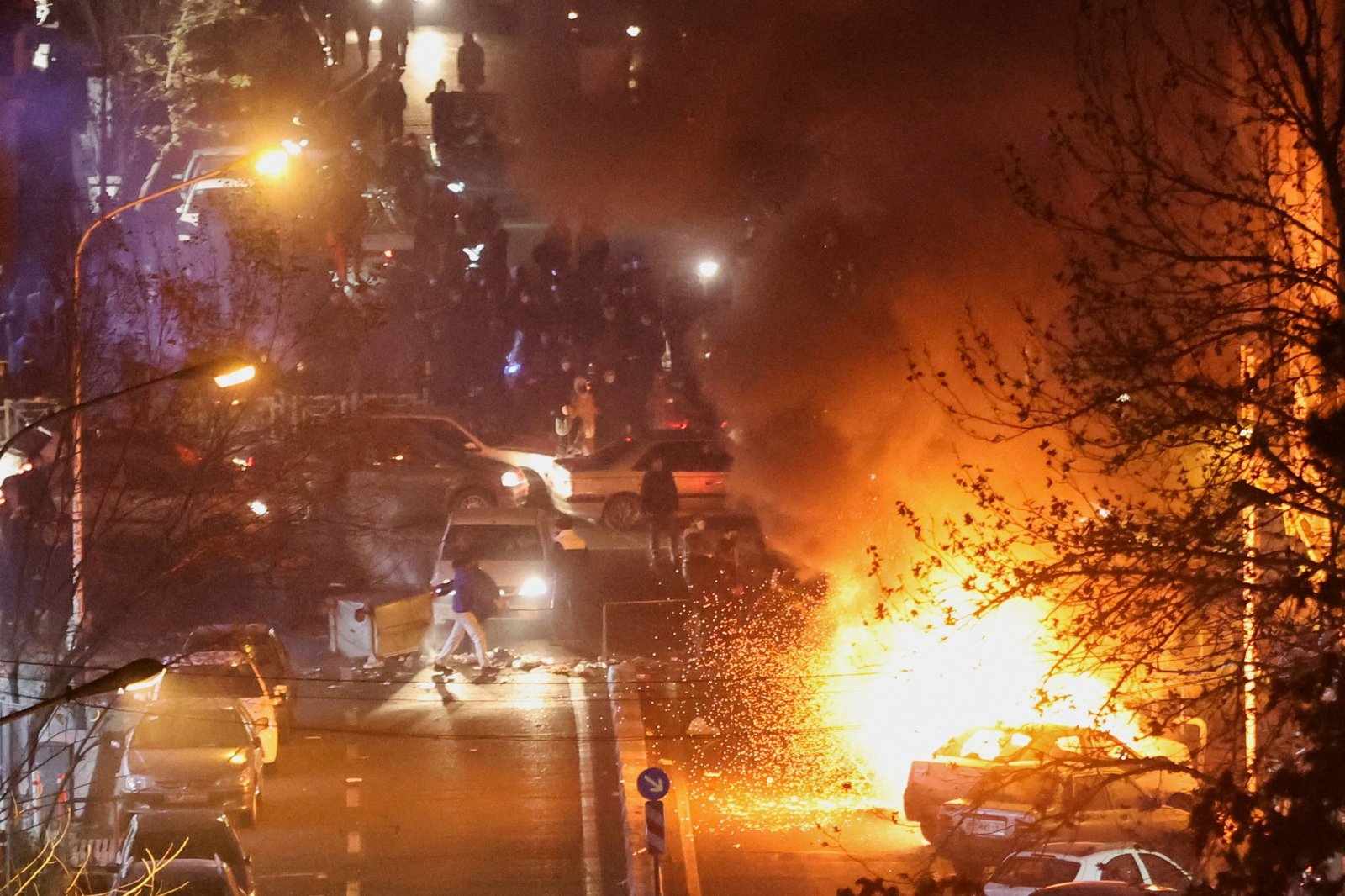
Video shows column of smoke in Iran’s capital after attack by Israel and the USA The United States attacked Iran this Monday (28). The offensive comes after weeks of negotiations between the countries in an attempt to reach an agreement that limits or ends Iran’s nuclear program. ✅ Follow the g1 international news channel on WhatsApp The military action takes place at a delicate moment for the Iranian regime, which is still dealing with the consequences of the wave of protests registered in the first weeks of 2025. The demonstrations gained worldwide repercussions after being harshly repressed by security forces, resulting in thousands of deaths and arrests of civilians. Last weekend, Iran registered protests again. This time, from students who were resuming the student semester. At the time, Tehran warned protesters not to cross “limits”. Understand how the protests began The protests in Iran began due to popular dissatisfaction with the country’s economic situation. The local currency suffered a strong devaluation, while the cost of living increased. The population faces high inflation, above 40% per year. In 2025 alone, the local currency lost around half its value against the dollar and reached an all-time low. Discontent also grew in the face of inequality between ordinary citizens and the country’s elite, in addition to allegations of corruption in the government. 💸 Prolonged crisis: Iran has been facing economic difficulties for years, mainly impacted by the reimposition of sanctions by the United States and other countries. The measure was adopted in 2018, when Trump left the international agreement on the Iranian nuclear program. The US and other countries fear that Iran is enriching uranium to develop a nuclear bomb. Tehran denies the accusation and says the program is for peaceful purposes. Even with this justification, sanctions and trade restrictions discouraged business with the country and affected exports, investments and the financial system. The situation also worsened after the conflict between Iran and Israel, in June 2024. On that occasion, Israeli and US forces attacked targets linked to the Iranian nuclear program. ✊ Start of demonstrations: The first protests occurred on December 28, when Iranian traders began a strike and closed stores in reaction to the economic situation. The demonstrations gained strength in the capital, Tehran, and spread to other cities the following day, with support mainly from young people and students. In addition to economic issues, protesters also began to demand the overthrow of Ayatollah Ali Khamenei’s government. In an attempt to contain the acts, President Masoud Pezeshkian promised to open a channel of dialogue with representatives of society to discuss the population’s demands. 👉 Since the Islamic Revolution of 1979, Iran has been a theocratic republic, in which the highest authority is the supreme leader, Ayatollah Ali Khamenei. He has been in power for more than 30 years. The regime is the target of criticism for human rights violations and restrictions on social freedoms, especially among younger people, who have led several protests in recent years. Cars are set on fire during a protest in Tehran, capital of Iran, on January 8, 2026 West Asia News Agency/Reuters Brutal repression After protests took to the streets in early January, Tehran began to repress protesters with extreme violence. The regime also blocked access to the internet and restricted communications. Reports from Iranians in those weeks narrated a brutal repression, with piles of bodies and gunfire on the population. According to humanitarian organizations, thousands of protesters were killed and thousands more detained. Videos that circulated at the time showed bodies lined up. (Watch below). Images show bodies lined up in front of a morgue in Iran after repression Protests at universities On the weekend of February 21 and 22, Iranian students began a new wave of protests against the Khamenei regime, with demonstrations at several universities in Iran. Clashes were reported, but news agencies were unable to verify whether there were any deaths. At the time, Tehran threatened protesters with yet another violent repression. Since then, there have been no reports of protests in the country. Iranian students for and against the Khamenei government clash at the Amirkabir University of Technology, in Tehran, on February 22, 2026. UGC/AFP VIDEOS: trending on g1 See the videos that are trending on g1
Source link
From the traders’ strike to the US attack: remember the wave of protests that took over Iran
17

previous post