
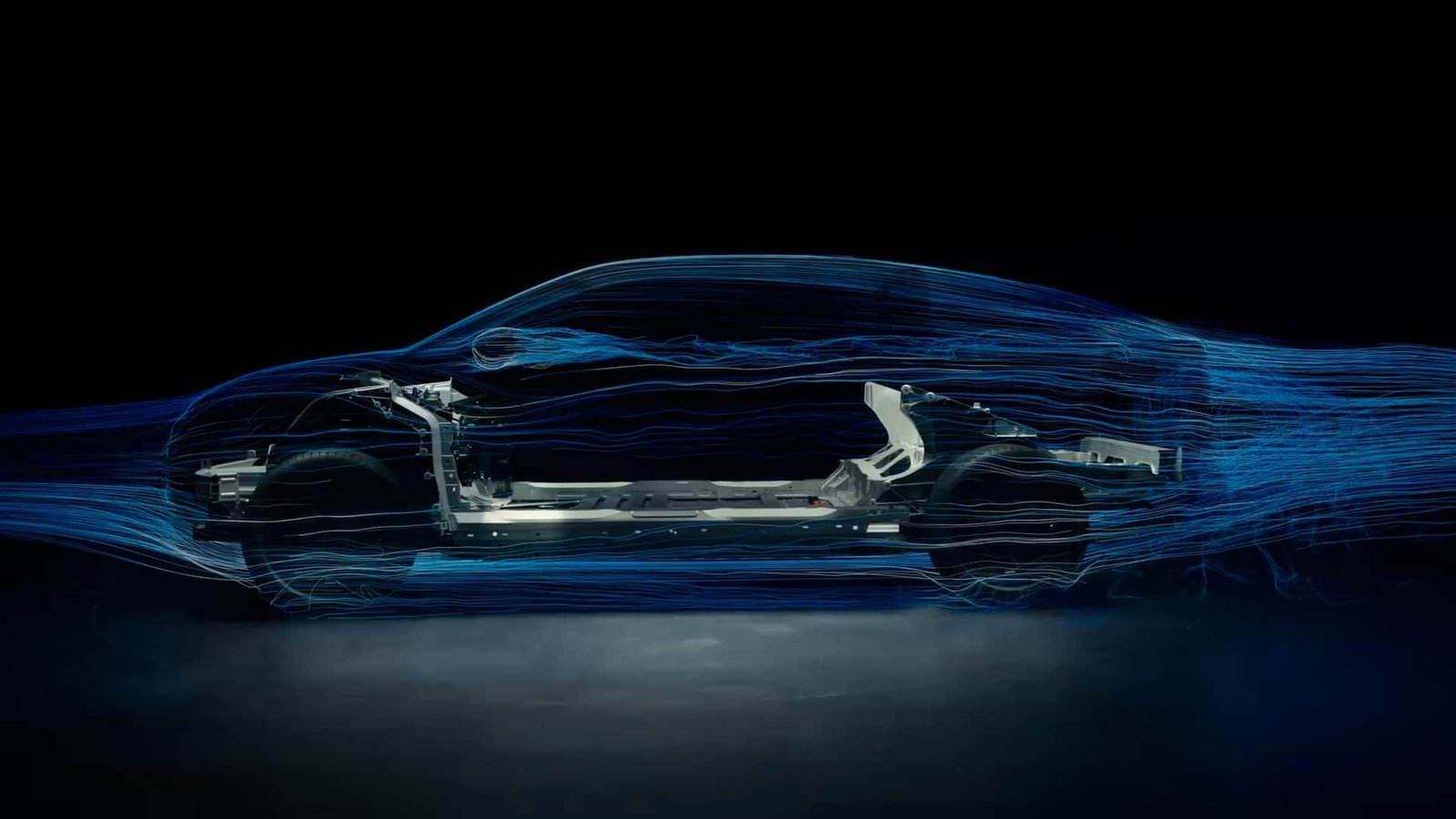
- Ford is maximizing the aerodynamic efficiency of its new electric truck in several ways.
- Bolt holes underneath the truck are shallower, and the side mirrors are 20 percent smaller than traditional ones.
- Each small improvement lowers the battery’s cost and increases the range.
Last summer, Ford Motor Company announced it was developing an electric pickup truck with a starting price of around $30,000. It goes on sale sometime in 2027, and the automaker is just now starting to release more details on the upcoming model.
Central to the project is a new manufacturing process, an innovative design, and a focus on increasing efficiencies. The truck will be the first model to ride on Ford’s upcoming Universal Electric Vehicle platform, which the automaker says will be as quick as an EcoBoost Mustang and offer more passenger space than the Toyota RAV4.
The automaker tasked the truck’s development teams with chasing “bounty targets,” which are metrics designed to convert any efficiency improvements into battery cost savings and estimated range as the automaker attempts to make the new model affordable. This includes a new manufacturing process that’s designed to reduce complexity, such as using fewer structural parts and fasteners.
According to the automaker, the Maverick has 146 structural parts in the front and rear. The new electric pickup has just two, utilizing a technique called aluminum unicasting production, a first for Ford, but it’s just one of many ways the company is trying to keep costs low.
Small Decisions, Big EV Gains
Photo by: Ford
Aerodynamics are fundamental to an EV’s range capability, and every bit of improvement in efficiency helps make the model more affordable. For example, even a 1.0-millimeter increase in the truck’s roof height would equate to a $1.30 more in additional battery cost, or a loss of .055 miles of range. Instead, the roofline directs high-speed air into a teardrop shape over the bed, allowing it to skip right over it.
Underneath the truck, Ford made the bolt holes shallower, allowing air to move more efficiently, including around the tire and suspension. Ford also designed the vehicle to direct the front tire wake onto the rear ones, “hiding” the rear wheels from the high-speed airflow around the vehicle and gaining an additional 4.5 miles of range.
The automaker is also mounting the drive unit as low as possible and includes a motor case designed to reduce turbulent wake. This low positioning also reduces the angle of the half-shafts and the friction in the joints.
On the outside, Ford reduced the mirror’s size by 20 percent. It did this by merging the glass adjustment and folding mirror actuator into a single unit, so the entire mirror moves to the perfect viewing angle. This added 1.5 miles of range.
The focus on making numerous small improvements has resulted in a truck with aerodynamic efficiency more than 15 percent higher than that of any other pickup on sale today.
Battery Magic
Ford already revealed that the truck will use prismatic lithium iron phosphate batteries that also serve as the vehicle’s structural sub-assembly and floor. We now know that the truck will have a 400-volt battery and operate on a 48-volt system.
Specifics such as range remain a mystery, but the automaker did reveal that it is developing the vehicle’s electric charging ecosystem in-house while incorporating advanced technologies. The truck will utilize a new circuit board design that combines low-voltage, high-voltage, and thermal sensing into a single part, reducing the number of parts and wiring.
Ford is also adopting zonal architecture for the truck, reducing the number of control units throughout the vehicle. This has resulted in the EV’s wiring harness being 4,000 feet shorter than the harness used in Ford’s first electric SUV.

18
Source: Ford
Motor1’s Take: Ford has already detailed how its new electric platform is saving money by reducing wiring, harnesses, and control units, as the company attempts to revolutionize how it builds electric vehicles that are competitive in America and abroad.
The proposed $30,000 price tag sounds improbable, but each peek behind the curtain shows that the Dearborn-based automaker is truly trying to maximize the value Ford can offer at a lower price tag. We will have to wait and see if Ford’s attempt is successful.
