
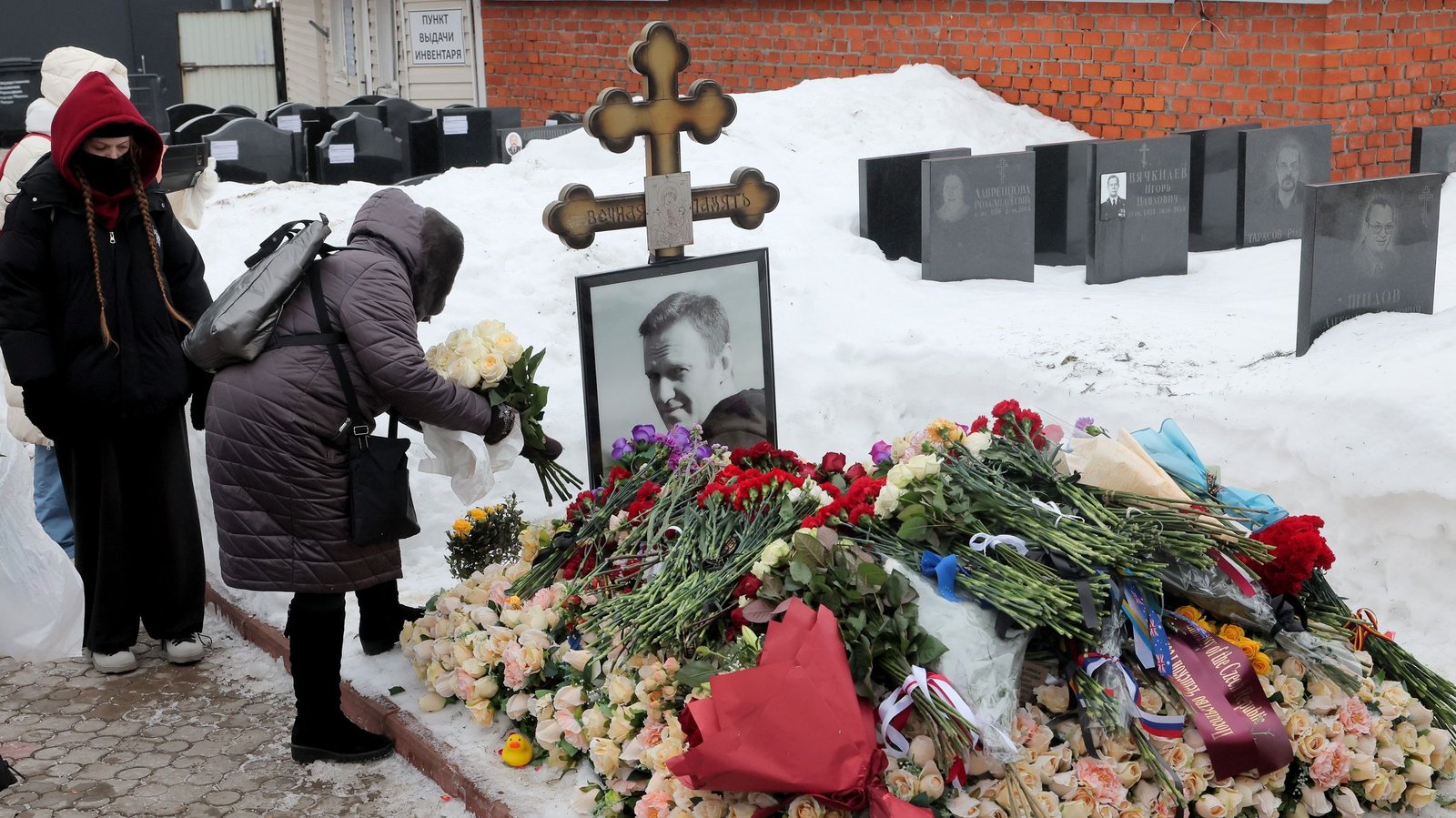
The head of European diplomacy, Kaja Kallas, said on Monday that the Kremlin is “fully responsible” for the poisoning of Russian opposition leader Alexei Navalny two years ago, and stated that Brussels “will continue to use its sanctions regime” to hold Moscow accountable. “The Russian regime does not just bomb Ukraine, it also continues to silence opponents in its own country,” said the European Union’s High Representative for Foreign Affairs in a message on social media. The Russian opposition leader lost his life at the age of 47 while in a Siberian prison.
“The murder of political opponents is part of the regime’s DNA. It is not a show of force, but an admission of fear,” said Kallas. The vice-president of the Community Executive added that the EU “will continue to use its human rights sanctions regime against Russia to ensure accountability for repression”.
The message from the head of European diplomacy comes after the president of the European Commission, Ursula von der Leyen, added to the condemnations of other EU leaders due to the announcement by five European countries – Germany, the United Kingdom, France, Sweden and the Netherlands – that they had reached the conclusion that Navalny was poisoned with a lethal toxin. According to this international investigation carried out using samples taken from Navalny shortly after his death in a Russian Arctic prison, the politician died of poisoning with a lethal toxin (epibatidine), present in poisonous frogs in South America.
France calls for independent and complete investigation
France on Monday demanded an independent and complete investigation to fully clarify the circumstances of Navalny’s death. Diplomatic sources reported that French Foreign Minister Jean-Noël Barrot will meet on Tuesday in Paris with Navalny’s widow, Yulia Navalnaya, who, since her husband’s death, continues her political work and denounced the circumstances of his death.
French President Emmanuel Macron expressed this Monday hope that justice will be done in the case of Navalny, whose death, he emphasized, was “premeditated”, and pointed directly to the Kremlin’s responsibility. On this second anniversary of the death of the opposition leader, the French government once again paid tribute in a statement to his commitment “to a free and democratic Russia”.
The country lamented the conviction a year ago of three former Navalny lawyers for “participation in an extremist organization,” and emphasized that they were simply fulfilling their duties as defense lawyers. France further reiterated its support for those who “courageously” defend individual freedoms and the rule of law in Russia, strongly condemned all human rights violations and called for the immediate and unconditional release of all political prisoners.
The Kremlin on Monday rejected accusations of participation in Navalny’s death, and insists that the oppositionist died of natural causes in prison in February 2024. Given the toxicity of epibatidine and the reported symptoms, however, the five European countries mentioned assured that poisoning was the most likely cause of his death.
