
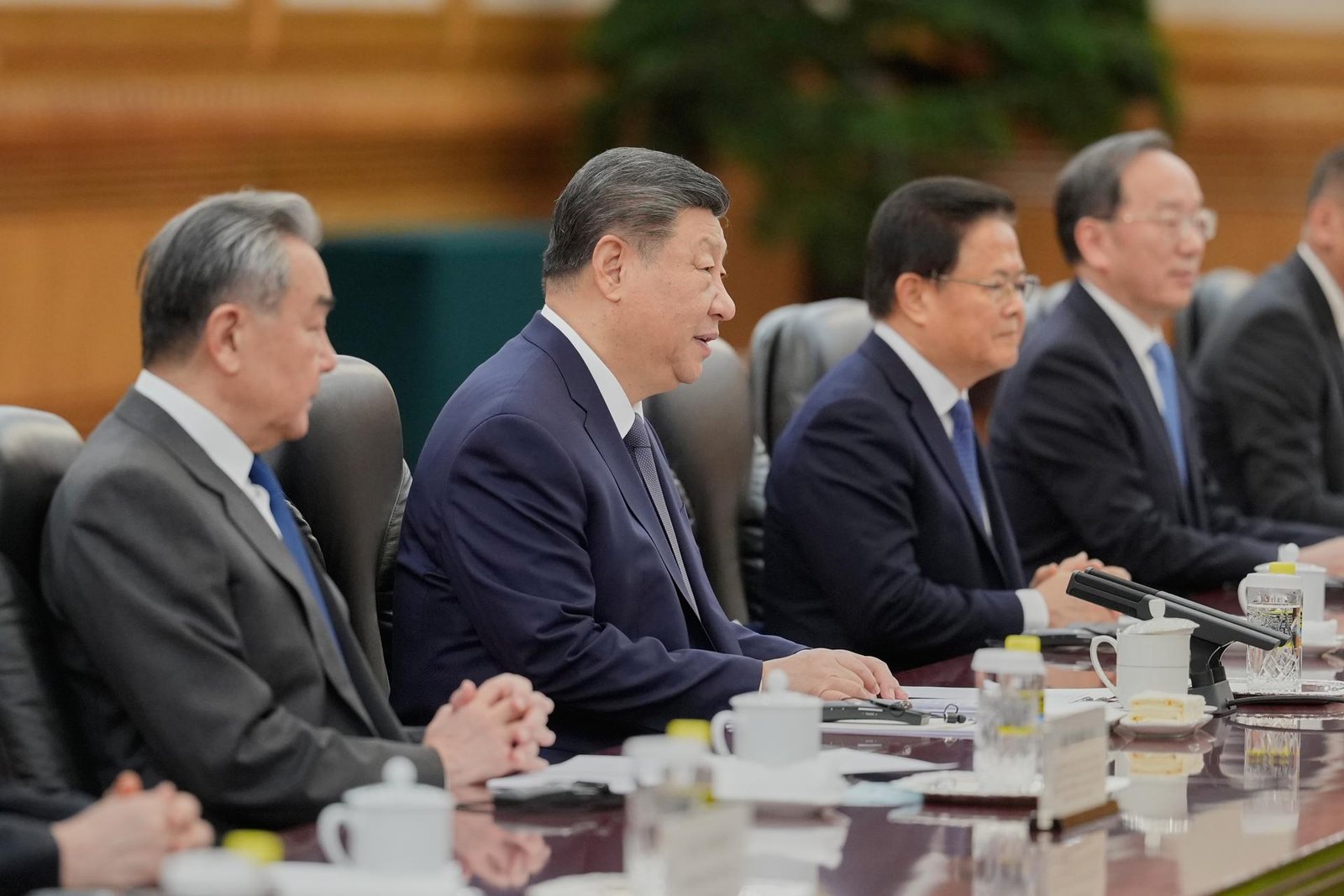
China’s communist regime has expanded censorship, intensified the persecution of government critics and reinforced repression against religious minorities and other social groups, according to the annual report released this Wednesday (4) by the organization Human Rights Watch (HRW).
According to the document, Chinese authorities continue to “systematically deny” freedoms of expression and association, using surveillance mechanisms, digital censorship and the legal system itself to punish dissidents, critics of the regime and the Chinese Communist Party.
According to HRW, the tightening of ideological control was accompanied by policies of forced assimilation in Tibet and Xinjiang, in addition to the imposition of a national security regime classified as repressive in Hong Kong, with a direct impact on peaceful demonstrations, the press and cultural life.
In the case of Xinjiang, the organization claims that there has been no accountability for the abuses reported in recent years. According to the report, “several hundred thousand” Uyghurs – a Muslim ethnic minority – remain unjustly detained, in a context that HRW continues to classify as crimes against humanity – an accusation rejected by the Chinese communist dictatorship.
The report points out that China maintains one of the most rigorous surveillance and censorship systems in the world. As an example, HRW cites the sentencing, in January last year, of filmmaker Chen Pinlin to three and a half years in prison for the crime of “picking fights and creating problems”, after the production of a documentary about the 2022 protests against the “Covid zero” policy.
The organization also mentions the three-year sentence imposed in February last year on Taiwanese publisher Fu Cha for “inciting separatism”, in addition to the sentencing, in July last year, of activist Peng Lifa to nine years in prison for hanging pro-democracy banners on a bridge in Beijing.
According to HRW, authorities continue to repress any attempt at public memory of the Tiananmen Square Massacre, which occurred in 1989, both in mainland China and Hong Kong. At the same time, demonstrations organized by Chinese diaspora communities took place in dozens of cities outside the country.
The report also warns of the increase in so-called “transnational repression”, with pressure on Chinese communities abroad and intimidation actions against families of activists who remain in China.
At a regional level, HRW states that policies persist in Tibet that force cultural and linguistic assimilation. The organization recalls that Chinese President Xi Jinping declared in August that Tibetan Buddhism must “adapt to socialist society”.
In Hong Kong, according to the document, the recurrent use of national security laws has resulted in hundreds of arrests since 2020, according to official figures cited by the organization, in addition to restrictions on media outlets, publishers, academic and cultural activities.
HRW also denounces strict control over religious freedom, with official permission for only five faiths and repression of unregistered communities, including Catholic and independent Protestant groups. The report also mentions persistent discrimination against women, censorship of feminist speeches and restrictions on LGBTQIAPN+ people, despite “greater social acceptance”.
“The Chinese government under Xi Jinping has accumulated an increasingly disastrous human rights record, broadening and deepening the repression of fundamental freedoms,” said Maya Wang, deputy director for Asia at HRW, in presenting the report.
The Chinese regime repeatedly denies accusations of human rights abuses and maintains that its policies aim to guarantee stability, development and national security.
