
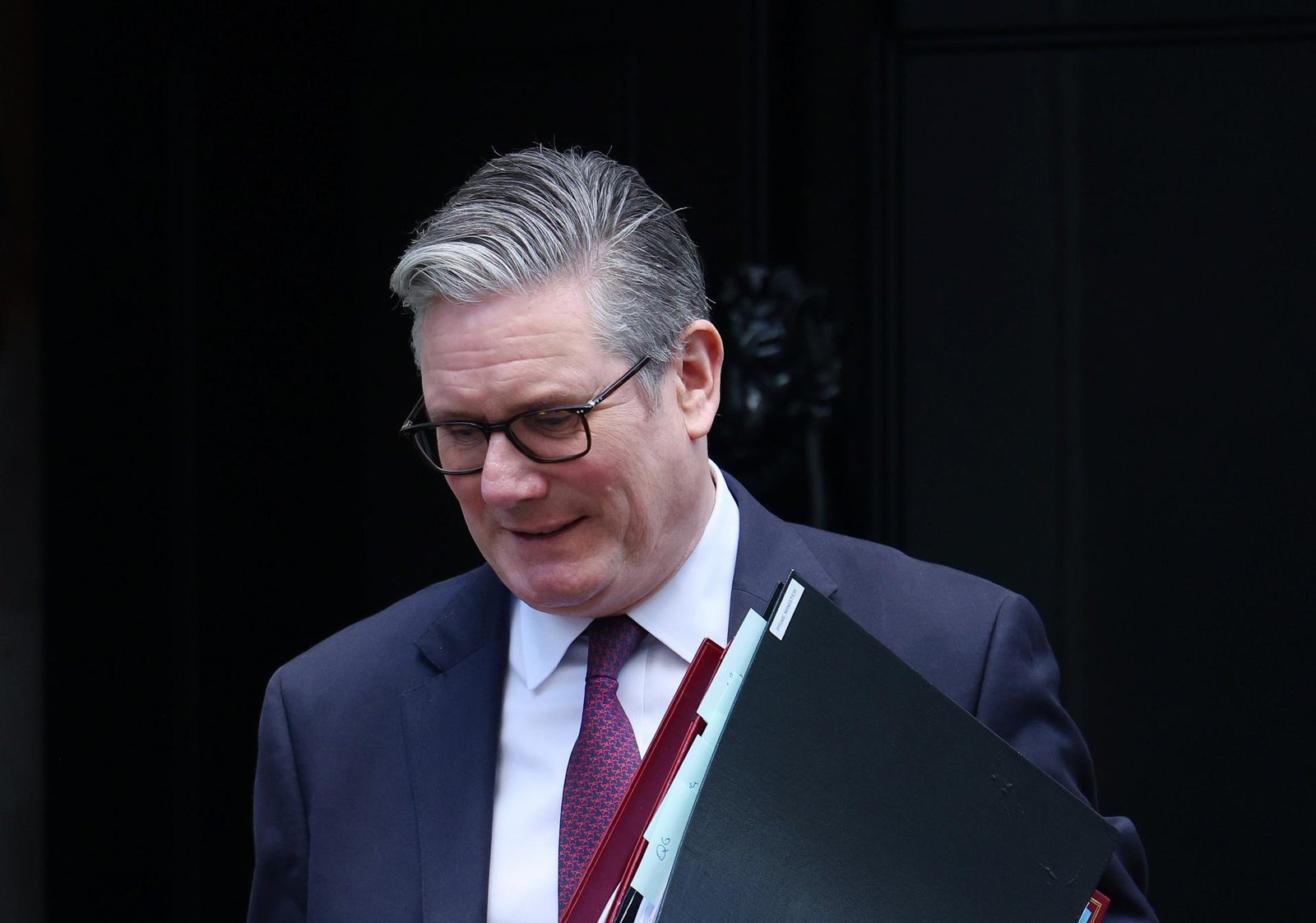
Another name close to the Prime Minister of the United Kingdom, Keir Starmer, has resigned, which increases the pressure on the Labor Prime Minister, whose disapproval reaches high levels.
Tim Allan, Communications Director at Starmer, announced this Monday (9) that he is leaving his position “to allow a new team to be built at Downing Street”, which represents the second resignation following the crisis related to former ambassador Peter Mandelson and American financier Jeffrey Epstein, who committed suicide in prison in 2019, while awaiting trial on charges of sex trafficking of minors.
Starmer is in the process of rebuilding his immediate circle after his chief of staff and top advisor, Morgan McSweeney, resigned on Sunday (8).
McSweeney admitted that he had recommended the February 2025 appointment of Peter Mandelson as ambassador to the United States. Mandelson was ousted in September after the extent of his ties to Epstein were revealed.
Although the departure of McSweeney, the prime minister’s right-hand man, was welcomed by some in Labor who criticized his excessive influence, MPs from all parties point out that it is the head of government who should take final responsibility for Mandelson’s appointment.
Last week, Starmer admitted that he was aware of Mandelson’s ties to Epstein when he nominated him for the diplomatic post in Washington, but claimed that the ally “lied” about the “extent” of that relationship.
This Monday, Anas Sarwar, leader of the Scottish Labor Party, called for Starmer’s resignation. “The distraction needs to end and the leadership at Downing Street needs to change,” Sarwar said at a press conference in Glasgow, according to information from The Guardian newspaper.
The leader of the Conservative Party, Kemi Badenoch, declared this Monday that Starmer’s position is “untenable”, while the First Minister of the Scottish government, John Swinney, of the Scottish National Party, said that the episode demonstrates “his weakness” as a leader.
According to a survey released by the YouGov institute in January, only 18% of Britons had a favorable opinion of Keir Starmer, while 75% had an unfavorable view of the Prime Minister.
Labour’s net approval rating, at -57, was the most negative for a British prime minister since his predecessor, the conservative Rishi Sunak, reached the same level in June 2024.
In support of the Prime Minister, Secretary of State for Equality, Jacqui Smith, assured the BBC that Starmer “is determined” to finish his term, after coming to power with an absolute majority in the July 2024 elections.
Other secretaries of the Labor government, such as Yvette Cooper, from the Foreign Affairs department, defended the prime minister this Monday.
“Later this week, Keir Starmer will lead our delegation at the Munich Security Conference. At this crucial time for the world, we need his leadership not just in our country, but also on the global stage, and we need to maintain focus where it really matters: on maintaining the security of our nation,” he claimed.
