
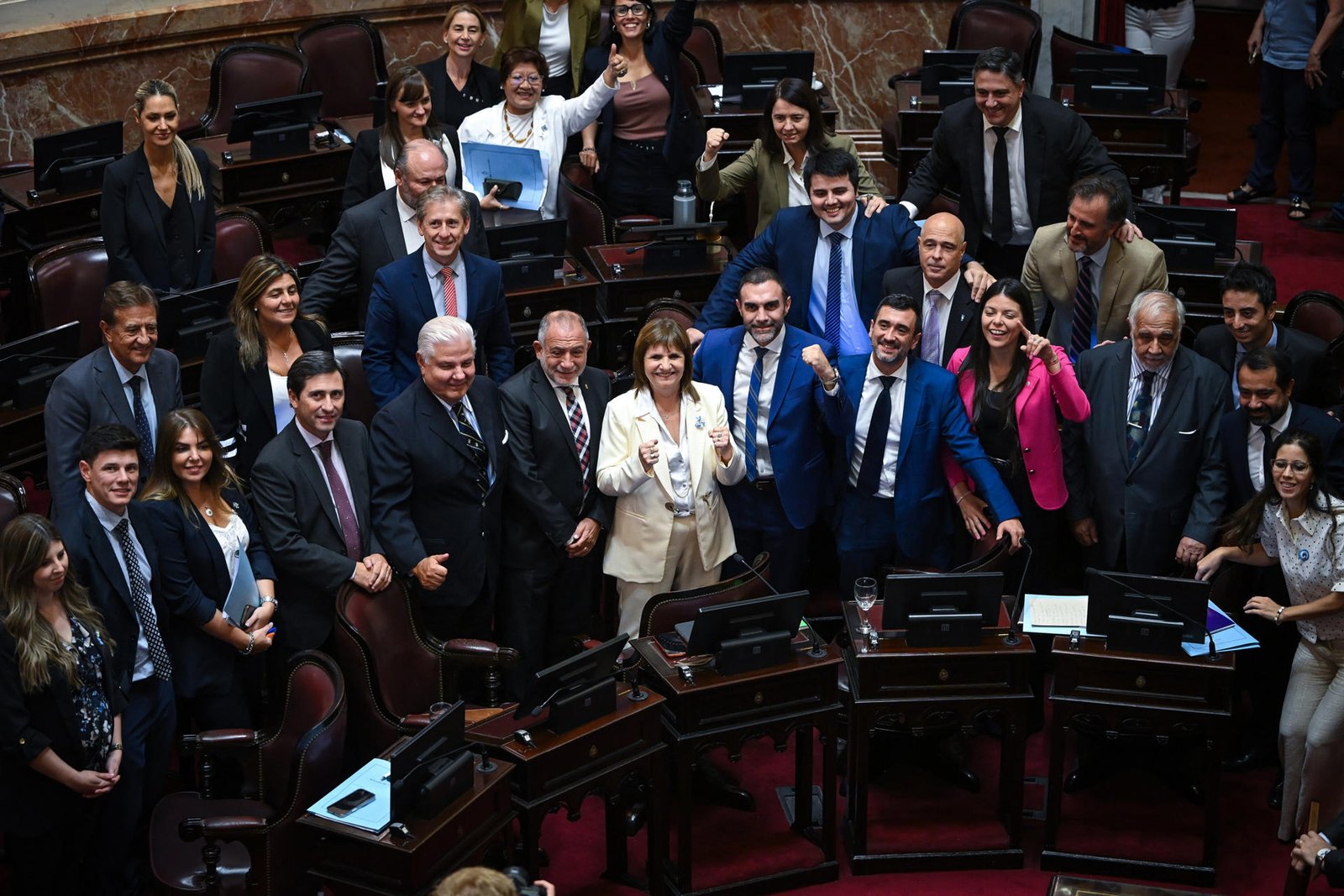
The Argentine Senate approved this Friday night (27), after extensive discussion and protests by unions outside Congress, the labor reform presented by the government of President Javier Milei. The proposal was approved with 42 votes in favor, 28 against and two abstentions, becoming law after having already been discussed and approved in the Chamber of Deputies.
This Friday’s vote took place amid tight security around the Argentine Parliament, where trade unions organized demonstrations against the project. The approval consolidates yet another political victory for Milei in Congress, as earlier his government also managed to approve the law that reduces the age of criminal responsibility to 14 years old.
The 42 votes in favor came from senators from Milei’s party, La Libertad Avanza, the Radical Civic Union (UCR), the PRO, party of former president Mauricio Macri, and other provincial blocs. The 28 votes against were from senators from Peronism and Kirchnerism. There were two abstentions.
During the discussion of the project, the senators who supported the government stated that the reform reduces bureaucracy, gives more legal security to companies and can encourage new hiring with a formal contract. In turn, the Kirchnerist and Peronist opposition stated that the reform reduces labor rights and weakens employee protection in relations with companies.
With approval in the Senate, the text is definitively sanctioned by the Argentine Congress and now goes for promulgation by the Executive Branch. Trade unions have already indicated that they may go to court to challenge the application of the new law.
Milei classified the approval as “historic” in a publication made on X moments after the vote in the Senate.
Understand what changes with the new labor reform
The new law approved by the Argentine Congress promotes broad changes to the rules that govern labor relations in the country. With the reform, the Milei government intends to reduce informality, encourage hiring and reduce legal disputes between employees and companies.
One of the main changes involves severance pay. From now on, the amount will be calculated based only on the worker’s main salary. Items such as bonuses, tips and the 13th salary no longer enter the account. The law also establishes a maximum limit for the calculation, which cannot exceed three times the average salary for the professional category.
Another novelty is the creation of the Labor Assistance Fund (FAL, in its Spanish acronym) – almost similar to the FGTS in Brazil. Companies operating in Argentina will begin to deposit a percentage of their payroll monthly into a specific account destined for the payment of compensation. For large companies, the contribution will be 1%; for small and medium-sized companies, 2.5%. If the accumulated amount is not enough to cover the compensation, the employer must pay the difference.
The working day may also change. The law allows shifts of up to 12 hours per day, as long as a minimum 12 hours of rest are respected between one shift and another. In addition, it creates the time bank system, which makes it possible to compensate overtime with time off, instead of immediate additional payment.
Vacations may be divided into smaller periods, as long as each part is at least seven days long. The list of services considered essential has been expanded, which means that certain sectors must maintain part of their operations even during strikes.
In the judicial field, the reform establishes a cap on the fees of lawyers and experts in labor actions. According to the new rule, the costs of the process cannot exceed 25% of the value of the sentence, a measure that, according to the government, seeks to reduce the number of legal actions.
The text also creates tax incentives to encourage the formalization of workers who currently work without registration, reducing charges for companies that hire new employees within the rules of the law.
In relation to unions, the reform maintains mandatory union contributions for two years, with a limit of up to 2% of the worker’s monthly salary. After this period, the charge is no longer compulsory. The law also establishes that agreements signed directly between companies and workers – by company or by region – will have priority over general collective agreements for the category. In practice, this reduces the power of national unions in negotiations.
The new law will come into force after its promulgation by President Milei and publication in the Official Gazette.
