
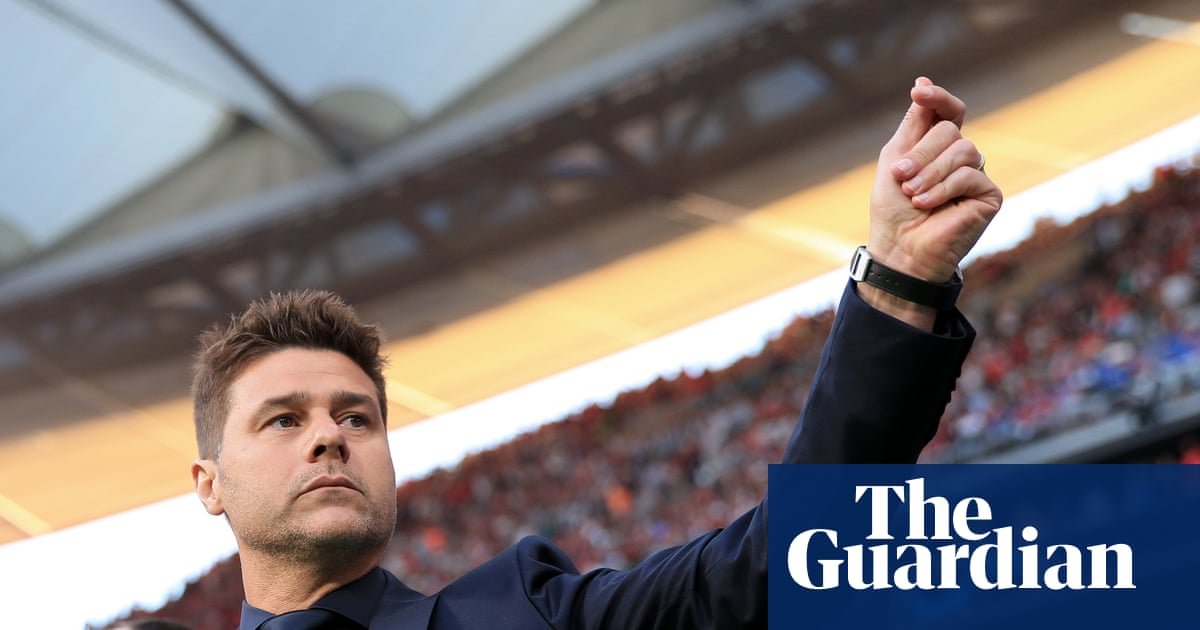
Tottenham Hotspur have tried everything. After sacking Mauricio Pochettino in November 2019 – five months after the club’s first Champions League final, with Spurs sitting 14th in the league and sleepwalking to second place in a weak UCL group – There came a pair of chronic (if cantankerous) title winners: José Mourinho and Antonio Conte. They gave a pragmatist (Nuno Espírito Santo) a Big Six test and moved on when performances instantly stagnated. Then arrived Ange Postecoglou; a staunch tactical ideologue whose principles excited at first before becoming a liability.
Thomas Frank, though, seemed like the appointment most reminiscent of Pochettino’s 2014 arrival. Both raised relatively unfancied clubs to prominence and established firm operational bedrocks. Both spoke about the importance of culture as much as on-field Xs and Os. Neither had been tested at a club of this caliber.
It’s worth remembering that Pochettino wasn’t an immediate hit. By the November international window of his first season, Tottenham sat 12th with more losses (five) than wins (four) from his first 11 games. Nonetheless, it’s a stretch that the Argentine clearly remembers with some fondness.
“When we arrived, we had the possibility to create something special,” Pochettino told the High Performance podcast earlier this week. “To build the new stadium, to finish the training ground, and to create the facilities that today is one of the best clubs in the world in terms of facilities. You need the trust of the owner, the trust and the vision of the guy they have, like Daniel (Levy), to create this. And then support, and have the patience with us, because in the beginning, it wasn’t easy.”
Pochettino acknowledged that he and his staff had to get “very creative” as there was “not too much money to invest in players” while construction was in process on the Tottenham Hotspur Stadium. During Pochettino’s first winter window, two weeks after Manchester City pried Wilfried Bony from Swansea for £28m to bolster their attacking depth, Tottenham sent £5m to MK Dons to acquire Dele Alli before immediately loaning him back to gain further seasoning.
Spurs found stability in time; after losing six of their first 14 league fixtures under Pochettino, they lost just six more times over the ensuing 24 contests. Harry Kane cemented himself as the first-choice striker, Spurs qualified for the Europa League by finishing fifth, and the fanbase’s favorite stretch of the modern era kicked off in earnest.
Frank’s tenure should be remembered as an ill-suited appointment at a time when the club couldn’t afford to tolerate mediocrity. These days, patience is a costly virtue. And yet, the Pochettino era Spurs would love to return to is a tale of patience being rewarded.
”We lived a moment when I was a really young coach, [coming in] from Southampton, and Daniel really trusted us and gave the confidence and patience for us to provide and show our quality as coaches,” Pochettino said. “There are not too many clubs that can do that.”
How the state of affairs has shifted. Tottenham is now among the world’s most fidgety clubs in the pyramid. Their squad is cobbled together from the wishlists of four former coaches. The profile of their next manager (and, with it, their inevitable next sacking) is complicated by the duality of Spurs at present: a team again mired in the bottom-quarter of the table, but safely through to the Champions League round of 16. The next steps for those two jobs require completely different approaches, and who Tottenham picks will be telling.
Among those in talks to take over is Roberto De Zerbi, a kindred spirit to Mourinho and Conte who would bring their previous success, albeit with a need to control transfers and a prickly disposition during rough patches. His hire would indicate that the club is still largely focused on European competition. De Zerbi suffered relegation during his sole flirtation with the drop (Benevento, 2017-18). John Heitinga, another reported candidate, is now on the coaching staff and would probably be a caretaker hire until a permanent hire can be made in the summer, when there might be a better set of options. Including … Pochettino.
While he has a publicised release clausethere’s little reason to think the US coach would abandon his team mere months before a home World Cup. He won’t want to reveal his post-Cup plans too soon, either – ask Julen Lopetegui how that works out.
But a reunion wouldn’t be without risk. Pochettino’s struggles with PSG and Chelsea were well-documented, and they’re clubs of a standard that Tottenham is desperate to match since opening a world-class arena. His honors list includes more runners-ups than trophies.
Nonetheless, Pochettino appears eager to embrace the challenge. In public appearances, he still refers to Tottenham as “we” – even in the context of playing Chelsea, a team he managed more recently. Last summer, the last time rumors of his return to north London were floated, he ended a press conference by saying it was because Tottenham is “my club.”
A decade has seen the Tottenham Hotspur Stadium evolve from a costly project that required strict book-keeping into a high-tension cathedral. Lately, though, it has hosted a brutal football experience. Fans estimate that of the unlucky 13 matches Frank managed at home, the supporters booed him on nine occasions.
Frank joins Graham Potter among managers who built their reputations on the bedrock of perceived overperformers before sullying it with short-lived failures at bigger clubs. And Tottenham stands beyond the point of desperation as they chase the successes of yesteryear.
