
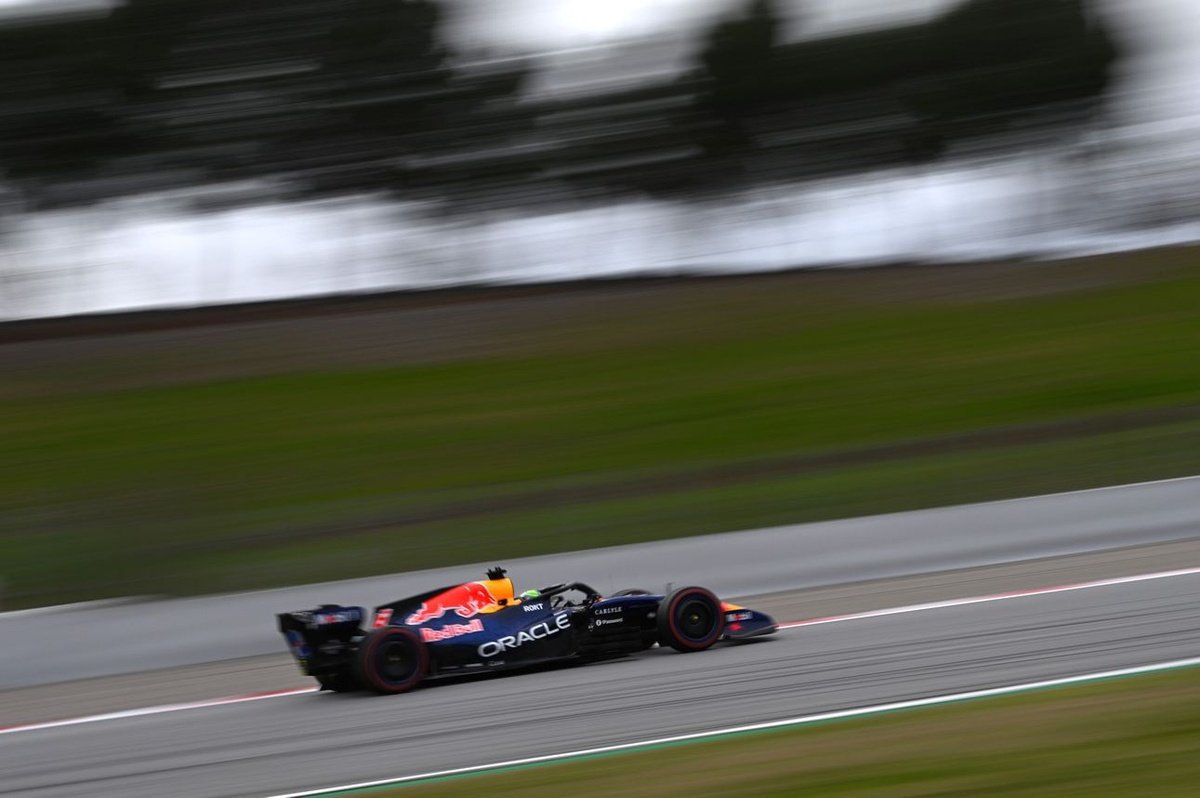
After what seemed like an endless back and forth about Formula 1’s much vaunted 2026 rules, cars have finally hit the track in Barcelona, a prelude to the series’ new era.
With the five-day shakedown held behind firmly closed doors, and coverage limited to guerilla reporting from a grassy knoll, the real answers of F1’s new pecking order and its racing product are yet to follow, starting at F1’s official winter testing in Bahrain and subsequently the Melbourne curtain raiser in March.
As is well known, the key bullet points of the new regulations include a bigger reliance on electric energy, active aerodynamics, an Overtake Mode to replace DRS as well as slightly smaller and more nimble cars that should also be safer, suffer less from dirty air and provide a better show. F1 is also switching to sustainable fuels from the first race in Australia.
That’s a lot of change at once, the biggest in many generations, with the desire to retain existing manufacturers like Honda and attract new ones such as Audi a big driving force behind the near 50-50 split between combustion power and the much more powerful MGU-K unit. A lot of the other rule changes have had to be devised as a result of that to safeguard and where possible improve the spectacle, with the outgoing generation of cars having piled on aerodynamic load and converged in performance to such an extent that 2025 became a qualifying championship.
Under the watchful eye of a growing and more diverse fanbase, there is a lot riding on the success of 2026 to capitalise on F1’s newfound popularity, both at F1 management’s owner Liberty Media and at the FIA, the governing body that has had to come up with a brand-new regulatory framework after long and numerous discussions with the teams.
“There’s a huge amount of excitement before the season, and of course a degree of nervousness of the unknown,” FIA single-seater director Nikolas Tombazis told Autosport at the recent Autosport Business Exchange in London.
“We have worked a lot on the aerodynamics to make sure cars can follow each other more closely. We definitely made a step forward with the ’22 regulations, which did then deteriorate from its initial target a bit. So, we think we’ve understood why and what things need to be improved.
David Croft, Sky Sports F1 Commentator, Graeme Lowdon, Team Principal, Cadillac Formula 1 Team, Nikolas Tombazis, Single-Seater Director, FIA, Jim DeLorenzo, Global Head of Sports, Apple
Photo by: Autosport Business Exchange London, A Motorsport Network Event
“Also, the aerodynamics of course go together with the power unit and how the management of energy will work, so the DRS will be replaced by a more energy-based solution, let’s say. So we hope all of these things put together will produce exciting races and good fights.”
Pulling levers
The sheer amount of change, as well as the stark difference in terms of how lap time will be generated, has certainly led to some nerves in the paddock, with some observers and technical personnel worried about the prospect of huge closing speeds as cars run out of electric energy on the straights.
Derating is, of course, nothing new in F1. But the energy involved will ramp up from 120kW or 160bhp last year to 350kW or 500bhp. Cars running out of energy on the straight will lose around half of their horsepower, which has been likened to a car jumping on the brakes.
There are also question marks around just how effective the MGU-K based Overtake Mode will be to replace the outgoing DRS system as F1’s main overtaking tool. With drivers able to deplete their batteries much more quickly if they want to, wheel-to-wheel duels could become an intriguing and bewildering game of chess.
The FIA is keenly aware of those concerns, and while some appear to be borne out of an individual fear of being uncompetitive rather than the overall good of the sport, there is no denying that there are a lot of moving parts that will all have to go according to plan for F1 to be the kind of spectacle fans expect to see.
As a result, the governing body has ensured it has kept plenty of levers at its disposal to adjust the on-track action on a race-by-race basis. That’s nothing out of the ordinary, as DRS zones were initially also tweaked to try and ensure overtaking was neither too difficult nor too trivial.
“Everything is new, so we’ve got various scenarios on how to react in certain circumstances, so that even if for whatever reason we don’t hit it right on day one, we can tune to be where we need to be,” Tombazis explained. “We want [overtaking] to be a challenge and to be something won at the track. Exciting racing, it’s one of the things we hope to see.”
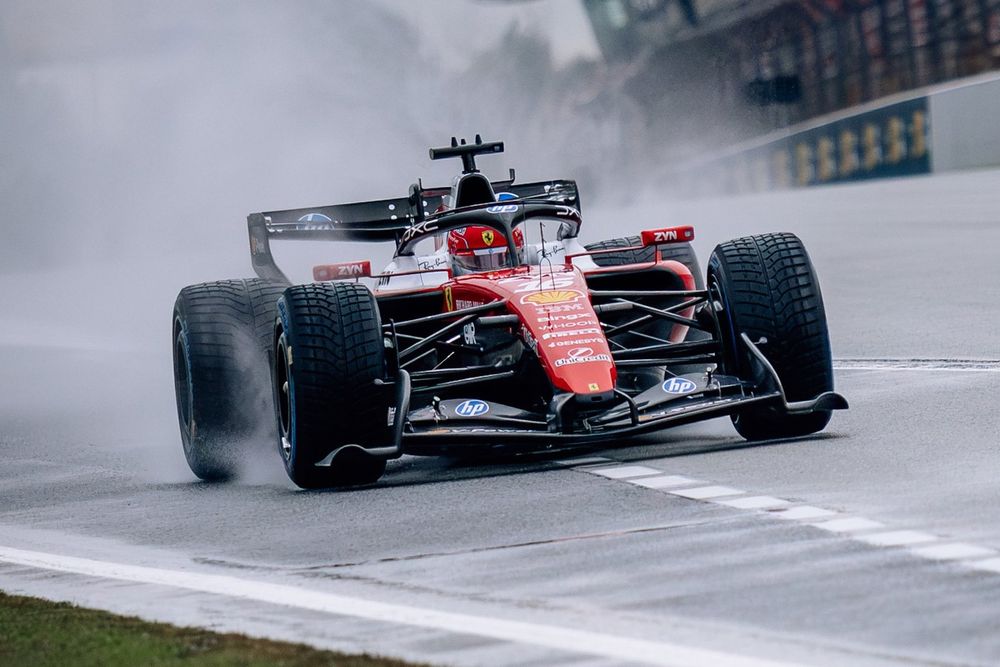
Charles Leclerc, Ferrari
Photo by: Formula 1
Tombazis explained the FIA also has “quite a lot of flexibility” to adjust energy deployment parameters and its effect on the show, but that will depend on the findings from Bahrain’s double three-day test and further evolve based on the first set of races of the season.
“One thing we don’t have at the moment is we haven’t seen exactly the performance envelopes of all 11 cars,” he said. “We’ve got a reasonably good guess, but we don’t have the final real data. Once we have that and we see on track how they behave, then we can definitely react to these parameters.
“These parameters, like how you set up the overtake zones, are parameters that you can adjust. Of course, we do need to give teams advance notice. We don’t change them on Friday at the racetrack, but there are things we can simulate and I think we’ll be okay.”
Another lever is a catch-up mechanic dubbed ADUO – Additional Development and Upgrade Opportunities – that afford power unit manufacturers who have fallen more than 3% of ICE power behind the lead manufacturer some development and budget cap headroom to redevelop elements of their combustion engines, some of which are otherwise frozen.
Tombazis feels F1 has also demonstrated at the last ruleset that it can swiftly reach to unforeseen issues, like the porpoising that plagued the 2022 season and was missed by the large majority of the paddock. “None of the 800 [aerodynamicists] picked it up before it happened, so it was a surprise for the whole industry,” he pointed out.
“But by and large we managed to get it under some sort of control before the first race in 2022 – not eliminated – and I guess it became a non-topic by mid-season, I would say. So, I think the whole industry and the FIA have a good record in trying to react to issues. We have quite a lot of good people, simulation tools, we collaborate a lot with the teams, so if anything comes up, of course we will act.”
Why FIA wants to put F1 cars on a diet
One topic the FIA does not want to compromise on, however, is F1 2026’s new weight limit of 768kg, a reduction of 32kg which some critics feel was plucked out of thin air. Some of the reduction is achieved by reducing the dimensions of the cars, with a shorter wheelbase and narrower width and narrower tyres, but the weight reduction is still seen as one of several performance differentiators for the 2026 season, amid paddock rumours that only several teams have been able to meet it for the start of the campaign.
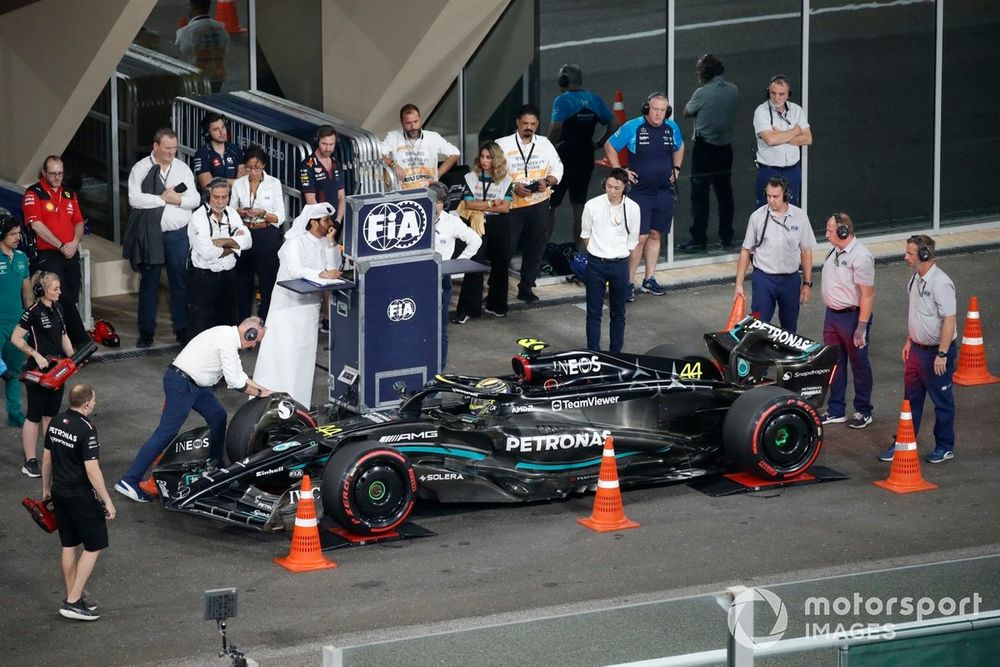
Lewis Hamilton, Mercedes F1 W14, at the weighbridge
Photo by: Jake Grant / Motorsport Images
If it were up to Tombazis and the FIA, however, and they’ll find the driver corps will unanimously agree with it, a measly 32kg reduction is not nearly enough. That’s one element of why exploratory talks over a subsequent move to cheaper and simpler V8 engines in the future is so appealing to the governing body.
“Weight does contribute to the nimble car concept, we would love it to go down further in the future, and I’m confident we will,” said Tombazis. “It’s been going up in the last 20 years or so, mainly because of a combination of factors. We would like to put Formula 1 on a diet, this is the first step and then we need to push a bit more for the future.”
This is where the FIA has received some inevitable pushback from teams, as the last thing F1 designers and engineers like to hear about is bigger restrictions. But there will be no haggling on this topic, as that is part of why the weight and the complexity of the cars has gradually crept up so much in recent years in the first place.
“We were quite adamant that we are not going to be tweaking the weight on team demand, we feel it needs a bit of discipline and a bit of pressure to achieve,” Tombazis held firm. “What has happened in previous regulation cycles is that teams design systems that are not essential for the functioning of the car, but are systems that just make the car incrementally better, maybe not even visible to the fans in many cases. A lot of these systems crop up on the car, and then teams then say: ‘Well, our car is five kilos overweight, should we increase the weight?’
“In the past we have been a bit more flexible on that and tried to comply, but this year we said: ‘No, this is the limit’. And to the best of our knowledge, there are teams who are slightly underweight, so it is entirely feasible. Teams need to be very careful when they design a system, they need to say: ‘That system is going to gain us X amount of lap time, it’s going to weigh an extra kilo and a half, is it worth it? And they need to make this decision a bit more consciously.”
When the F1 2026 regulations will be a success
So when can F1’s paradigm shift be considered a success? The governing body argues that a bumper 22-car grid with a variety of OEMs is already a big win in and of itself.
But the technical and sporting regulations that should ultimately lead to a more compelling product form an intricate web, so the FIA is aware that F1 2026 could get off to a rocky start and might have to mature over time using the levers Tombazis mentioned.
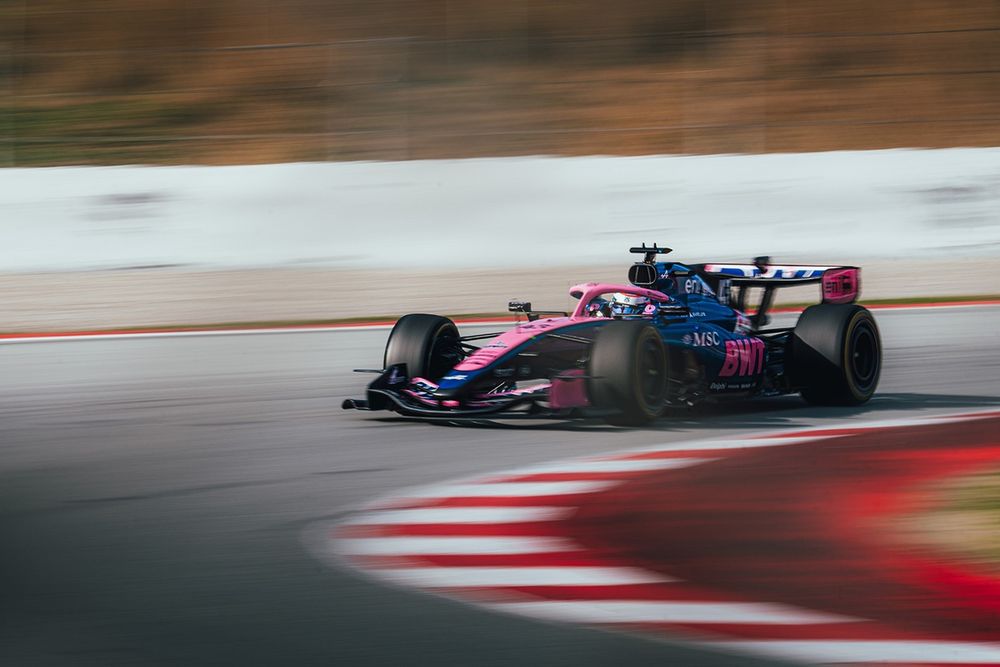
Franco Colapinto, Alpine
Photo by: Alpine
“Exciting races is the main thing and we will work to get there, whether it’s on day one or day ten, I don’t know, but it will be very soon that we manage to get there, I’m quite confident,” Tombazis was adamant. “I would perhaps argue some boxes are already ticked. The cars are incrementally safer than they have been before, there are some important safety improvements.
“One of the reasons was to attract newcomers to the sport, we certainly have that. If we had not made the rules, I think we would be stuck in a situation with maybe two power units in Formula 1, so there would be 10 teams, five with one power unit and five with the other, we don’t think that would have been necessarily very good. We’ve got Audi, Cadillac, Ford, and clearly Honda reversed its decision to pull out by coming back in again.
“There were some important sustainability objectives, such as the bigger batteries, the bigger proportion of electrical power, and the [sustainable] fuels, so again that box is already ticked. There’s a lot of innovation there.
“But obviously that is in itself not enough to be complacent or happy about, we need to get the full job done.”
We want to hear from you!
Let us know what you would like to see from us in the future.
– The Autosport.com Team
