
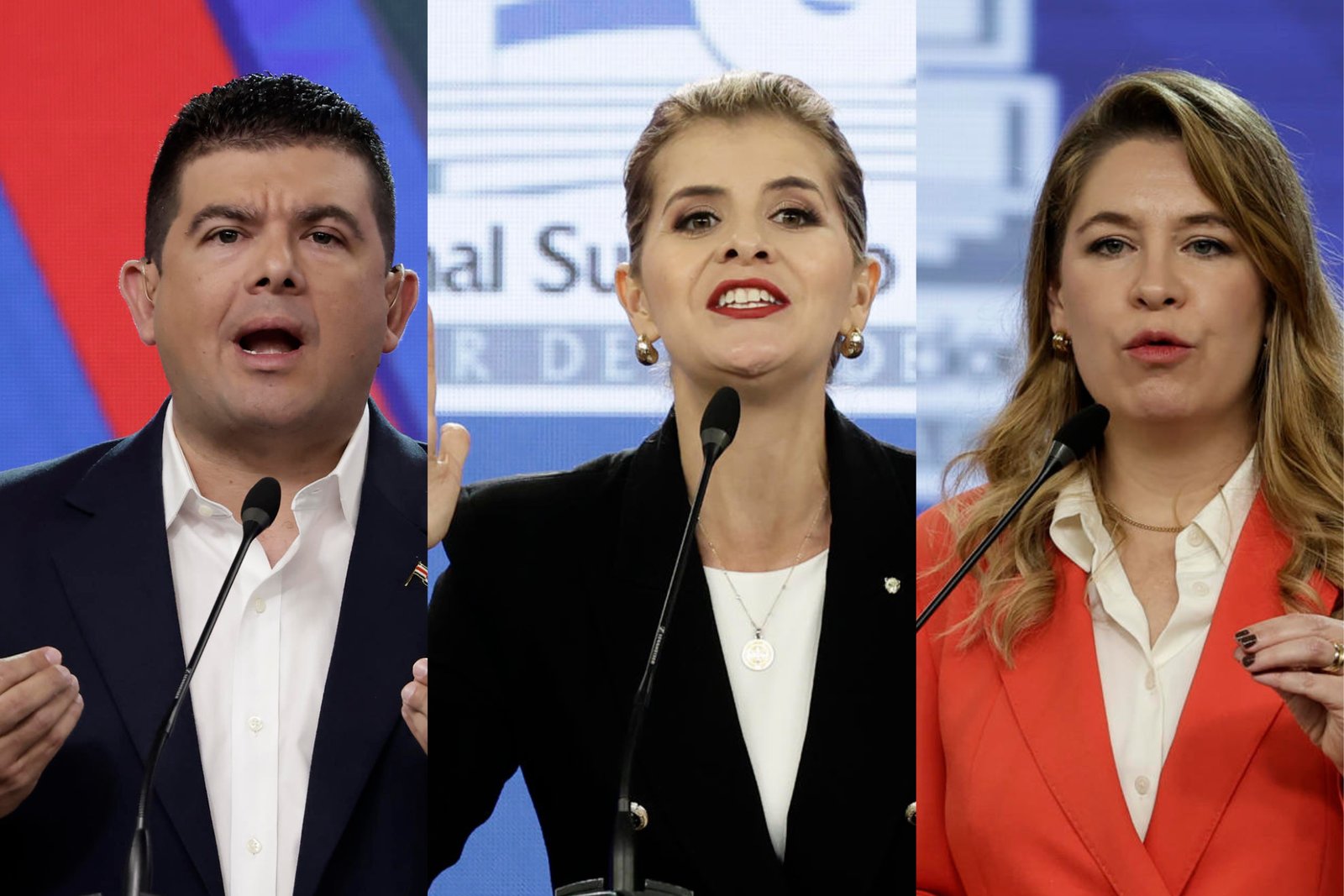
Costa Rican voters go to the polls this Sunday (1st) to choose the new president in a scenario of deep concern. The growing wave of violence and the expansion of drug trafficking became the central themes of the election, putting pressure on the 19 candidates to present firm solutions.
Why did security become the main issue of the election?
Costa Rica, once seen as an oasis of security in Latin America, is facing a crisis. The country saw its homicide rate soar to 16.6 per 100,000 inhabitants, the third highest in Central America. In 2025, cocaine seizures doubled compared to the previous year and scandals such as the dismantling of a transnational cartel and the arrest of a former minister for drug trafficking shook the population’s confidence.
Who is the favorite candidate and what does she propose for security?
Laura Fernández, government candidate and former minister of President Rodrigo Chaves, leads the polls. With a “hard-line” stance, she proposes strengthening the police, expanding the use of scanners at ports and borders, and greater cooperation with international agencies such as the US DEA. Its most controversial proposal is the implementation of states of exception in critical areas to combat crime.
What is the “state of exception” that she defends?
It is a drastic measure that allows the government to temporarily suspend some civil guarantees and freedoms, such as the right to assembly and the inviolability of the home, in specific locations. The objective is to facilitate large-scale police operations to capture criminals in areas of high violence, a strategy that gained notoriety when used widely in El Salvador to combat gangs.
What are the alternatives proposed by the other candidates?
Centrist Álvaro Ramos focuses on technology, proposing a ballistics laboratory to track weapons, the hiring of 6,000 police officers and the use of “smart containers” with electronic seals to prevent trafficking. Claudia Dobles, from the left-wing opposition, rejects the state of exception and defends prevention, with more investments in education and police intelligence to prevent young people from committing crime.
What do the electoral polls indicate about the dispute?
The latest survey shows a comfortable lead for the government candidate, Laura Fernández, with 44% of voting intentions. His main opponents, Álvaro Ramos and Claudia Dobles, appear very far away, with around 9% each. However, the high number of undecided voters, which reaches 26%, could still influence the outcome of the vote for the 2026 to 2030 term.
This content was generated with artificial intelligence. To access the information in full and delve deeper into the topic, see the report below.
SEE ALSO:
- Violence and drug trafficking are highlighted in Costa Rica’s electoral race
