
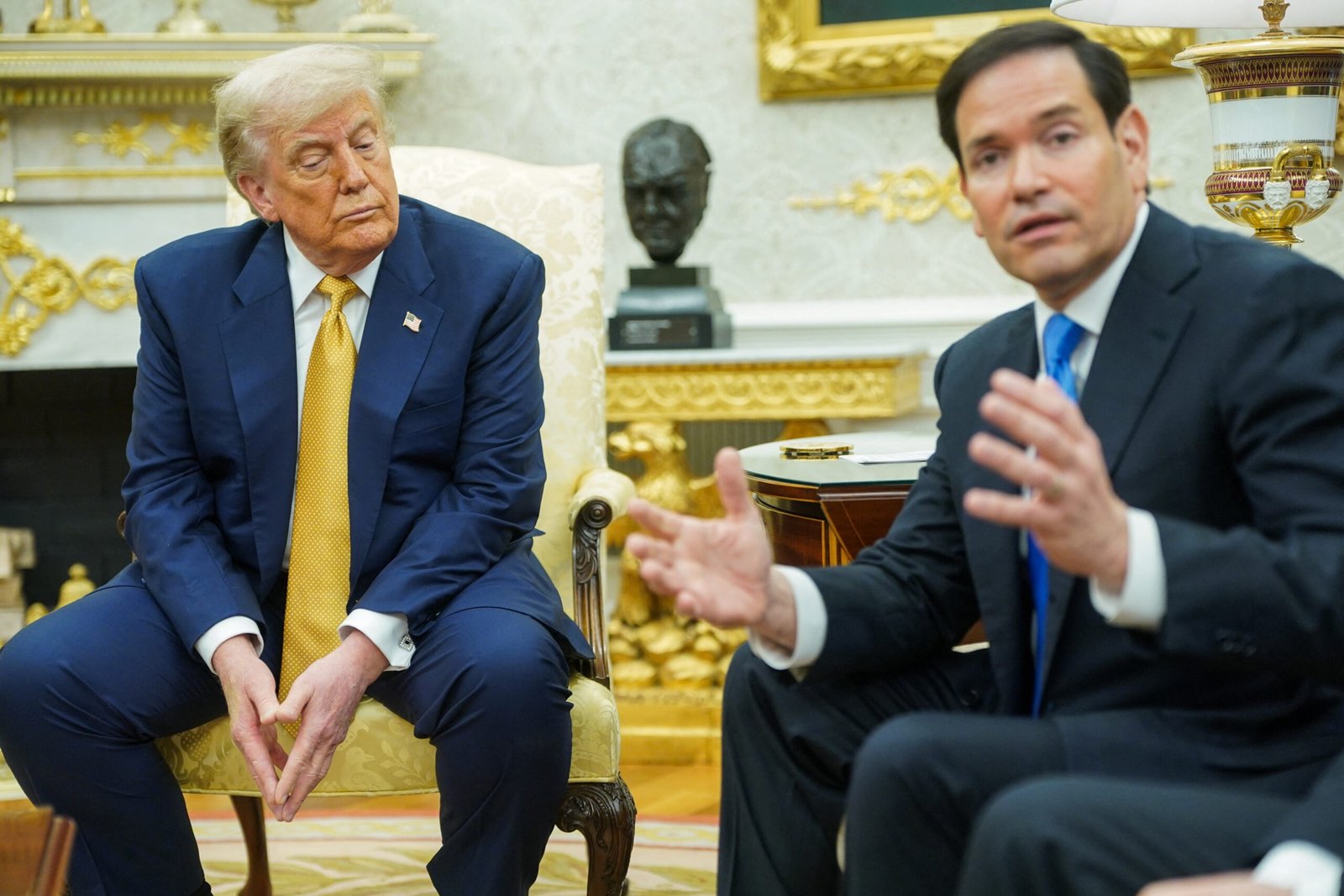
The President of the United States, Donald Trump, officially launched this Thursday (22) his “Peace Council”, in a ceremony at the Davos Economic Forum. Around 60 world leaders were invited to participate in the body, including Lula – who has not yet responded. Argentine President Javier Milei participated in the ceremony. ➡️ Understand: the Peace Council is a structure created by Trump to work on maintaining peace and rebuilding the Gaza Strip. The initiative can also act in other international conflicts in the future. According to the council’s statute obtained by Reuters, Trump will have a lifetime term as president of the group and broad powers. Countries that want a permanent seat will need to pay US$1 billion (R$5.37 billion). The resources will be administered by the US president. The international community, however, fears that the Peace Council will become a kind of “parallel UN” and weaken the role of the United Nations. Understand, point by point, what is known about the Peace Council What is the Gaza Peace Council? How does the White House say it will work? And what about the UN? Who will chair the council? Who is on the founding executive board? Which countries have already confirmed their participation in the council? Who else was invited? Why is Trump’s invitation a big deal for Lula? And the Palestinians? “Who thought this could work?”, assesses Marcelo Lins about the Peace Council 1. What is the Peace Council? The creation of the council was foreseen in the second phase of the peace agreement brokered by the US and signed by Israel and the terrorist group Hamas, in October last year. The peace plan, released by the White House at the end of September, has 20 points and envisages the Gaza Strip as a zone free of armed groups and under the command of a transitional government, formed by a technocratic and apolitical Palestinian committee, which will be supervised by the council. 2. How does the White House say it will work? The council, which will have an advisory role, will advise the committee responsible for the provisional administration of the Gaza Strip, which began its work this month in Cairo, under the command of former Palestinian deputy minister Ali Shaath and 14 other members. The entity “will help support effective governance and the delivery of high-level services that promote peace, stability and prosperity for the people of Gaza”, announced the White House. The proposal, however, is viewed with fear by the international community and has received criticism from diplomats and analysts. “It’s one of those initiatives that makes us wonder: who planned this? And who thought it would work? Many analysts, including myself among them, are absolutely skeptical about what could happen with this advice”, said presenter Marcelo Lins, on the GloboNews Internacional program this Sunday (18). 3. And what about the UN? According to diplomatic sources interviewed by Reuters, there is great concern, especially among European governments, that the council will harm the UN. “It’s a ‘Trump United Nations’ that ignores the fundamental principles of the UN Charter,” one said. The Peace Council’s draft statute makes a veiled criticism of the United Nations, saying that “a more agile and effective international peacebuilding body” is needed and that it takes “courage to abandon approaches and institutions that have too often failed.” For Oliver Stuenkel, professor of International Relations at Fundação Getúlio Vargas (FGV), the structure proposed by Trump brings together a series of flaws and concentrates too much power in a single leadership, which would be that of the President of the United States himself. “There is a real fear that the Council will become a kind of parallel UN, controlled by the United States,” says Stuenkel. 4. Who will preside over the Peace Council? Donald Trump will be the inaugural president. With broad powers, he will have the final say in voting, can choose the countries he wants to invite and can also revoke the participation of anyone who displeases him. According to the council’s draft statute, anyone who wants to be part of the group will serve three-year terms, but a billion-dollar fee guarantees fixed tenure. “Each Member State will serve a term of maximum three years from the date of entry into force of this Charter, renewable by the President. This three-year term will not apply to Member States that contribute more than US$1 billion in cash to the Peace Council in the first year”, says the document. Trump with Secretary of State Marco Rubio Reuters/Nathan Howard 5. Who is on the founding executive board? In a statement on Friday (16), the White House released the names of the seven named as founding members of the council. Those chosen by Trump were: Marco Rubio, the head of US diplomacy Tony Blair, former UK Prime Minister Steve Witkoff, US special envoy for peace in the Gaza Strip, Jared Kushner, Trump’s son-in-law Ajay Banga, the president of the World Bank Marc Rowan, American financial tycoon Robert Gabriel, Trump’s faithful collaborator on the National Security Council The responsibilities of each member of the council have not yet been disclosed. The American president also appointed American Major General Jasper Jeffers to direct the International Stabilization Force (ISF) in Gaza. 6. Which countries have already confirmed their participation in the council? This Wednesday (21), the White House stated that 25 countries have already accepted the invitation to join the Peace Council. Among them are: Israel Argentina Saudi Arabia United Arab Emirates Bahrain Jordan Qatar Egypt Turkey Hungary Morocco Pakistan Indonesia Kosovo Uzbekistan Kazakhstan Paraguay Vietnam Armenia Azerbaijan Belarus Trump also said on Wednesday that Putin accepted the invitation, but the Russian president said he was still studying the proposal. 7. Who else was invited? According to the United States government, invitations were sent to leaders of around 60 countries. So far, only Norway, Sweden and Italy have spoken out refusing the invitation. Italian Prime Minister Giorgia Meloni said she needed more time to analyze the proposal before committing to membership. Other countries said they were still evaluating what they would do. Some of them are: Brazil Russia China France Canada United Kingdom Germany Japan Ukraine Vatican 8. Why is Trump’s invitation a fair shot for Lula? Invited to join the council on Saturday (17), Lula has not yet accepted the invitation. It should only be assessed whether to accept it or not next week, according to sources with knowledge of the matter. The situation is a fair deal for the Brazilian president, who, since the start of the conflict in Gaza, in October 2023, has reiterated criticism of Israel’s military operations in the Palestinian territory. The Brazilian president defends the creation of a Palestinian state, this position, recorded in speeches, interviews and demonstrations in international forums, clashes with the invitation made by Trump. If he accepts to join the peace council, Lula could be charged with consistency. On the other hand, a possible refusal could displease the North American president and harm the rapprochement that has occurred between them since the tariff negotiations for Brazilian products exported to the USA. 9. What about the Palestinians? So far, it is unclear whether Palestinians will have a stake in the council, raising questions about the effectiveness of the new body. “A council that does not have any Palestinian in its composition to speak about Gaza […] It leaves a lot of doubts in the air, and more than doubts, suspicions about the interest and role of those most interested in this, the Palestinians”, assesses Marcelo Lins.
Source link
Trump launches ‘Peace Council’ in Davos
50
