
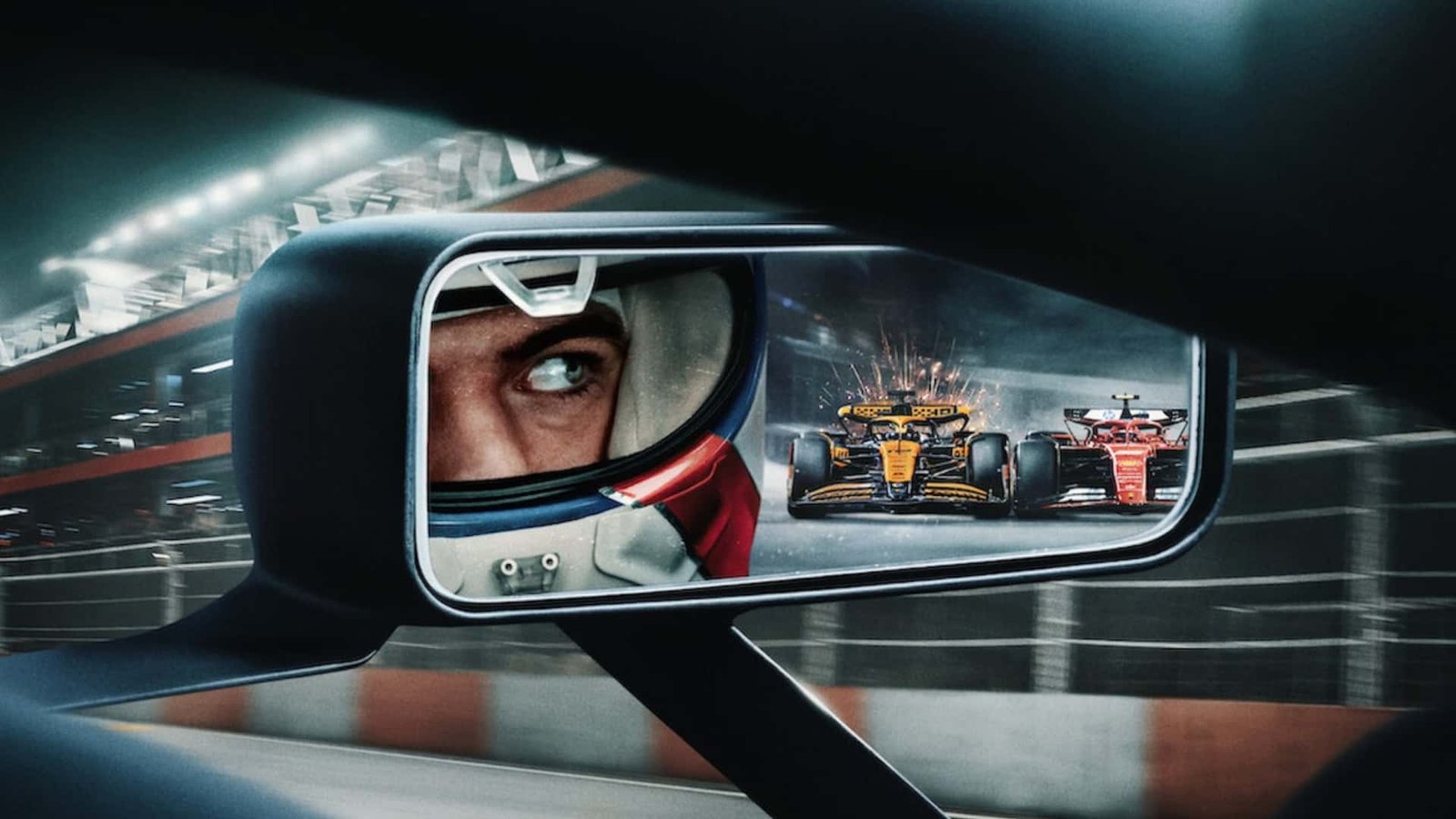
I’ll get one thing out of the way first: Drive to Survive is the best piece of marketing Formula 1 has ever done. It cracked the American market, blew up global viewership, and turned team principals into rockstars.
According to Motorsport.com’s analysis in 2025, 16 percent of the new fans gained over the previous five years say the Netflix docuseries was their entry point, with younger audiences being won over by the personalities of drivers and the rivalries that erupt between them.
This drama, however, is a sticking point for many long-term fans of the championship. If you’ve been watching F1 through Netflix’s lens, you’ve likely been sucked in by a reality the producers wanted you to see—something that isn’t necessarily that close to the truth.
A lot of the drama shown during the series has been manufactured in the editing process. For a new fan who thinks every radio message sounds like a declaration of war and every teammate is like a bitter rival, this is the reality, this is what Drive to Survive got wrong.
Frankenstein Radio Messages
Drive to Survive Season 6 filming
Photo by: Netflix
This is perhaps one of the more deplorable sins made by the producers. In order to create the narrative they want to tell, Drive to Survive has been known to stitch radio messages together to support the storytelling. These messages may have happened in a different order than what you’re hearing on the show, or even from a different race entirely.
While you may hear the odd angry message from driver to engineer, for the most part, they’re calm and deliberate. And that’s not just hearsay; Max Verstappen was critical of the radio messages, saying in 2025 that: “Apparently, I was very upset after Miami. I literally had the best time ever Sunday night. So, I don’t know what I was upset about.”
Fabricated Rivalries

Guenther Steiner in Drive to Survive Season 6
Drive to Survive has often painted friendships as intense rivalries. For example, Season 4 showed the friendship between then-McLaren teammates Lando Norris and Carlos Sainz as a relationship built on jealousy and fighting, when in fact they’re two of the closest drivers on the grid.
This level of fabrication, including producers sometimes even stitching together different races, was something that pushed four-time champion Max Verstappen to boycott the show.
He said, “Of course, I understand when you create a show, there needs to be drama, it needs to be exciting. But I’m a guy who finds it also very important that you’re portrayed well, and that they do not start to copy comments on the different kinds of footage, while it didn’t happen like that.
“I had to explain it to them that that was my view. Otherwise, I didn’t want to be part of it. But yes, they understood.”
He has since returned after sitting out for a number of seasons.
Sound Design
Toto Wolff is interviewed by Sky Sports F1 at Abu Dhabi GP 2023
Photo by: James Sutton / Motorsport Images
Radio messages aren’t the only thing being fabricated. It’s no secret that F1’s current hybrid powertrain doesn’t sound as good as fans want it to. So to make it more interesting to listen to, the producers also stitch together different sounds for a more dramatic effect.
There are plenty of tire screeches, gearshifts, and crowd chanting where there shouldn’t be. It sounds amazing, but it (sadly) isn’t anywhere close to reality.
The Real Damage: The Reality Of A Race
In the series, every race is pure wheel-to-wheel combat. You can smell the adrenaline through the screen as your favourite drivers rocket their way to the podium in front of fans laden with merchandise.
Unfortunately, like any sport, the reality is that not every race is a good one. Sometimes even the best circuits can result in a race you wish you’d watched on fast-forward, while other times even Monaco can surprise you.
And while it’s great to believe that drivers are racing at full pace, 100 percent of the time, they’re often fuel or tire saving.
My opinion? This has damaged F1 more than anything else. Races are followed by tsunamis of comments on social media from fans who were expecting more because that’s the expectation Drive to Survive has instilled in people.
Lewis Hamilton makes second Ferrari F1 test at Barcelona 2025
Photo by: Ferrari
F1 is like coffee. You can be given a choco-mocha-double-frappe latte, which blows your head off with sugars and flavors with sprinkles on top, and sometimes you can have a black coffee.
The former is an onslaught to the senses—a race full of unsubtle racing. The latter is something you have to dig deeper into. It may be boring on the surface, but pause after a sip and explore the hidden flavors that lurk beneath: the development war happening behind the scenes, the strategy slowly being implemented, and the mental battle each driver is embedded in.
For The Fans
Does this make Drive to Survive a bad series? Absolutely not. It is a masterpiece example of storytelling, and F1 wouldn’t be as popular as it is now without it. But when the series comes out later this year, be wary of the engineering not only of the cars, but of the stories it creates.
