
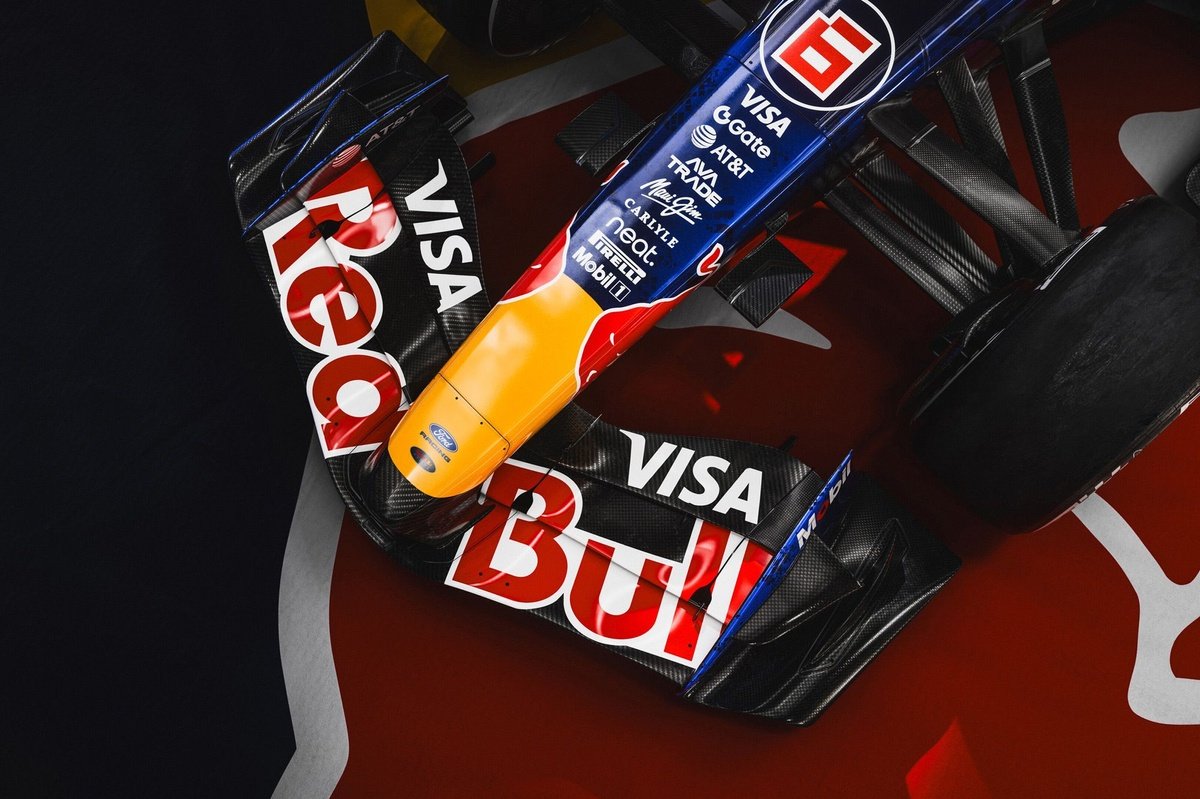
On the eve of Formula 1’s new era, the obvious question is where all teams and manufacturers stand, but also what the biggest performance differentiator will be this season.
FIA single-seater director Nikolas Tombazis has shared the expectation that the internal combustion engine will largely determine the pecking order in 2026. Ben Hodgkinson, director of Red Bull Ford Powertrains, shares that view in part, but not entirely.
Asked by Autosport whether the internal combustion engine (ICE) would be the main performance differentiator in 2026, Hodgkinson acknowledged this was likely for the new power units – despite the increased share of electrical power – but added that the aerodynamic side of the regulations should not be underestimated.
“I think within the power unit space itself it could be true that the internal combustion engine might be the biggest differentiator,” Hodgkinson said. “I think that on the ERS side everyone will be sort of 99% efficient on their power electronics and their motor.
“I think the biggest differences are probably going to be on the ICE side, and that does work with your fuel partner a lot as well. So in our case, ExxonMobil has been really vital in trying to get as much performance as we can out of the ICE.”
That said, he does not expect a repeat of 2014. Back then, Hodgkinson’s former employer Mercedes was so far ahead with the power unit that its dominance was effectively locked in for years.
“I think the differences between the power units are going to be less than we’ve seen in 2014, because the power unit or the ICE in particular is very, very similar,” he explained. “Yes, it’s got sustainable fuels and yes, we’ve lost the MGU-H and there’s been a compression ratio limit. There’s been lots of tweaks to the regulations that deliberately kind of reset combustion technology, but it’s not a million miles away [from what we had].”
Red Bull Racing livery
Photo by: Red Bull Content Pool
In certain respects, the regulations have become even more accessible than before, which was also the intention for newcomers such as Audi.
“It’s not like we’re suddenly developing a different configuration,” Hodgkinson pointed out. “It’s still a V6, and it’s still fundamentally the same. All the lowering of things like compression ratio and boost limits have actually made the loads a bit less, so the stress the parts have to go through is a little easier.
“I think the power units could be similar. Maybe I’m saying that because technically we’re newcomers as Red Bull Powertrains, although an awful lot of my staff have lots of F1 experience. Maybe I don’t feel so much like a newcomer as perhaps we should do, and maybe that’s why I’m saying that.
“It’ll be interesting to see where all the other teams are, but I guess there’s a bigger risk on the aero side.”
The FIA has acknowledged that it expects differences on that front as well, although the governing body added that there will be significant convergence in the months – as was the case in 2022. Hodgkinson, however, still believes it could be a major performance differentiator in 2026.
“But aerodynamics is not really my expertise, so you shouldn’t really take it as an official statement,” he laughed. “But it’s a complete reset with the whole car, it’s not just a reset for the power units. So yeah, there should be differences, and we’ll see what they are.”
We want to hear from you!
Let us know what you would like to see from us in the future.
– The Autosport.com Team
