
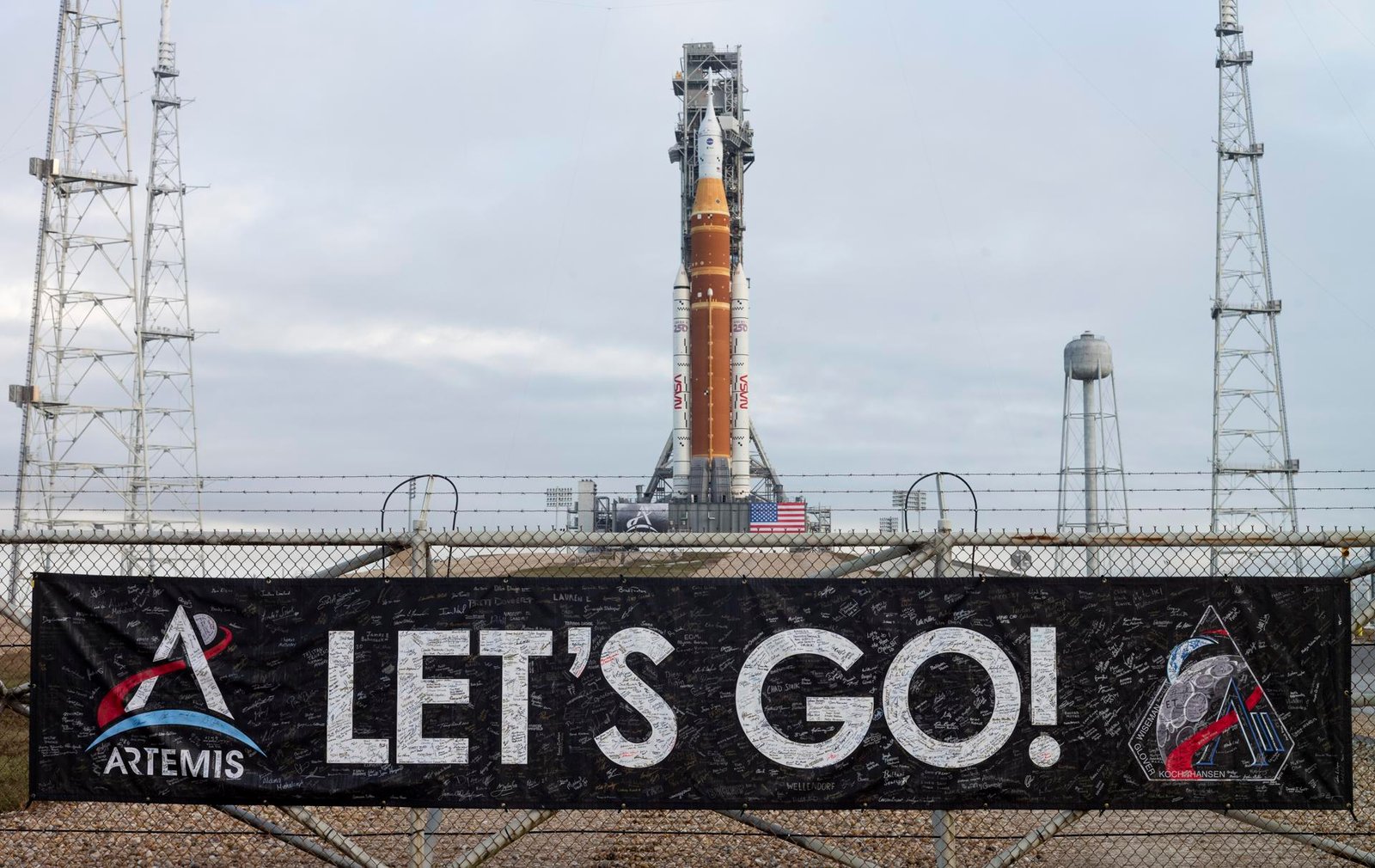
NASA has entered the final phase of preparation to launch, starting in February, the Artemis II mission, which should take four astronauts on a manned flight around the Moon. If confirmed, the mission will mark the first human return to the lunar environment since the end of the Apollo program in 1972.
According to NASA, the Space Launch System (SLS) rocket and the Orion capsule, which will serve to transport the crew of the Artemis 2 mission around the Moon and back to Earth, have already been transported and installed on platform 39B at the Kennedy Space Center, in Florida, formally beginning the launch campaign.
Artemis 2 will last an estimated ten days and will carry out a manned flight around the Moon, without landing. According to NASA, the mission will serve to test, in a real environment, the navigation, communication and life support systems necessary for human operations outside low Earth orbit, paving the way for later lunar missions.
The crew will be made up of NASA astronauts Reid Wiseman (commander), Victor Glover (pilot) and Christina Koch (mission specialist), as well as Canadian Jeremy Hansen, from the Canadian Space Agency.
According to the The New York Timesif successful, Artemis 2 will be the first manned flight to circumnavigate the Moon in more than five decades. The Space Launch System, measuring around 98 meters high, is the most powerful rocket ever developed by the American agency.
The launch of the mission was initially scheduled for February 6, but the exact date still depends on the completion of final tests, including the so-called wet dress rehearsal, which simulates the entire countdown with fuel loading. The schedule is also dependent on weather conditions on the Florida coast.
According to a report from USA TodayNASA is monitoring forecasts of atypical cold in the Kennedy Space Center region, as mission guidelines prevent the launch if temperatures are between 3°C and 9°C. Given this scenario, the agency maintains alternative launch windows scheduled for March and April.
On its return to Earth, the Orion capsule will land in the Pacific Ocean, in a stage used to test the heat shield with astronauts on board.
