
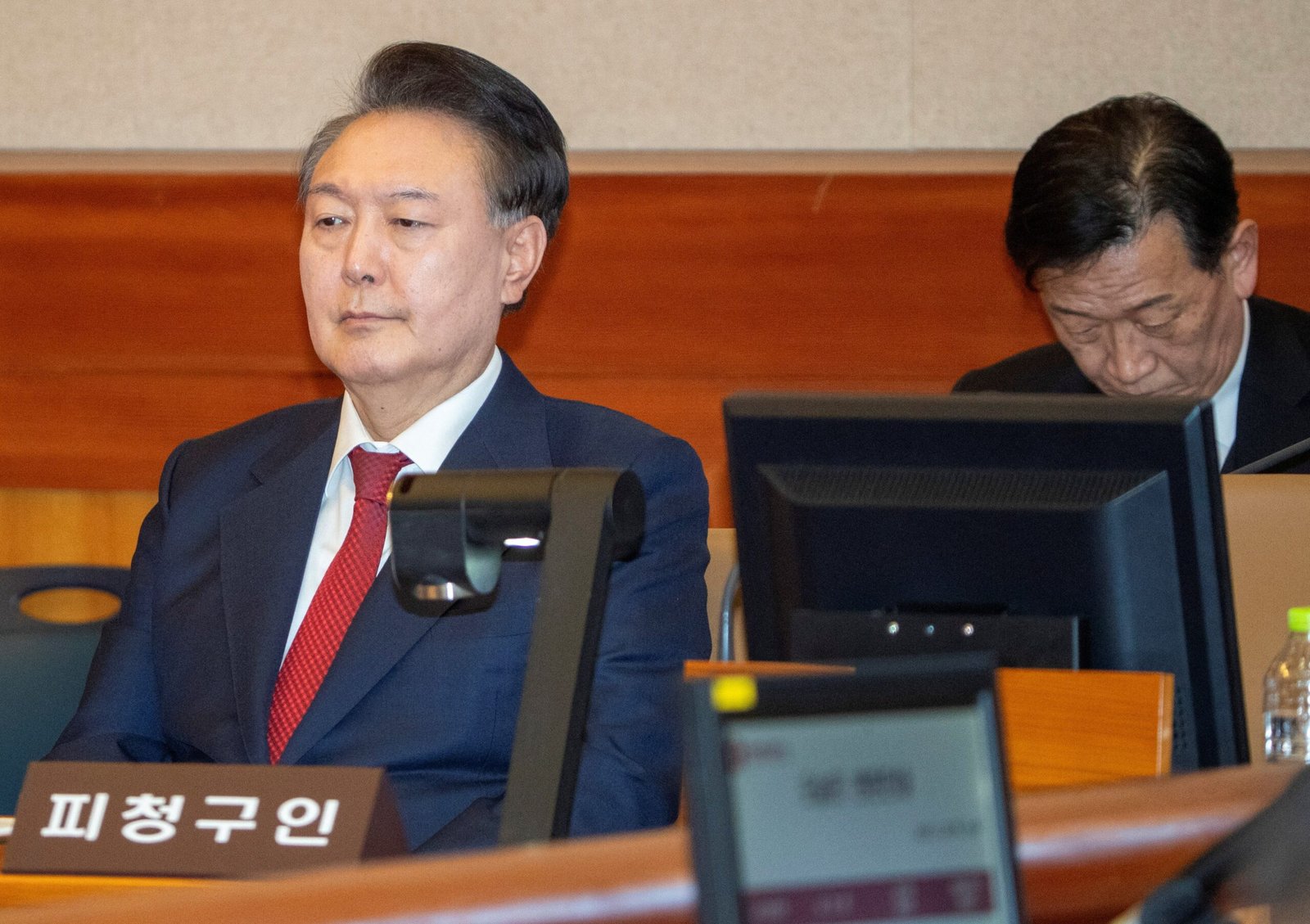
South Korea’s ousted president, Yoon Suk Yeol, gives testimony at the first martial law trial hearing on February 20, 2025. NGO KYUNG-SEOK/Pool via REUTERS Former South Korean president Yoon Suk Yeol was sentenced this Friday (16) to five years in prison for obstruction of justice and other charges in the first of a series of eight criminal trials related to his failed attempt to impose martial law in South Korea. South in December 2024. The sentence is less than the ten years in prison requested by the Prosecutor’s Office against the 65-year-old conservative leader, whose attempted coup against Parliament plunged the country into a political crisis that led to his removal from office. The decision, announced this Friday by the Seoul Central District Court, concerns some of the aspects related to its declaration of martial law. He still faces seven more separate cases and one of them, which judges insurrection, could result in the death penalty. The former president was found guilty of failing to follow due legal process before declaring martial law and other crimes related to obstruction of justice. See below: Excluding government officials from a meeting on preparations for the imposition of martial law; Create an official document related to the declaration of martial law; Prevent investigators from arresting him by hiding for weeks in the official residence under the protection of his personal guard; Destroy possible criminal evidence by ordering the deletion of official phone records. See the videos that are trending on g1 “Despite having the duty, above all others, to defend the Constitution and observe the rule of law as president, the defendant demonstrated an attitude that disrespected the Constitution. (…) The defendant’s culpability is extremely serious,” said judge Baek Dae-hyun. The judge added, however, that Yoon was not found guilty of falsifying official documents due to a lack of evidence. Yoon’s defense, who has already been imprisoned since July 2025, stated that he will appeal the decision. ‘Insurrection’ South Korean President Declares Martial Law; understand the term This conviction comes days after prosecutors in another case sought the death penalty for his role as “leader of an insurrection” for orchestrating the imposition of martial law. They argued that Yoon deserves this punishment because he has not shown “remorse” for actions that threatened the “constitutional order and democracy.” If convicted, it is highly unlikely the sentence will be carried out, as South Korea has had an unofficial moratorium on executions since 1997. The former leader claims the declaration of martial law was a legal exercise of his presidential authority. On Tuesday, he insisted that “a president’s exercise of emergency constitutional powers to protect the nation and maintain constitutional order cannot be considered an act of insurrection.” Yoon accuses the then opposition party of having imposed an “unconstitutional dictatorship” by controlling the Legislature. In his opinion, “there was no other option than to awaken the people, who are sovereign.” Remember the case Yoon Suk Yeol decreed martial law in South Korea on December 3, 2024. With the decree, the president tried to close Parliament and limit the population’s civil rights. However, with resistance from legislators and the population to the announcement, the measure was overturned hours later. In January 2025, prosecutors in South Korea indicted the ousted president for insurrection, which is one of the few criminal charges from which a president in the country does not have immunity. The crime is punishable by life in prison or death, although no one has been executed for the crime in decades. Before going to prison and becoming the first sitting South Korean president to be detained, he resisted for weeks at his residence thanks to the protection of the presidential security body. In South Korean Constitutional Court hearings, Yoon and his lawyers argued that he never intended to fully impose martial law, but merely intended the measures to be a warning to break the political impasse.
Source link
Former South Korean president sentenced to 5 years in prison for failed attempt to impose martial law
54

previous post