
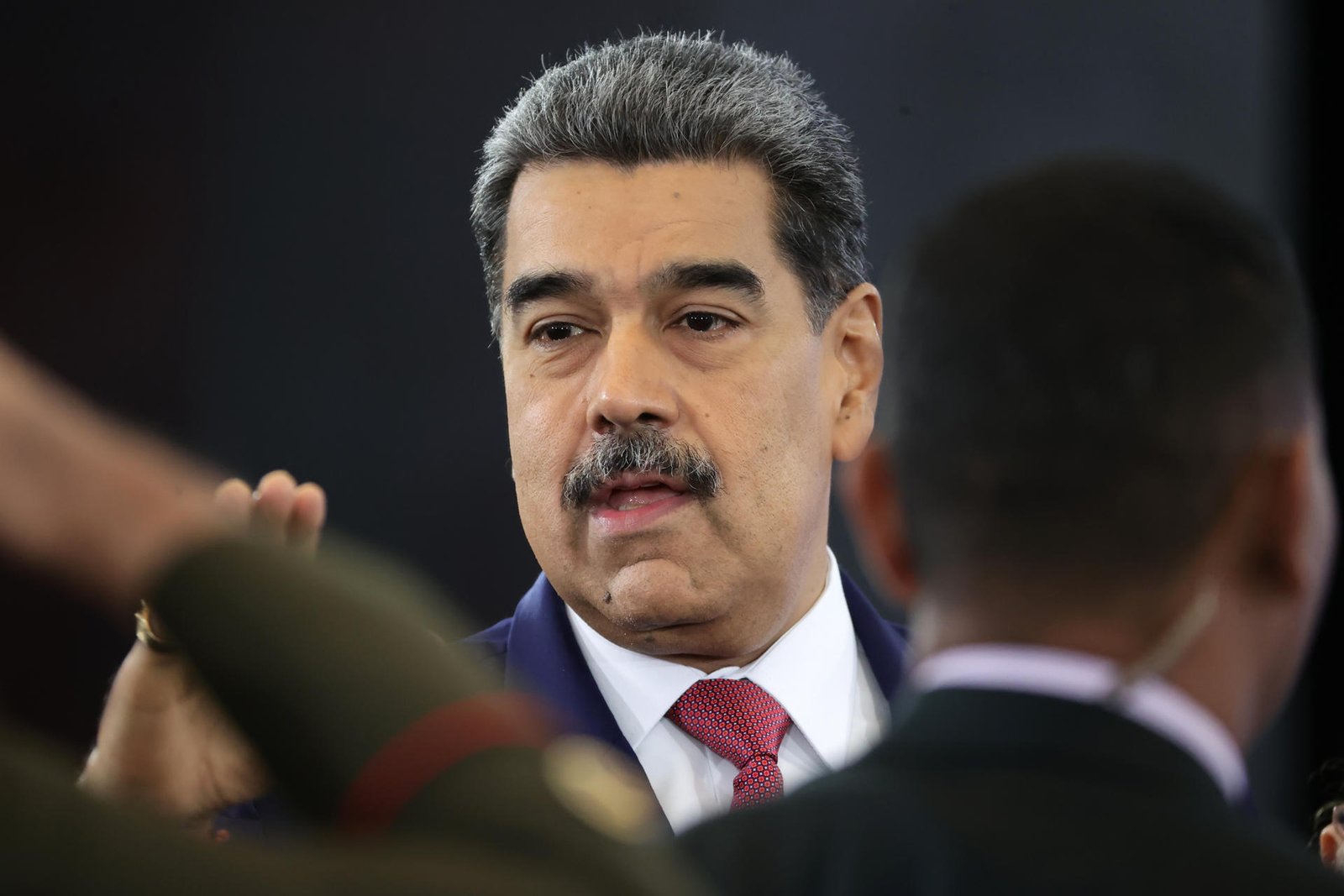
Under intense pressure from the United States, the Chavista regime, now led temporarily by Delcy Rodríguez, began in recent days to release some of the political prisoners detained during the administration of dictator Nicolás Maduro, who was captured along with his wife, Cilia Flores, by American forces on the 3rd, during a military operation in Caracas.
The Chavista regime claims that it has already freed more than 400 people, although human rights organizations dispute the official numbers and point to a lack of transparency in the process. According to the NGO Justicia, Encuentro y Perdón (JEP), only 257 releases could be confirmed based on independent verifications. The NGO Foro Penal, which has been monitoring cases of arbitrary detention in the country for more than two decades, also rejects the data released by the Chavista regime and states that the number of political prisoners in Venezuela still exceeds one thousand people.
Those who have already left the terrible Venezuelan prisons have reported in recent days the inhumane way in which they were treated. They described the existence of a recurring pattern of physical torture, psychological violence, absolute isolation, forced use of medication and constant death threats from Chavista agents.
Colombian David, one of the political prisoners released after Maduro’s capture and US pressure, told the Chilean channel Meganoticias who spent around 13 months imprisoned in Venezuelan territory after being detained by Chavista forces on the border between Colombia and Venezuela, where he worked as a motorcycle taxi driver. David reported that at the time, he was detained without formal explanation, accused of criminal association and prevented from speaking to a lawyer or family. Initially taken to a barracks, the man claimed to have been handcuffed, hooded and beaten before being transferred overnight to Caracas.
David told the Chilean channel that he went through different detention centers until he was taken to the Rodeo I Penitentiary Center, where he remained for 13 months. The man described being the victim of electric shock sessions, burns with hot water mixed with lime and continuous torture due to sleep deprivation. According to him, the Chavista guards sprayed pepper spray on the cell where he was, slammed doors and shined flashlights in the prisoners’ faces to prevent any rest. He further stated that he received pills without knowing what they were and that he spent the entire prison period without any contact with his family, who did not know whether he was alive or dead.
Regarding his release, David said that he was removed from his cell in the last few days without explanation. They forced him to wear civilian clothes and sign a document stating that he had not suffered ill-treatment and that his human rights had been respected. David reported being handcuffed, hooded and placed on a bus.
“I started crying, but out of joy, because I knew my sister was fighting for me,” he said. David’s sister, identified as Nubia, stated in the report that there are still at least nine Colombians unjustly imprisoned in Venezuelan prisons.
European citizens who were also released in recent days gave reports similar to David’s. Italian businessman Mario Burlò, 52, who was arrested at the end of 2024 on charges of “terrorism and conspiracy”, without any formal charges being filed against him, reported to the newspaper The Country who spent almost a year incommunicado, during which time his family in Italy believed he was dead.
Burlò described the conditions at Rodeo I prison, the same one where David was held, as degrading. The Italian said he had to sleep on the floor, among cockroaches, in small cells, without adequate light, and could only take a few steps. He stated that prisoners received very little food, which was delivered through a small opening in the cell door, without human contact. Access to the penitentiary center courtyard was limited to one hour a day, five times a week, and there was no authorization for family visits.
“Even dogs have daily needs. We were treated worse than dogs,” said Burlò.
Although he said he did not suffer direct physical torture, Burlò classified the prolonged isolation and lack of contact with his children as psychological torture. He also reported that, at night, Chavista guards wore balaclavas, adopted nicknames and promoted constant intimidation. One of them, according to Burlò, identified himself as “Hitler”. The Italian stated that he feared he would be killed at any moment.
Another released Italian citizen, Alberto Trentini, a humanitarian services volunteer who was arrested in November 2024, limited himself to releasing a statement read by his lawyer. According to the text, the 423 days of imprisonment in Venezuela left “indelible” marks and his happiness upon being released “came at a very high price”. Trentini said his thoughts remain with the prisoners still being held in Venezuela and their families.
In Argentina, the newspaper Clarion published this Tuesday (14) the story of the family of the Argentine-Israeli Yaacob Eliahu Harary, aged 72, who was released this week after spending 490 days in the Chavista prison. According to his family, Harary described the experience as “coming out of hell”. He reported that he was a victim of mistreatment, constant humiliation and recurrent use of psychiatric medications without medical indication, used as sedatives for political prisoners.
Harary was also imprisoned at Rodeo I prison and said he witnessed suicide attempts, including by his friend and cellmate, who tried to cut his own neck. According to the report, the Chavista regime never informed Harary about the death of his partner, which occurred while he was in prison, and he remained incommunicado for around 15 months. Upon his release, the Argentine said he had a direct meeting with Diosdado Cabello, the number 2 of Chavismo, who would have personally accompanied his release from prison.
Despite the releases announced in recent days and the fall of Maduro, opposition leaders and independent organizations warn that the Chavista repression system remains intact in Venezuela. According to the opposition and human rights organizations, the lack of transparency, the continuity of arbitrary detentions in the country and the consistent reports of torture in prisons indicate that the releases made so far do not represent a structural change in Venezuela.
On the side of the regime, Diosdado Cabello said this Wednesday in his program broadcast by the state broadcaster Venezuelan Television (VTV) that the ongoing releases in the country were “unilateral” decisions by the dictatorship and denied, once again, the existence of political prisoners in Venezuela. According to Cabello, the releases underway in the country are a case review that was ordered by dictator Maduro before his capture.
“It’s not a gracious concession,” Cabello said.
Delcy Rodríguez, the interim dictator, declared this week to journalists at the Miraflores Palace that Venezuela was now experiencing a “new political moment” and that the liberation process seeks to “promote political understanding”.
