
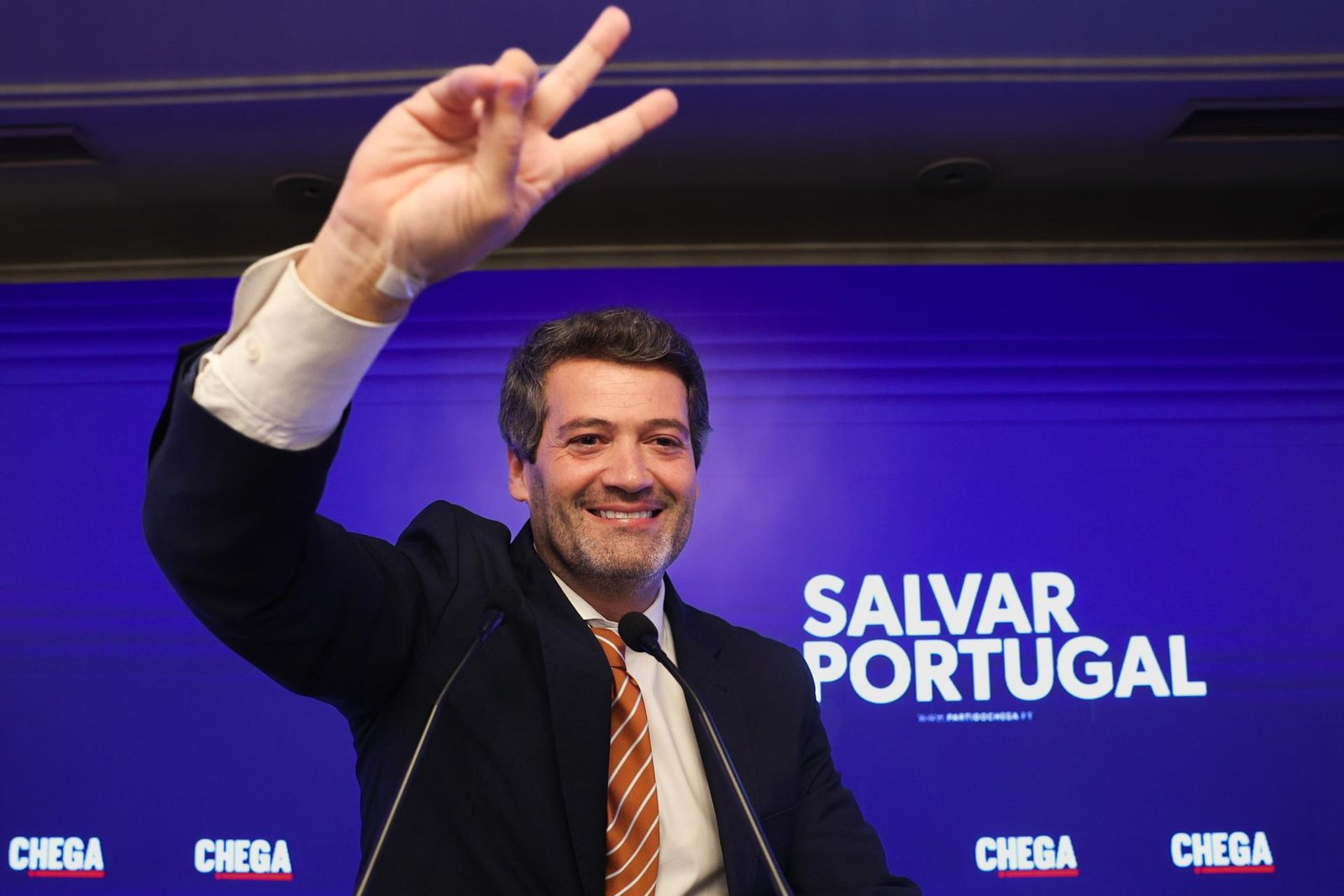
Portugal goes to the polls this Sunday (18) in a presidential election that could mark the end of decades of hegemony by traditional parties. For the first time in 40 years, the emergence of new conservative forces and political fragmentation should push the dispute into a second round.
At the center of this change is André Ventura, leader of the right-wing Chega party, which is in first place in the polls. He has around 24% of voting intentions and is followed by the socialist José Seguro, with 23%. As there are so many candidates — 11 in total — it is almost impossible for one of them to win in the first round.
To avoid a conservative victory, Ventura’s opponents resorted to the “useful vote” speech. Seguro, candidate of the Socialist Party (PS), is the main defender of this strategy. “I am the only Democrat who defends the social state, health and public schools, our Constitution and who can go to a second round”, he states.
Behind him are João Cotrim de Figueiredo, from the Liberal Initiative (with around 19% of voting intentions), Luís Marques Mendes, supported by the Social Democratic Party (14%), and Admiral Henrique Gouveia e Melo, independent candidate (14%).
The three are in a field between the center and the center-right, but none of them presents the same discourse of rupture as Ventura — which, according to analysts, transformed the election into a kind of referendum, in which the Portuguese people will give their opinion on topics such as national identity, immigration, ideological indoctrination and sovereignty.
Using the motto “Save Portugal”, André Ventura has also been exploring the public security agenda. “If you commit a crime here, you go to prison for several years or even decades. Once you serve your sentence, you won’t spend another second in this country,” he says.
“Authentic right”
Founded in 2019, Chega went from a single deputy to a group of 60 representatives in the last legislative elections, in May last year — and consolidated itself as the second largest political force in the country, behind only the Social Democratic Party (PSD), which leads the current government coalition.
Classified as “ultra-right” by sectors of Portuguese public opinion, the party rejects the label and defines itself as “authentic right-wing”. In its program, Chega emphasizes the defense of national values and criticism of the political elites that have ruled the country for decades.
In Portugal, the president has a more symbolic role — without direct power to govern, he basically acts as an arbitrator. Still, this Sunday’s election has real political weight and, according to analysts, could go down in history as a turning point in Portuguese life.
