
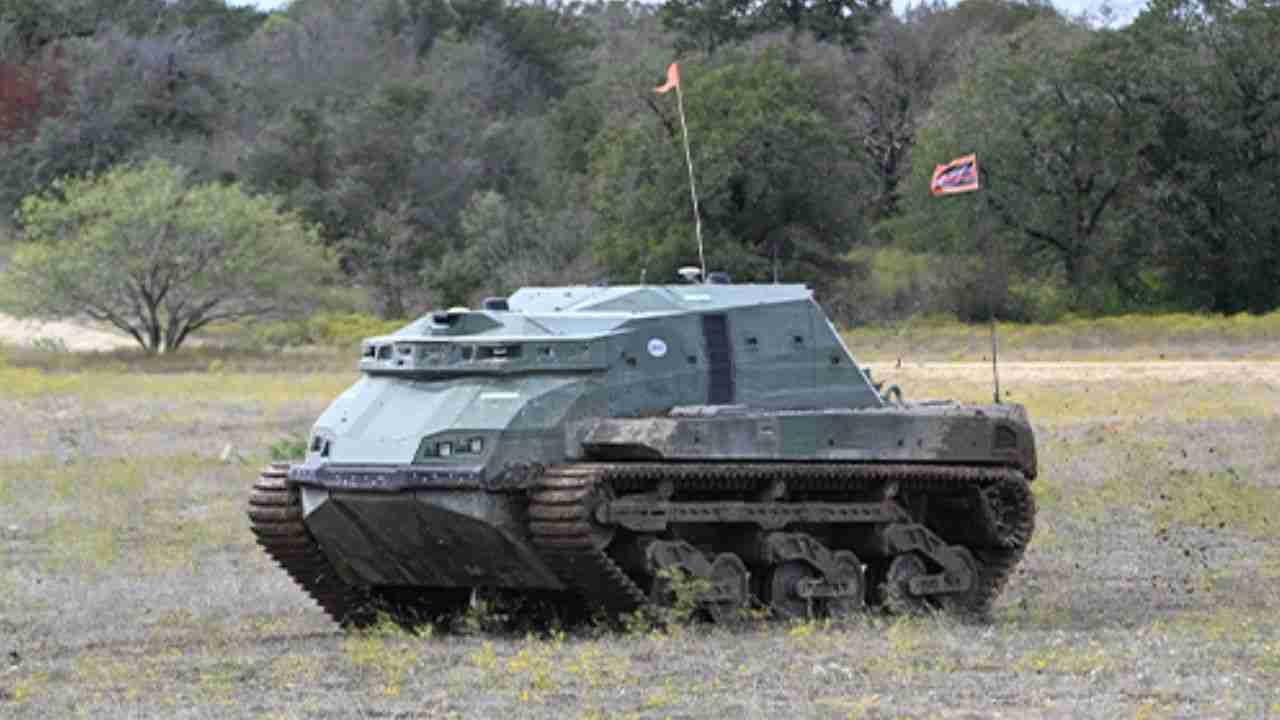
DARPA announced the conclusion of the final tests of the RACER program, which aims to develop the robotic autonomy of land vehicles operating in complex environments.
The agency says the technology is ready to be transferred to both U.S. military units and for commercial use after demonstrations with the U.S. Army and Marine Corps in 2025. The tests proved that the vehicles can operate without GPS, pre-mapped routes or direct human control.
Unlike programs that focus on a single vehicle, RACER consists of a reusable software package that includes algorithms, databases, and neural network models. This architecture allows platforms equipped with various sensors to become autonomous vehicles capable of operating in degraded and contested environments, fulfilling a promise that began with the 2004-2005 DARPA challenges.
During operational demonstrations, the system was used in realistic combat scenarios, such as opening autonomous corridors in minefields and conducting long-range reconnaissance missions. In exercises held at the National Training Center in California, Army units used RACER vehicles as an adversary force, validating the technology’s performance in tactical operations and highlighting the reduction in risk to soldiers during dangerous missions.

Another major achievement of the program was RACER’s detection architecture, which can predict terrain conditions and adapt to unfamiliar environments in about a day—a significant improvement over previous systems. Closing the program, DARPA said the technology is ready for widespread use, highlighting its dual-use potential and the emergence of companies that are already using the autonomy developed in this way in the civilian sector, such as agriculture, mining, construction and transportation.
Source: Defence Blog | Photo: X @DARPA | This content is generated with the help of artificial intelligence and reviewed by the editors
