
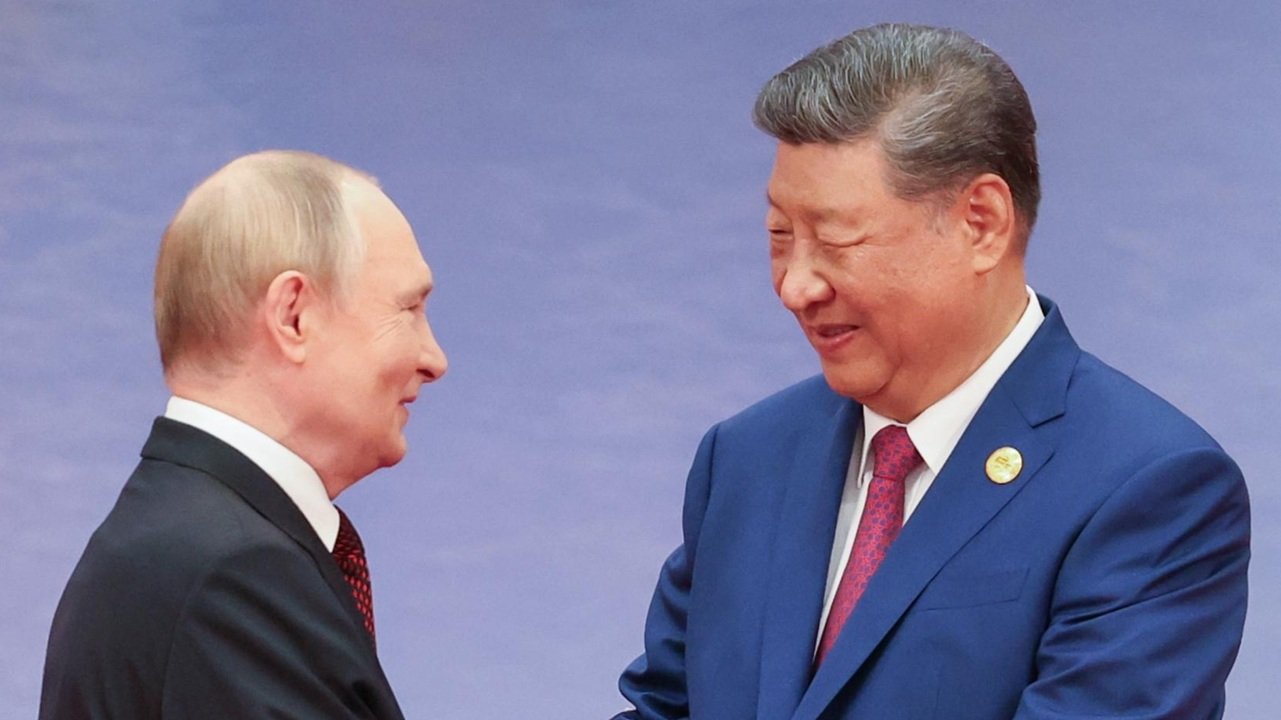
With the capture of the then Venezuelan dictator Nicolás Maduro by United States forces on the 3rd, China and Russia lost their main geopolitical ally in the Americas.
The action was part of the Donroe Doctrine, as American President Donald Trump, inspired by the 19th century Monroe Doctrine, called his new national security guidelines, which stipulate Washington’s predominance in the Western Hemisphere – from which he seeks to remove the influence of Beijing and Moscow. However, this presence is far from over, even with Maduro’s fall.
Last week, China approved a new round of aid for Cuba, which, according to a statement from the Castro regime’s Ministry of Foreign Affairs, includes US$80 million in emergency financial assistance for the purchase of electrical equipment and other “urgent needs” and a donation of 60,000 tons of rice.
This is just a sample of Chinese influence in the Americas. China is the largest trading partner of several Latin American countries, such as Brazil, Peru and Chile, and offers credit lines and billion-dollar investments, which have caused nations on the continent to cut diplomatic relations with Taiwan (as Panama, El Salvador and the Dominican Republic have done in recent years).
Two examples of this action are the Port of Chancay, a deep-water mega-terminal in Peru that opened in November 2024, and a bioceanic railway corridor, connecting Brazil to the Peruvian port, currently in the technical and feasibility studies phase.
Russia’s presence is felt in the military cooperation agreement with Daniel Ortega’s dictatorship in Nicaragua, which includes sending Russian troops, ships and aircraft, joint exercises and spy systems, according to the independent Nicaraguan press. The Kremlin has a similar agreement with Cuba.
On Thursday (29), when announcing tariffs on products imported from countries that send oil to Cuba, Trump said that the Castro regime invites “dangerous adversaries of the United States” to install “sophisticated military and intelligence bases” on the island that directly threaten American national security.
“Cuba is home to Russia’s largest signals intelligence facility abroad, which attempts to steal sensitive national security information from the United States. Cuba continues to build deep intelligence and defense cooperation with the People’s Republic of China,” the American president said in an executive order.
Although Russia’s economic influence in the Americas is much smaller than China’s, it is also present: Brazil was accused of helping Moscow finance the war against Ukraine by increasing its imports from Russia from US$3.97 billion to US$10.29 billion between 2019 and 2025, according to data from the United Nations’ Comtrade platform. The majority of these purchases were fuels and fertilizers.
SEE ALSO:
- Russia says deadline agreed with Trump not to attack Ukraine ends on Sunday
With Vladimir Putin’s dictatorship concentrating its forces in Ukraine, the Kremlin did nothing to help Maduro and other allies who have gone through trouble in the last two years, such as Syria’s Bashar al-Assad (deposed at the end of 2024) and the Iranian regime, but Natalie Sabanadze, researcher on the Russia and Eurasia program at the British think tank Chatham House, stated in a recent article that she believes the dictator will seek to use Trump’s action in Venezuela to galvanize anti-US sentiment in the Americas.
“Moscow will seek to take advantage of this while advancing with greater confidence its narrative of Western neocolonialism,” Sabanadze wrote.
In an interview with People’s GazetteEduardo Galvão, professor of public policy at Ibmec Brasília, spoke about the subject.
The Donroe Doctrine talks about the prevalence of the USA in the Western Hemisphere and removing the presence of China and Russia in the Americas, but the two countries continue to have influence on the continent, even after the fall of Maduro. What are Washington’s biggest challenges in reducing this presence?
The first challenge is structural and not just political. Over the past few years, Latin American countries have deepened economic ties with China, especially in trade, investment in infrastructure, technology and public financing, creating networks of interdependence that do not simply dissolve with changes in government.
This scenario makes it difficult for the US to offer fast and far-reaching competitive alternatives, without generating significant domestic economic costs for Latin American governments that need to maintain growth and investments.
A second challenge is the diffuse nature of Chinese and Russian influence. It is not restricted to direct military presence, but is expressed in commercial agreements, port logistics, participation in value chains, technology contracts and multilateral diplomatic partnerships.
Reducing this influence requires not only coercion, but an attractive alternative offering at commercial, technological and governance levels, something that, historically, the US has had difficulty scaling in a timely manner in the face of the projection of economic power from Beijing and Moscow.
Nicaragua and Cuba are China and Russia’s biggest allies in the Americas in military and geopolitical terms. Could they be targets of actions similar to what occurred in Venezuela?
Both are seen by Washington as vectors of Russian and Chinese influence in the region, in part through military cooperation and political alignment with Moscow and Beijing. The American strategy documents that where democracy is “absent or under threat,” the US intends to ally with pro-democracy forces and promote governance more aligned with its hegemonic partners.
On the other hand, replicating actions similar to what occurred in Venezuela is unlikely for practical and contextual reasons. The operation that resulted in Maduro’s withdrawal from the country, although emblematic and associated with the new hemispheric strategy, was also a unique action, with justifications linked to accusations of drug trafficking and specific regional security implications.
Repeating this pattern in other countries could generate the risk of military escalation, diplomatic revulsion and regional reaction that outweigh the short-term gains, especially in states with less legitimacy from Washington and greater sensitivity to territorial sovereignty.
In the economic field, threats of extreme tariffs, such as those mentioned by President Trump against entities that maintain commercial relations with Russia or China, may be part of a repertoire of geoeconomic coercion, but face practical limits.
High tariffs increase the costs of imported goods and can generate inflationary repercussions or indirect retaliation, which dilutes the intended impact and can affect Latin American economies integrated into global value chains.
Speaking of tariffs, Trump threatened last year to tax anyone who bought from Russia 100%. He made the same threat against Canada this week if Ottawa reaches a trade deal with China. Can the US escalate the tariff war to enforce the Donroe Doctrine? Is Brazil threatened?
The use of tariff instruments is more likely in specific areas where Washington identifies direct strategic interests, such as sensitive technology or critical infrastructure, rather than as a blanket policy across all sectors. Thus, Brazil, due to its economic dimension and global insertion, is not immune to pressure, but the risk is not a broad and generalized sanction, but rather a sectoral and conditional political risk.
This means that sectors more exposed to technological competition with China, or components sensitive to American security, could face greater scrutiny or restrictions.
For Brazilian companies and policymakers, the political risk is not just in the rhetoric, but in the way in which North American foreign policy decisions can translate into trade restrictions, review of contracts or the imposition of conditions on access to markets and supply chains.
SEE ALSO:
- After US warning, Chile cancels project to build astronomical observatory with China
This dynamic indicates a relevant change in the nature of the political risks faced by the region, in which decisions on investments, technology and external alignments can have direct impacts on institutional stability and the business environment.
In this context, the risk of selective coercion also emerges, in which specific countries or sectors are pressured to choose between markets and strategic partners, reducing regulatory predictability and increasing uncertainty for companies and investors.
Added to this is a reputational and internal polarization risk, especially when governments begin to be perceived as buffers against disputes between great powers and domestic demands, a factor with the potential to influence electoral processes and the ability to govern throughout 2026.
Finally, Latin American countries begin to operate in an increasingly complex zone, in which competition between external powers translates into additional uncertainties for public policies, foreign investment flows and regional integration efforts.
This configuration of political risk emerges from a combination of open geopolitical competition, economic instruments of coercion and the dispersion of the influence of extra-regional powers, making it more urgent for Latin American countries to strengthen their ability to anticipate, mitigate and respond to external shocks that today go beyond the traditional spectrum of relations between States.
