
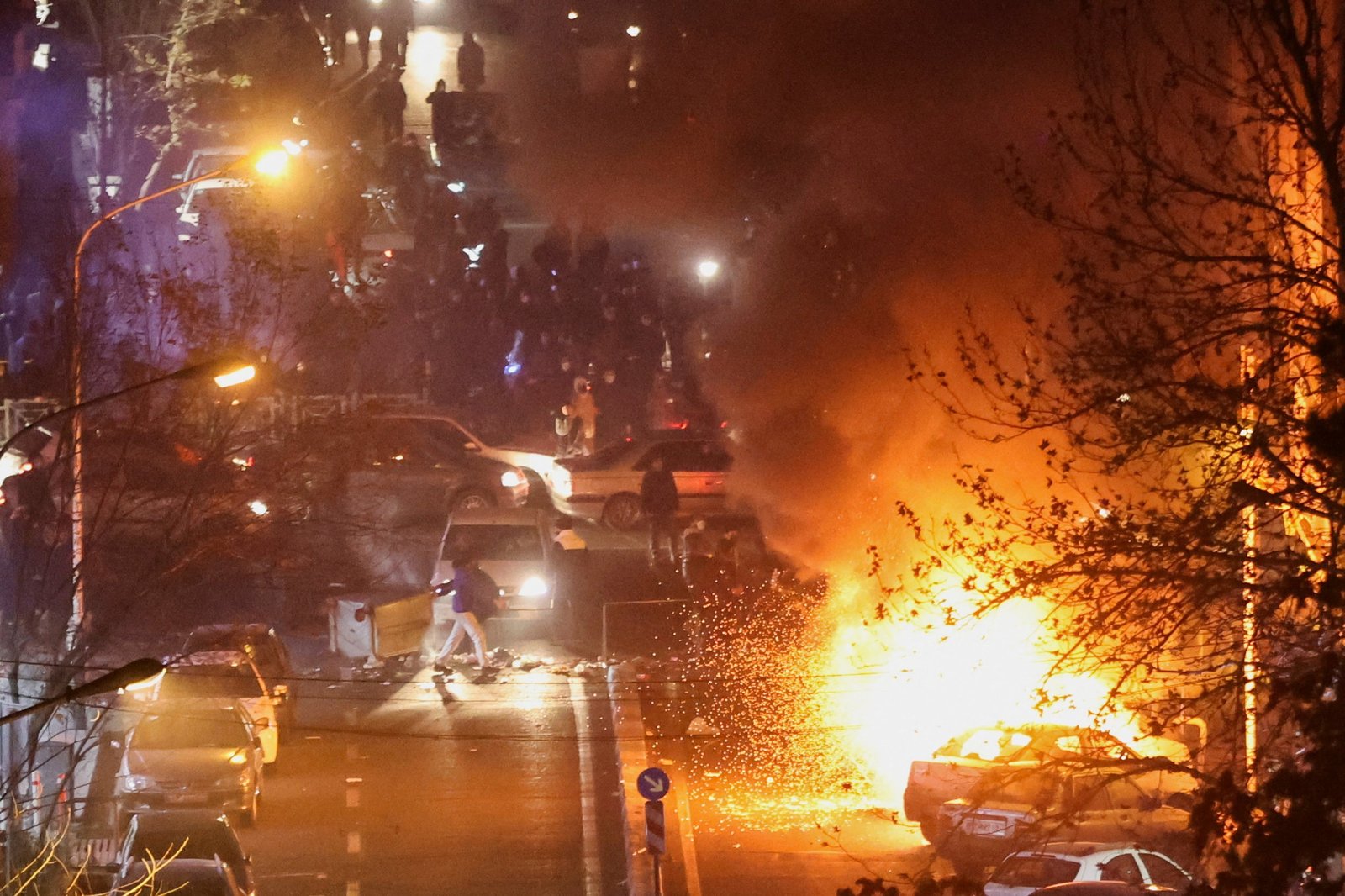
Deaths in protests in Iran could exceed 3,000 Iran is facing a wave of anti-government protests that began at the end of December and intensified in recent days. The demonstrations were harshly repressed by security forces, resulting in hundreds of deaths and the arrest of thousands of civilians. ▶️ Context: The protests began in the face of popular dissatisfaction with the country’s economic situation. The local currency suffered a strong devaluation, while the cost of living increased. The population faces high inflation, above 40% per year. In 2025 alone, the local currency lost around half its value against the dollar and reached an all-time low. Discontent also grew in the face of inequality between ordinary citizens and the country’s elite, in addition to allegations of corruption in the government. 💸 Prolonged crisis: Iran has been facing economic difficulties for years, mainly impacted by the reimposition of sanctions by the United States and other countries. The measure was adopted in 2018, when Trump left the international agreement on the Iranian nuclear program. The US and other countries fear that Iran is enriching uranium to develop a nuclear bomb. Tehran denies the accusation and says the program is for peaceful purposes. Even with this justification, sanctions and trade restrictions discouraged business with the country and affected exports, investments and the financial system. The situation also worsened after the conflict between Iran and Israel, in June 2024. On that occasion, Israeli and US forces attacked targets linked to the Iranian nuclear program. ✊ Start of demonstrations: The first protests occurred on December 28, when Iranian traders began a strike and closed stores in reaction to the economic situation. The demonstrations gained strength in the capital, Tehran, and spread to other cities the following day, with support mainly from young people and students. In addition to economic issues, protesters also began to demand the overthrow of Ayatollah Ali Khamenei’s government. In an attempt to contain the acts, President Masoud Pezeshkian promised to open a channel of dialogue with representatives of society to discuss the population’s demands. 👉 Since the Islamic Revolution of 1979, Iran has been a theocratic republic, in which the highest authority is the supreme leader, Ayatollah Ali Khamenei. He has been in power for more than 30 years. The regime is the target of criticism for human rights violations and restrictions on social freedoms, especially among younger people, who have led several protests in recent years. Violence Cars are set on fire during a protest in Tehran, capital of Iran, on January 8, 2026 West Asia News Agency/Reuters At the end of December, the Iranian government began to adopt a two-pronged approach: while affirming that the demonstrations were legitimate, security forces were used to repress the protests. On January 1, state media confirmed the first deaths, saying three people died during an attack on a police station in the west of the country. The situation escalated quickly. Humanitarian organizations reported an increase in the death toll, and civilians began to be detained. Amid the repression, the government blocked internet access and restricted communications. 👉 On Tuesday (13), the human rights group HRANA stated that 2,003 people had died since the demonstrations began, of which 1,850 were protesters. The organization also reported that 16,784 people were detained. At the same time, Iran began to accuse the US and Israel of inciting the population against the government, especially young people. According to Tehran, the American and Israeli governments were responsible for the deaths. This Wednesday (14), a young man who participated in acts against the government should be hanged by the regime, in the first execution since the demonstrations began. The Hengaw organization identified the convict as Erfan Soltani, 26 years old. Trump’s influence US President Donald Trump visits a Ford factory in Dearborn, Michigan, USA, on January 13, 2026 REUTERS/Evelyn Hockstein US President Donald Trump has given signs that he could authorize an attack against Iran at any time. On Saturday (10), he stated that the country is “seeking freedom” and said that the North American government “was ready to help”. On Tuesday, Trump used a social network to ask Iranians to continue protesting against the government. The president also stated that “help is on the way”. Hours later, in an interview, he said that the US will adopt “very tough measures” if Iran starts hanging protesters. 📰 According to The Wall Street Journal, behind the scenes, members of the government leadership are trying to convince Trump to prioritize a diplomatic solution. This position is even defended by vice president JD Vance. A possible military attack by the United States would aim to overthrow the regime of Ayatollah Ali Khamenei. However, Iran’s rivals in the Middle East have called on the US to avoid a military operation. Saudi Arabia, Oman and Qatar warned the White House that an attack could affect the oil market and provoke regional instability. Even so, according to government officials interviewed by the WSJ, an attack is considered more likely than not. Repercussion Ali Khamenei said he will not give in to Donald Trump Getty Images via BBC The scenario generated strong international repercussion. Russia condemned what it called “subversive external interference” in Iran’s domestic politics and said any American attack would have “disastrous consequences” for the Middle East and international security. Meanwhile, the United Kingdom, France, Germany and Italy have recalled their ambassadors to Iran in protest against the crackdown on demonstrations. German Chancellor Friedrich Merz said he believes the Iranian government will fall. The president of the European Commission, Ursula von der Leyen, said that she intends to propose new sanctions against those responsible for the violence against protesters. “The growing number of victims in Iran is frightening. I strongly condemn the excessive use of force and the continued restriction of freedom,” he said. 👉 The Ministry of Foreign Affairs released a note stating that Brazil views the evolution of the protests in Iran “with concern”. Itamaraty also said that “it is only up to the Iranians to decide, in a sovereign manner, on the future of their country”. “Brazil urges all actors to engage in peaceful, substantive and constructive dialogue”, says the note. VIDEOS: trending on g1 See videos that are trending on g1
Source link
Brutal repression, 1st execution and Trump’s threats: understand the escalation of protests in Iran
60
