
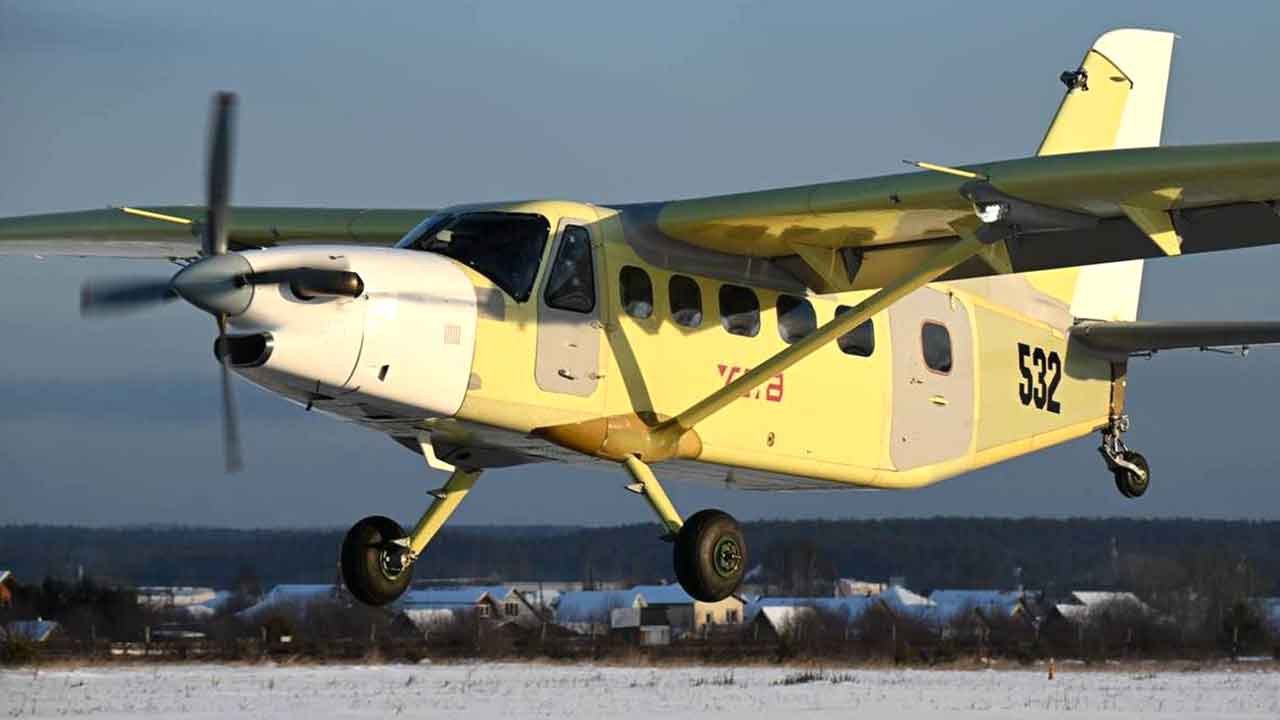
Yekaterinburg, December 24 – A prototype of the light multipurpose aircraft LMS-901 Baikal performed its first flight equipped with a fully domestic dynamometer combining the new turboprop engine VK-800 and AV-901 propeller.
The test was conducted at the Ural Civil Aviation Plant airfield in Yekaterinburg as part of a joint flight test program.
+ Go see the video
In its first flight equipped with the new dynamometer, the aircraft reached a speed of 210 km/h and an altitude of 400 m. Prior to flight test approval, comprehensive ground testing of the dynamometer was performed, including evaluation of the engine’s stability in all intended operating envelopes, throttle response characteristics, verification of operation of the propeller emergency stop and emergency reversal systems, and fuel delivery checks.
+ A woman caused confusion online by damaging the car’s child car seat after an accident.
According to the test pilots, the flight proceeded normally. The aircraft demonstrated stability and excellent controllability within the established center of gravity, speed and altitude ranges. The propulsion system operated reliably throughout the entire flight profile and no unusual events were reported.

Gennady Abramenkov, Deputy Minister of Industry and Trade of the Russian Federation, evaluated this test as a strategic milestone. He said the flight confirmed the feasibility of developing a fully Russian-made aircraft with a fully indigenous powertrain and demonstrated that it could address the critical national need to expand air transport connectivity and accessibility across the country, including in hard-to-reach areas. He also emphasized that engines of this power class have not been developed and produced domestically for decades, adding that this achievement is especially important for the Russian aviation industry.
VK-800 engine and AV-901 propeller
The VK-800 engine, developed by the Ural Works of Civil Aviation JSC, was designed with operation in harsh climatic conditions in mind, which is considered an essential requirement for missions in the Arctic, taiga and mountainous regions. Maximum power output is between 807 horsepower and 870 horsepower, depending on the application, and the possibility of modernization to further increase power is also considered, opening up the possibility of application to re-engineering programs, including the An-2 aircraft.
In addition to the LMS-901 Baikal, the VK-800 will also be used for the training aircraft UTS-800, the joint Russian-Belarusian regional aircraft LMS-192 Osway, and the re-engineering of the operational L-410 aircraft.
The AV-901 propeller is a single-acting variable pitch (reversible pitch possible) propeller with hydraulic control and direct circuitry. It is capable of operating up to 1,900 rpm, supports an output of up to 877 horsepower, and is estimated to provide a maximum thrust of at least 15 kN (about 1,400 kgf). AV-901 is manufactured entirely from domestic materials, and there are no direct similar cases in Russia. By reducing the number of control units, the system weight was lowered and operational reliability was improved. Digital integration with the VK-800 engine control system allows the dynamometer to operate in its highest efficiency range, reducing fuel consumption and improving aircraft handling.

Aircraft for remote areas
The LMS-901 Baikal is a 9-seat light multipurpose aircraft designed for regional airlines. This model offers high operational flexibility and has a spacious cargo compartment that can be quickly converted to passenger transport, cargo, postal and medical missions. The goal of the program is to provide reliable air connections to Russian regions with limited airport infrastructure, especially the Far East and Far North.
With the successful first flight with domestically produced engines and propellers, the Baikal program is moving toward certification of a fully Russian-made aviation platform, strengthening the country’s industrial self-reliance in the field of light aircraft.
Source and image: minpromtorg.gov.ru. This content was created with the help of AI and reviewed by our editorial team.
