
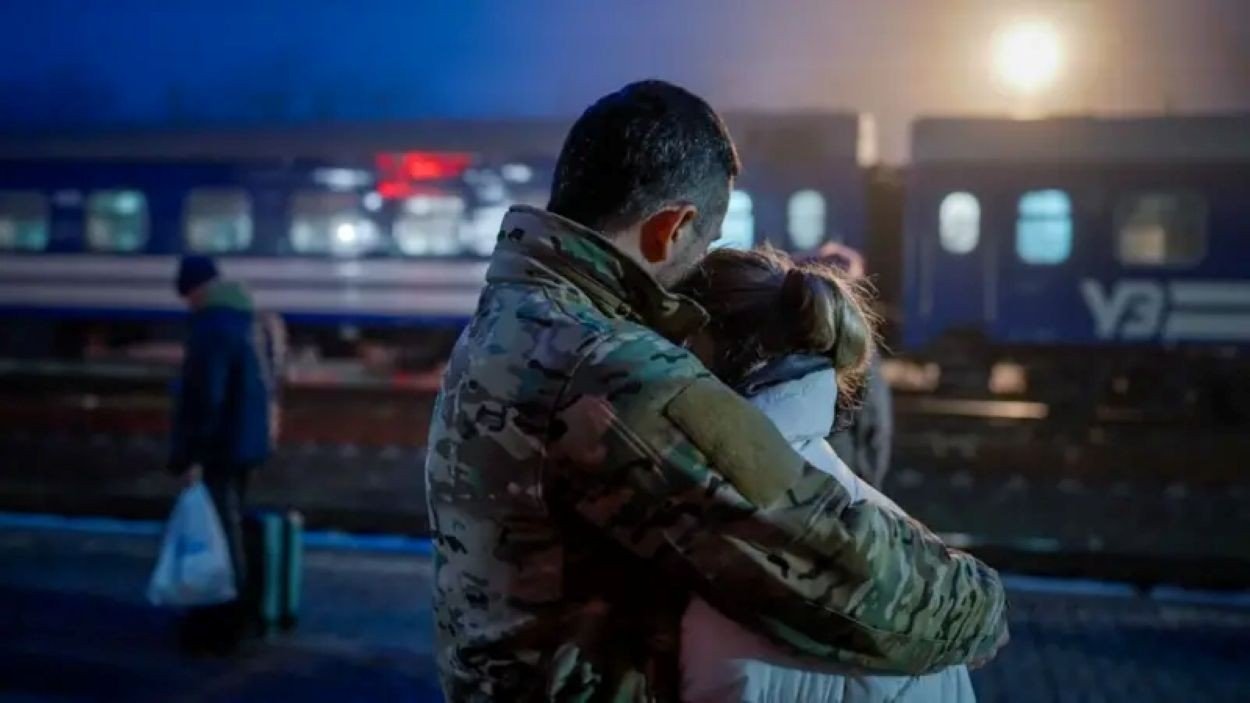
Women from Ukraine travel hundreds of miles to see husbands fighting against Russia MATTHEW GODDARD/BBC Sasha is traveling on a night train through a war zone. The 22-year-old is on the so-called “love train”, which leaves the Ukrainian capital, Kiev, to meet the man she loves in Kramatorsk, a city in the Donetsk region, in the east of the country. The reunion will be long awaited, but also brief. Sitting down for breakfast, Sasha tells BBC News: “I’m not worried about myself, I’m worried about my husband. He’s leaving his post at the moment.” The journey is exhausting and very dangerous, but for Sasha, it is worth the effort. “The journey out may be long, but it is full of hope. However, the journey back is more difficult,” she says. 📱Download the g1 app to see news in real time and for free See the videos that are trending on g1: See the videos that are trending on g1 Since November 5, 2025, the Ukrainian railway company has suspended train services in Donetsk due to the intensification of attacks on railway infrastructure. Now the train doesn’t stop in Kramatorsk, but in a small town two hours away by bus. “And during this transfer, anything can happen,” says Sasha. “But it’s good that the trains are still running, because that gives us hope,” he adds. Despite the danger, Sasha enthusiastically embarks on the journey that will take her from Kiev to Kramatorsk MATTHEW GODDARD/BBC A possible move to Kramatorsk Sasha got married in August 2025. “Dmytro told me right away: ‘You will be my wife’. I didn’t believe it. I had no plans to get married before I was 25,” she says, smiling. Her husband is a career military man. He spent seven of his 26 years in the Ukrainian Armed Forces. Sasha also has ties to the military. “All the men in my family serve. My father is a police officer, but after retiring, he also joined the Armed Forces. My older brother is also in the army”, he explains. The soldiers at the stations where the train passes are a reminder that the country is at war MATTHEW GODDARD/BBC Sasha travels to Kramatorsk almost every month. She wishes she could go more often, but it’s hard for Dmytro to get time off. After the wedding, Sasha even considered moving to Kramatorsk. “We talked about it at the beginning of September. And a month ago, we talked again. And a week ago. We talk about it all the time, but obviously it’s not possible now because Kramatorsk is dangerous,” he explains. Dmytro chooses relatively quiet and safe areas for their brief reunions, but even so, the city remains “very noisy” and there are “a lot of attacks”. “When he sleeps next to me, I’m not afraid of anything,” says Sasha. The train he takes in Kiev is high speed. But that day, it’s at least two hours late. One of the stations on the road to Kramatorsk, after a Russian drone attack mat “It goes quickly to Poltava, but once we get to the Kharkiv region, we have to make detours because of the bombing of the infrastructure. You never know for sure when you will arrive. People find out as they travel,” explains the train inspector. Sometimes the journey becomes even more complicated after the train reaches its final destination in the town of Barvinkove. On one occasion, the bus was parked far from the station and ended up leaving without her. “I saw a taxi driver,” remembers Sasha. “I simply convinced him to take me to Kramatorsk. We drove for about three hours in the fog. The road was full of potholes.” “The only thing that helps me continue is common sense: that we are still alive, that there is communication, transportation and that we can see each other,” says Sasha with a smile. And after each date, she begins to prepare for the next one. Polina and Andriy met a few months ago and the little time they can spend together is very precious for them MATTHEW GODDARD/BBC Couples on one side, evacuees on the other On the platform at Barvinkove station, people disembark cautiously. The evening mist adds to the atmosphere which, for some, brings a sense of calm. “When there is fog, there are fewer drones flying,” the grandmothers whisper to each other. In the darkness, those who get off the train are not sure where to go. The only option is to follow the crowd, made up mainly of camouflaged people. A bearded man gently hugs a girl in a white jacket. Power failures often cause train delays MATTHEW GODDARD/BBC “I took an antispasmodic to stop crying. Last time I cried the whole time and we couldn’t say goodbye properly,” says Polina, who met Andriy on a bus four months ago. He was on his way to enlist in the army. She was returning home from the coast. Polina is 24 years old and this is her first visit to Kramatorsk. Previously, Andriy used to travel to Kiev on weekends. “We haven’t been together for a long time and we really missed this time alone. At a certain point, I told Andriy that I didn’t care anymore: I would come even if it was just for half a day, just to have a coffee with him”, she says. Finally, Andriy got a weekend off and Polina bought a train ticket. “Long-distance relationships are difficult,” admits Polina. “When Andriy doesn’t respond, I immediately worry… but he might just be taking a shower or something. Plus, every time we see each other, I feel like we have to get used to each other’s physical presence again, because we haven’t known each other that long.” Polina believes that long-distance relationships are difficult for many reasons BBC The danger is constant. Early this morning, when Polina’s train arrived back in Kiev, she heard explosions on the platform. That night, the capital had suffered one of its longest air raid warnings: more than 10 hours. It was later confirmed that there were dozens of injuries and two dead. Trains carrying couples to frontline cities also carry separate families. Local authorities regularly ask residents to leave their homes for their safety. The front line is just 20 km from the cities of Kramatorsk and Sloviansk. Both are under constant bombardment and also within drone range. Every day, around 200 people arrive at the evacuation center on the border of Kharkiv and Donetsk regions seeking safety. Some travel in their own vehicles with a clear plan for the future. Others wait for the Ukrainian Railways evacuation train, which, delayed by constant Russian attacks, will arrive at some point. “I’m already looking forward to the next reunion,” says Sasha. “There is simply no time for tears or despair.” Reported by the BBC Global News team.
Source link
The ‘love train’ in which Ukrainian women visit their husbands who are fighting against Russia
54

previous post