
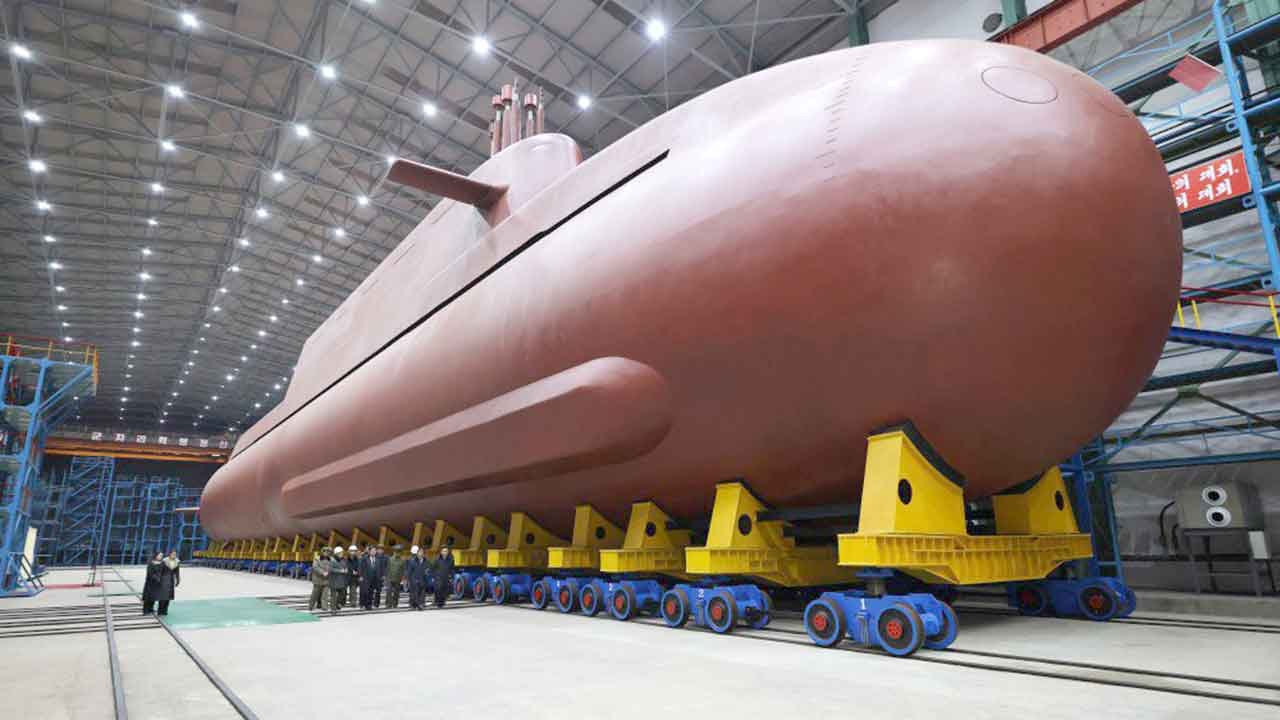
On December 24, 2025, North Korean state media released the first complete images of a “strategic nuclear guided-missile submarine” under construction, with an estimated displacement of 8,700 tons.
The photographs show North Korean leader Kim Jong Un inspecting the shipyard and providing what Pyongyang described as “on-site guidance” during the visit.
The images were published by the Korean Central News Agency and represent the most detailed visual confirmation to date of the regime’s long-claimed effort to develop a nuclear-powered ballistic missile submarine.
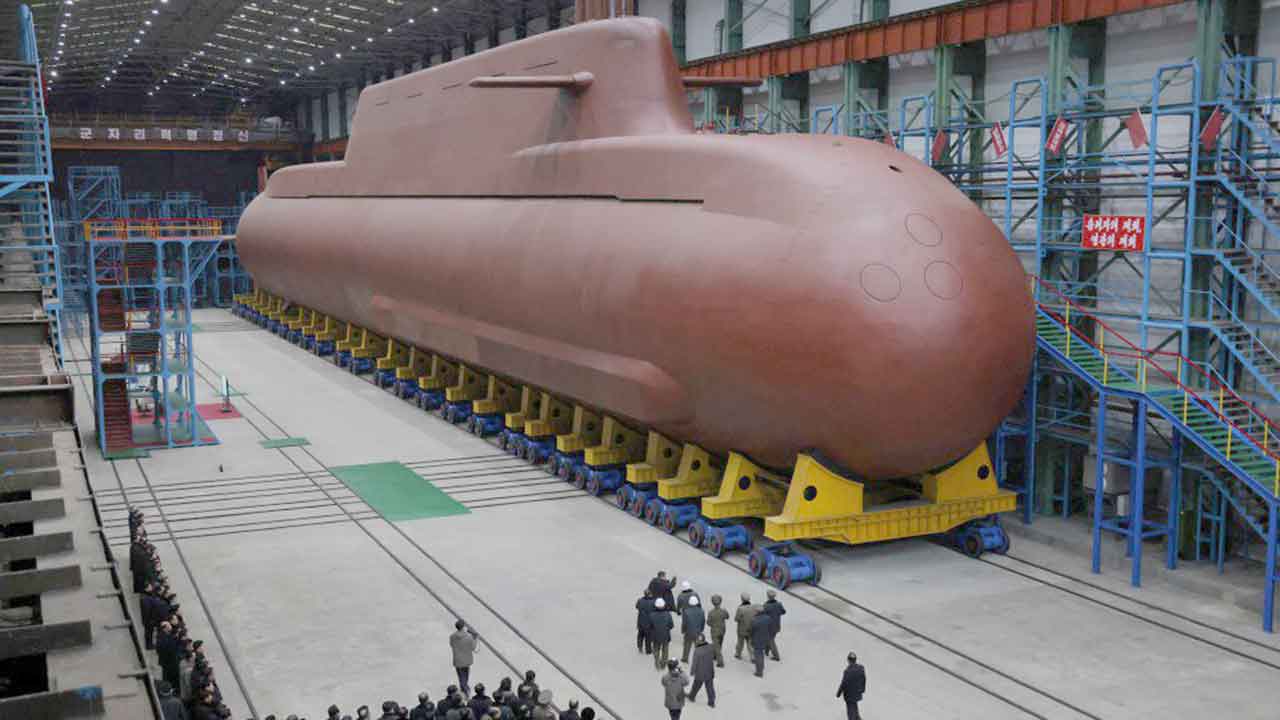
According to analysts, the vessel appears to be significantly larger than the diesel-electric submarines currently operated by North Korea and seems designed to carry multiple vertical launch tubes for submarine-launched ballistic missiles (SLBMs), possibly a maritime variant of the Pukguksong family.
The stated displacement of 8,700 tons would place the project close in size to early Cold War SSBNs, surpassing any platform currently in service with the North Korean navy. This suggests a considerable leap in strategic ambition, even if final performance falls short of the standards of leading nuclear navies.
The released photos indicate a widened pressure-hull section consistent with a missile compartment, as well as external features pointing to a dedicated nuclear reactor section. However, there is no independent confirmation that a functional naval reactor has already been installed.

Experts assess that deepening military and technological cooperation between North Korea and Russia could be a critical factor in advances in areas such as reactor design, specialized metallurgy, and noise-reduction techniques—fields in which Pyongyang has historically faced technical limitations.
If completed and brought into service, the submarine would represent North Korea’s first credible attempt to establish a sea-based nuclear deterrent, increasing the survivability of its strategic forces and complicating tracking and missile-defense efforts by allied countries in Northeast Asia.

Nevertheless, significant challenges remain, including reactor safety, crew training, acoustic silencing, and the reliable integration of SLBMsindicating that the platform will likely take years to achieve effective operational capability, even if construction progresses as planned.
+ Video: UAC delivers the last Su-35S aircraft of the year to the Russian Aerospace Forces
+ Video: LMS-901 Baikal aircraft flies for the first time with Russian VK-800 turboprop engine
Source and images: Korean Central News Agency. This content was created with the assistance of AI and reviewed by the editorial team.
