
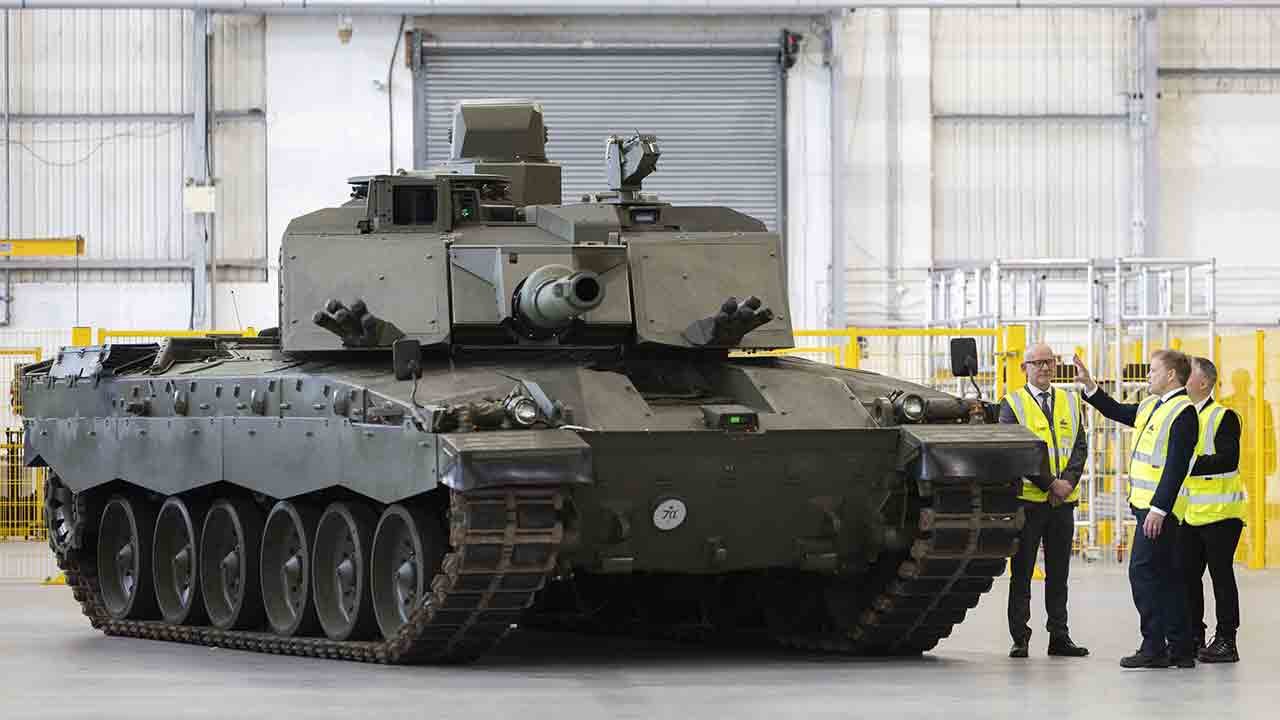
The British Ministry of Defense confirmed that the start of production of the main battle tank Challenger 3 has been postponed and will not follow a fixed schedule.
According to information published by UK Defence Journalin response to questions from Conservative MP Ben Obese-Jecty, the Minister of Defense Luke Pollard stated that the program “is currently going through the demonstration phase, designed to prove the performance of the tanks.” According to him, manufacturing will only begin after technical validation, “instead of being linked to a specific deadline”.
The demonstration phase uses a limited number of vehicles to validate design, systems integration and performance against formal requirements. By the end of 2025, only eight Challenger 2 hulls have been allocated to Rheinmetall BAE Systems Land for design, construction and testing activities, without series conversion having started.
By avoiding a fixed date for the start of production, the Ministry of Defense signals a cautious and targeted approach to risk management, seeking to reduce the likelihood of later delays or operational capability gaps. Although previous plans indicated the Challenger 3’s entry into service later this decade, the most recent parliamentary responses make it clear that the program’s advancement will depend directly on the results of the trials, and not on pre-established milestones.
The Challenger 3 is a fourth-generation main battle tank developed for the British Army by modernizing existing Challenger 2 vehicles. The program foresees the delivery of 148 units by 2030 and includes a new turret, structural improvements to the hull, modular armor and preparation for the integration of an active protection system.
Considered the largest modernization process for the United Kingdom’s armored forces in decades, the project seeks to prolong the operational relevance of the Army’s heavy fleet, aligning it with NATO standards and expanding interoperability with allied forces.

The origins of the Challenger 3 date back to initiatives started in 2005 to extend the useful life of the Challenger 2, within the Capability Sustainment Programme. After delays related to funding and management, the effort was reorganized in 2014 as the Challenger 2 Life Extension Program, generating competing proposals from BAE Systems and Rheinmetall. With the merger of the two companies’ UK land operations in 2019, Rheinmetall’s most ambitious proposal became the only viable alternative to completely replacing the fleet with a foreign tank.
Pollard added that the project team will continue to reassess the progress of the program, noting that “the schedule will be reviewed regularly to ensure alignment with delivery milestones, operational needs and emerging technical risks.” The statements indicate a heightened level of scrutiny over integration challenges and performance parameters before any commitment to large-scale production.
Source and images: British Ministry of Defense, X @DefenceHQ | UKdefencejournal. This content was created with the help of AI and reviewed by the editorial team.
