
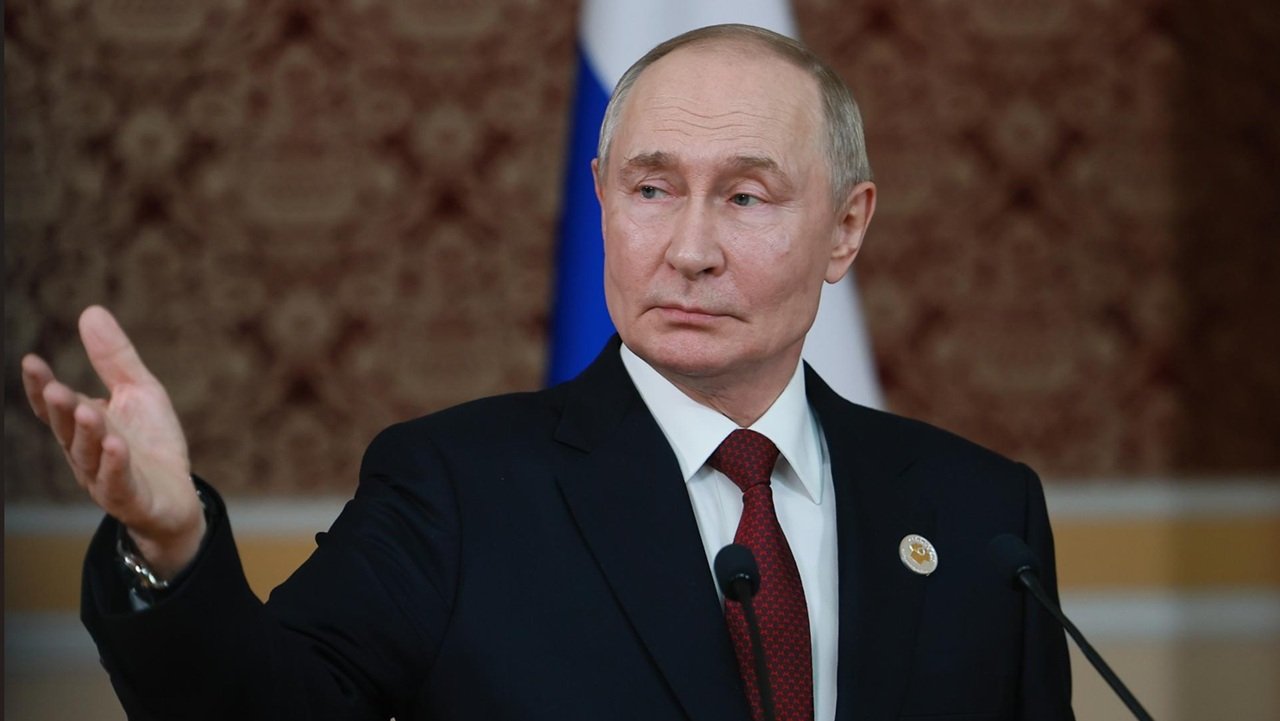
Negotiations between the United States, Russia and Ukraine to end the war in Eastern Europe entered a new phase this weekend, driven by the direct mediation of American President Donald Trump. However, the process is already facing its first setback: a complaint made this Monday (29) by the Kremlin about an alleged Ukrainian attack against one of dictator Vladimir Putin’s official residences.
The allegation, which was transmitted to Trump by Russia during a telephone call this morning, cast new doubts on the continuity of the peace dialogue, despite the initial advances announced after the meeting between the American president and Volodymyr Zelensky, president of Ukraine, which took place this Sunday (28).
The meeting between Trump and Zelensky, which was held at the American leader’s residence in Florida, lasted more than three hours and resulted in the creation of working groups to negotiate the peace plan presented last week, consisting of 20 points. According to Trump and Zelensky, around 95% of the text of the plan has been agreed, with all that remains is to negotiate impasses considered “thorny” by the three parties, such as the future of the Donbass region – partially occupied by Russian troops – and control of the Zaporizhzhya region.
The text of the 20-point plan, presented by Kiev together with Washington, reaffirms Ukrainian sovereignty and proposes a complete and unquestionable non-aggression agreement between Moscow and Kiev, accompanied by an international monitoring system to prevent future violations. The document includes robust security guarantees for Ukraine, with contributions from the United States, the European Union and signatory countries, in a form inspired by Article 5 of the North Atlantic Treaty Organization (NATO) – according to the Ukrainian proposal, these guarantees must cover situations of future Russian aggression and only be activated if there is an unprovoked initiative from Kiev.
As an immediate result of the meeting with Zelensky, Trump announced the creation of two working groups to discuss the next steps of the negotiations – one focused on security and the other on economic issues – which will bring together representatives from Kiev, Washington and, according to the Kremlin, also from Moscow. The American group will be formed by Secretary of State Marco Rubio, the president’s son-in-law, Jared Kushner, special envoy Steve Witkoff and General Dan Caine, chairman of the US Joint Chiefs of Staff. Zelensky stated that the groups should present results as early as January.
However, the Kremlin’s complaint about the alleged Ukrainian attack on Putin’s residence reignited diplomatic tension. The Russian regime is already using the episode to assert that it can review or even reverse points already reached in the most recent round of negotiations. This would not be the first time that the Kremlin has backed down or hardened its stance following diplomatic advances. Throughout the peace talks, Moscow has adopted an oscillating stance, always alternating moments of signaling dialogue with threats to continue intensifying attacks to seize Ukrainian territories by force.
Zelensky has already reacted firmly and accused the Kremlin of trying, once again, to sabotage the progress of peace talks. In a message published on Telegram, the Ukrainian president stated that “the Russians created an obviously false story about an attack on the residence of a Russian dictator, just to interrupt the diplomatic advances achieved with the United States.”
The Kiev government denies any involvement in the alleged attack, which would have been carried out with drones, and accuses Moscow of fabricating pretexts with the aim of reversing commitments made in negotiations and hardening its position in the next stages of the peace process.
Trump commented on the alleged attack this Monday and declared that he was “very angry” when he was informed of the episode by Putin himself during the telephone call made this morning.
“I heard about this today from President Putin and I was very angry,” said the Republican. “It’s not the right time for this kind of thing,” said Trump, pondering, however, that the Russian accusation may be false. “It is possible that it is false, but President Putin told me this this morning,” he added.
