
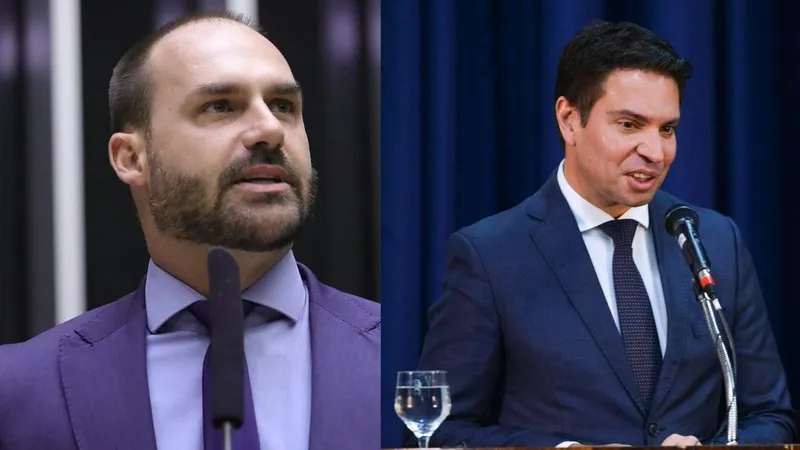
Last Friday (19), the Chamber of Deputies decided to cancel the diplomatic passports of former federal deputy Eduardo Bolsonaro and the former director of the Brazilian Intelligence Agency (Abin), Alexandre Ramagem. The measure was taken one day after the revocation of their mandates, which occurred on Thursday (18).
According to the Ministry of Foreign Affairs, it is extremely unlikely that Eduardo Bolsonaro will obtain a passport as a “stateless person”. According to information from BandNews FM, this would only be possible if he lost his Brazilian citizenship, which did not happen. Itamaraty also stated that the former deputy can return to Brazil normally, if he so wishes.
On social media, Eduardo Bolsonaro criticized the blocking of his passport, claiming that the decision was intended to prevent him from staying abroad. He also accused the minister of the Federal Supreme Court (STF), Alexandre de Moraes, of having given an alleged “secret order” to block the issuance of a common passport in his name.
In a note, the Office of the Second Secretariat of the Chamber of Deputies informed that the cancellation of the diplomatic passport follows the provisions of item IX of article 6 of Decree No. 5,978, of December 4, 2006, which regulates the granting of travel documents. This provision establishes that the diplomatic passport is intended, among others, for members of the National Congress.
In the case of Eduardo Bolsonaro, the loss of his mandate occurred due to excessive absences. The decision points out that he exceeded the permitted absence limit, failing to attend more than a third of the sessions held during the legislative year. Eduardo has been in the United States since February and, despite the revocation, remains eligible, as was informed during the broadcast.
Alexandre Ramagem had his mandate revoked as a result of a court order from the STF. He was sentenced to 16 years in prison in the same case involving former president Jair Bolsonaro. With the conviction, Ramagem had his political rights suspended, which led to the automatic loss of his parliamentary mandate.
